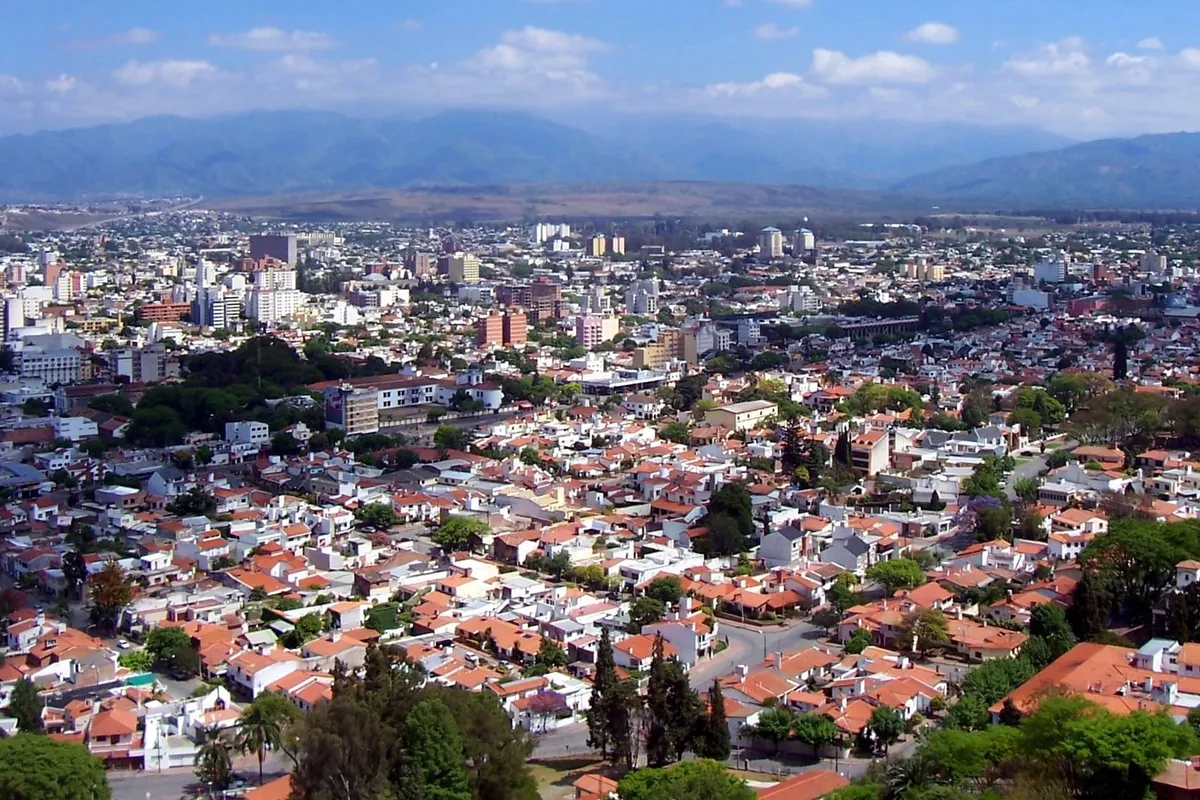
Santiago del Estero (358,000 inhabitants, 199 m above sea level) is the oldest city in present-day Argentina — founded by Francisco de Aguirre on July 25, 1553, almost five centuries ago. From here, Spanish conquistadors later founded San Miguel de Tucumán (1565), Esteco (1567) and Salta (1582), so the city was officially titled "Mother of Cities" in 1953. Today it preserves that historical aura in the Cathedral Basilica of Our Lady of Loreto (the current building is 19th-century, but the diocesan seat dates to 1570 — the oldest in Argentina), the Santo Domingo Convent (founded 1593, custodian since then of a True Cross splinter brought by San Francisco Solano as a gift from Pope Sixtus V — the oldest Catholic relic in the country), the Bicentennial Cultural Center (history museum, restored government house), Aguirre Park (70 hectares, the city's oldest, on the bank of the Dulce River, with monument at the founding site), the Lucas Roselli Forestry Museum (taxidermy of semi-arid Chaco fauna) and Plaza Libertad (civic heart). Beyond its heritage, Santiago is the cradle of chacarera, the folk genre born on these plains in the late 19th century and now danced at family gatherings throughout Argentina — its National Festival every February at the Forest Amphitheatre in Aguirre Park draws 80,000 spectators. Cuisine is deep criollo: locro santiagueño (with white corn slow-cooked 4-6 hours), tamales en chala, clay-oven empanadas and mistela. SDE Airport 6 km from downtown, daily flights from Aeroparque (1h50, USD 70-180). Combines perfectly with Termas de Río Hondo (65 km, 1h by bus) and Tucumán (165 km, 2h30) on 7-10 day NOA circuits.
Distances from Santiago Capital
| From | Distance | Flight | Bus | Drive |
|---|---|---|---|---|
| Buenos Aires (AEP) | 1060 km | 1 h 50 | 13-15 h | 12 h |
| Termas de Río Hondo | 65 km | — | 1 h | 50 min |
| Tucumán capital | 165 km | — | 2 h 30 | 2 h |
| Salta | 490 km | — | 7 h | 6 h |
| Córdoba | 430 km | — | 6 h | 5 h |
| Catamarca | 330 km | — | 5 h | 4 h |
Typical Prices in Santiago Capital (USD)
| Category | Budget | Mid-range | Luxury |
|---|---|---|---|
| 3★ hotel downtown (double) | USD 40-60 | USD 60-90 | USD 120-180 |
| 4★ Carlos V (double) | — | USD 80-130 | USD 150-220 |
| Hostel dorm bed | USD 12-22 | USD 25-40 | — |
| Regional lunch | USD 8-12 | USD 14-22 | USD 28-45 |
| Santiago empanada (each) | USD 0.80 | USD 1.20 | — |
| Locro santiagueño (portion) | USD 6-10 | USD 12-18 | — |
| Dinner with wine | USD 12-20 | USD 25-40 | USD 50-90 |
| Bus capital ↔ Termas | USD 4-6 | — | — |
| Cross-city taxi (5 km) | USD 3-5 | — | — |
| Chacarera Festival ticket | USD 12-18 | USD 20-35 | USD VIP 60-120 |
Prices April 2026. Chacarera Festival (early February) and MotoGP (March, in Termas but impacts capital): hotels +40-80%.
What to See and Do in Santiago Capital
1. Cathedral Basilica of Our Lady of Loreto (Plaza Libertad)
The current Cathedral is the fifth version of Santiago's mother church — the first four were destroyed by earthquakes (1817, 1830) and a fire. The present building is from 1872-1877, in neoclassical style with two 35 m bell towers. It houses the image of Our Lady of Loreto (patron saint of Santiago, festivity December 10) and maintains diocesan archives (the oldest in Argentina, founded 1570 — even older than Buenos Aires's ecclesiastical jurisdiction). Free visits Monday-Saturday 8-12 and 17-20, Sunday during masses. No charge.
2. Convent and Church of Santo Domingo — the True Cross
Corner of Buenos Aires and Urquiza streets, 3 blocks from Plaza Libertad. Founded 1593 by the Dominican order, it is the oldest continuously-used building in Argentina. Its treasure is the True Cross splinter, a relic brought by San Francisco Solano in 1593 as a gift from Pope Sixtus V — believed by Catholic tradition to be a fragment of the cross on which Jesus Christ was crucified. The relic is held in a 17th-century gold-and-silver monstrance crafted in Potosí, and is displayed on Good Fridays and special feast days. The church preserves 17th-century Cuzco school paintings and an 18th-century pipe organ. Guided tours available (USD 3) — check times depending on religious ceremonies.
3. Bicentennial Cultural Center (CCB)
Restored Government House (Av. Libertad 484), reopened in 2010 as a provincial history museum. 5 rooms with Santiago's timeline: indigenous peoples (Lule-Vilelas, Tonocoté), Spanish conquest, 1553 founding, colonial era, independence, 20th century. Models, original documents, audiovisuals. Free entry Tuesday-Sunday 10-19. Essential to understand the unique historical trajectory of the province.
4. Aguirre Park — the founding site
70 hectares on the eastern bank of the Dulce River, the oldest urban park in the city. Houses the founding-site monument (where Aguirre erected the founding cross on July 25, 1553), the Forest Amphitheatre (host of the National Chacarera Festival every February), the Park Lake, shaded paths with century-old carob trees, playgrounds, skate park and outdoor gym. Weekend gathering point for Santiago families. Free access.
5. Lucas Roselli Forestry Museum
Inside Aguirre Park. Small museum (created 1965) with taxidermy of Santiago's semi-arid Chaco fauna: pumas, jaguarundi, giant anteater, southern tamandua, capybaras, caimans, maned wolves, vizcachas, armadillos, brocket deer, peccaries and birds. Hall dedicated to extinct fauna (jaguar, gone from Santiago). USD 1 entry, two hours suffice.
6. National Chacarera Festival (February)
Santiago's most important folk event — 1st-2nd week of February, at the Forest Amphitheatre in Aguirre Park, capacity 6,000 per night. 5-6 consecutive nights of music and dance with top Argentine folk artists: the Carabajal Brothers, Peteco Carabajal, Verónica Condomí, Raly Barrionuevo, Soledad Pastorutti, Los Tekis. Tickets USD 12-35 per night, VIP USD 60-120. Book 30+ days ahead online (festivalchacarera.com.ar).
7. Criollo Cuisine — Locro and Tamales
Top restaurants:
- Mishqui Punkku (Av. Belgrano 555) — gourmet criollo fusion, deconstructed locro, quinoa tamales, NOA wines. USD 25-40 per person.
- El Patio del Indio Froilán (Pellegrini 124) — grill and folk peña Friday-Saturday with live bombo and guitar. USD 18-30.
- Casa Roma (Catamarca 174) — homemade pasta in Italo-Santiago style (legacy of Piedmontese immigration). USD 15-25.
- La Casona (Belgrano S 137) — criollo classics in colonial setting. USD 12-22.
How to Get There and Get Around
SDE Airport (Vicecomodoro Ángel de la Paz Aragonés) 6 km from downtown, taxi USD 8-12. Daily flights from Aeroparque with Aerolíneas Argentinas (1h50). Bus terminal at Av. Sáenz Peña 1300 — buses every 30-60 min to Termas de Río Hondo, 6-8 daily to Tucumán, departures to Salta and Córdoba. In-city: city buses USD 0.40, taxis and remises cheap (USD 3-5 anywhere). The historic center (Plaza Libertad + Cathedral + Santo Domingo + CCB) can be fully walked in 3-4 hours.
Book Santiago Capital

Hotel Carlos V (4★ downtown)
Facing Plaza Libertad. Double from USD 80, breakfast included, heated pool.
AEP–SDE Flight
1h50 direct from Buenos Aires with Aerolíneas Argentinas. From USD 70 one-way.
Chacarera Festival
Tickets for the National Chacarera Festival (February, Forest Amphitheatre).
Frequently Asked Questions about Santiago Capital
Why is Santiago del Estero called the "Mother of Cities"?
Because it is the oldest city in present-day Argentina — founded by Francisco de Aguirre on July 25, 1553, two decades before Buenos Aires (1580), Salta (1582), Mendoza (1561) or Córdoba (1573). From Santiago, several northwestern Argentine cities were later founded: San Miguel de Tucumán (1565), Talavera de Madrid (1565, today vanished), Esteco (1567, abandoned), Salta (1582). For this founding chain, Santiago received the official title "Mother of Cities" in 1953 on its 400th anniversary. The original founding site is today's Aguirre Park, where a monument marks the exact spot.
What is the True Cross splinter in the Santo Domingo Convent?
In the Santo Domingo Convent (Buenos Aires and Urquiza streets, capital) is preserved a splinter of the True Cross (the cross on which Jesus Christ was crucified per Christian tradition) brought to Santiago in 1593 by San Francisco Solano — the Franciscan evangelizer of northwest Argentina — received as a gift from Pope Sixtus V. The relic is in a gold-and-silver monstrance crafted in Potosí, displayed on Good Fridays and special veneration days. It is the oldest Catholic relic in Argentina. The convent (colonial style, founded 1593) is itself the oldest continuously-used building in the country.
How many days do you need in Santiago capital?
1-2 days are enough for the capital: day 1 Cathedral + Bicentennial Center + Plaza Libertad + Santo Domingo Convent, day 2 Aguirre Park + Forestry Museum + dining (Mishqui Punkku, El Patio del Indio Froilán). In February, add the National Chacarera Festival (3-5 nights depending on schedule). Most tourists combine capital + Termas de Río Hondo (65 km, 1h by bus) for a 3-4 day total provincial visit.
Where to stay in Santiago capital?
The best areas are downtown (Plaza Libertad, around the Cathedral) and the Caracol neighborhood, with good 3-4★ hotel options at accessible prices. Recommended: Hotel Carlos V (4★, facing Plaza Libertad, USD 80-130 double), Hotel Libertador (3★ downtown, USD 50-75), Termas de Río Hondo Resort (5★ at 65 km, USD 180-320). Hostels: Hostel del Centro (USD 15-22 dorm). Apartment rentals in Caracol via Airbnb from USD 35-60/night for 2 people. Book 30+ days ahead for February (Chacarera) and March (MotoGP at Termas).
What is the climate of Santiago capital?
Subtropical arid with extreme summers. December-February: highs 35-45°C, night lows 22-28°C, humidity 50-70%, afternoon thunderstorms. March-April: 25-32°C, pleasant, rain decreases. May-August: mild days 18-25°C, cool nights 5-12°C, clear skies. September-November: 22-32°C, ideal spring. For visiting the capital, April-May and September-October are optimal months. Avoid January (extreme heat) except for night strolls.
What to eat in Santiago capital? Where?
Deep criollo cuisine. Locro santiagueño (with white corn, tripe, bacon, hominy and squash, slow-simmered 4-6 hours), tamales en chala, Santiago empanadas (clay-oven baked, knife-cut beef, hard-boiled egg), humita en chala (with ground sweet corn), woodfire bread, mistela (wine with honey and spices) and aloja (fermented carob-pod drink). Restaurants: Mishqui Punkku (Av. Belgrano 555 — gourmet criollo fusion, USD 25-40 per person), El Patio del Indio Froilán (Pellegrini 124 — grill and live folklore peña, USD 18-30), Casa Roma (Catamarca 174 — homemade pasta), La Casona (Belgrano S 137 — criollo classics). Typical lunch USD 12-22, dinner with wine USD 25-45. Goat cheese from Loreto and carob honey as souvenirs.
What is chacarera and where can you dance it in Santiago?
Chacarera is the folk genre born in Santiago del Estero in the late 19th century, played with guitar, bombo legüero drum, violin or accordion in 6/8 time, danced in couples with an 8-figure choreography (turn, counter-turn, encounter, spin, return, etc.). It is the most widespread folklore in Argentina, danced at family gatherings nationwide. Main festival: National Chacarera (1st-2nd week of February, capital, at the Forest Amphitheatre in Aguirre Park, tickets USD 12-25 per night). Regular folk peñas: La Casa del Folclore, El Patio del Indio Froilán, El Bombero (all with dance and live-music classes Friday-Saturday). Legendary artists: Don Sixto Palavecino, Los Hermanos Ábalos, Jacinto Piedra, the Carabajal family.
Is it worth combining Santiago with Tucumán?
Yes, totally. Tucumán is 165 km away (2h30 by bus, 2h by car) and the provinces complement each other: Santiago contributes the cradle of chacarera and deep criollo culture; Tucumán adds the "Garden of the Republic" (yungas mountains, Tafí del Valle at 2,000m, Quilmes Ruins). A 7-day NOA mini-circuit could be: 2 days Santiago capital + 1 day Termas Río Hondo + 1 day Tucumán capital + 2 days Tafí del Valle/Quilmes + 1 day return. SDE and TUC airports have daily flights from Buenos Aires. Also combinable with Salta (490 km) in 10-14 day NOA circuits.