Paris on the River Plate — tango, steakhouses, Recoleta and the neighborhoods that define porteño culture
Last updated: April 2026
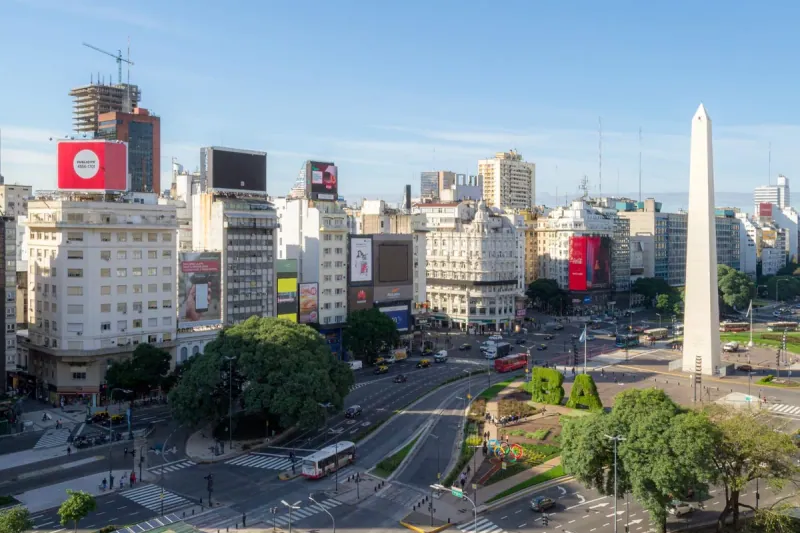
Buenos Aires is the most European city in Latin America and at the same time the most Argentine in the world: a Paris on the River Plate where Recoleta's Belle Époque cupolas live next door to corner steakhouses, San Telmo's underground milongas and the painted tin houses of La Boca. The Argentine capital packs 3.12 million people into 48 neighborhoods (15 million in the metro area) — almost a third of the country and all its cultural firepower: tango, soccer, asado, dulce de leche, the literary lineage of Borges and Cortázar, French-influenced architecture, and a nightlife that doesn't really start until 11 pm.
Think of it as NYC for South America: Microcentro is the financial Manhattan (Plaza de Mayo + Avenida 9 de Julio), Palermo is Brooklyn / Williamsburg with the food scene to match, Recoleta is the Upper East Side with French facades, San Telmo is the SoHo of 1920 frozen in time, and Puerto Madero is Hudson Yards on the river. 3 days covers the classics (Plaza de Mayo, Caminito, Recoleta cemetery, dinner in Palermo). 5 days add the San Telmo Sunday fair, Puerto Madero, the Tigre/Paraná Delta day trip and a tango show. A week opens the door to Colonia (Uruguay, 1-hour ferry), a polo match or a soccer game at La Bombonera, and a gaucho estancia day in San Antonio de Areco. Long-haul flights from JFK direct (10h30), Miami (9h), Madrid (12h), London via Madrid or São Paulo.
Top attractions in Buenos Aires
Real traveler data: Civitatis, GetYourGuide, verified reviews — April 2026.
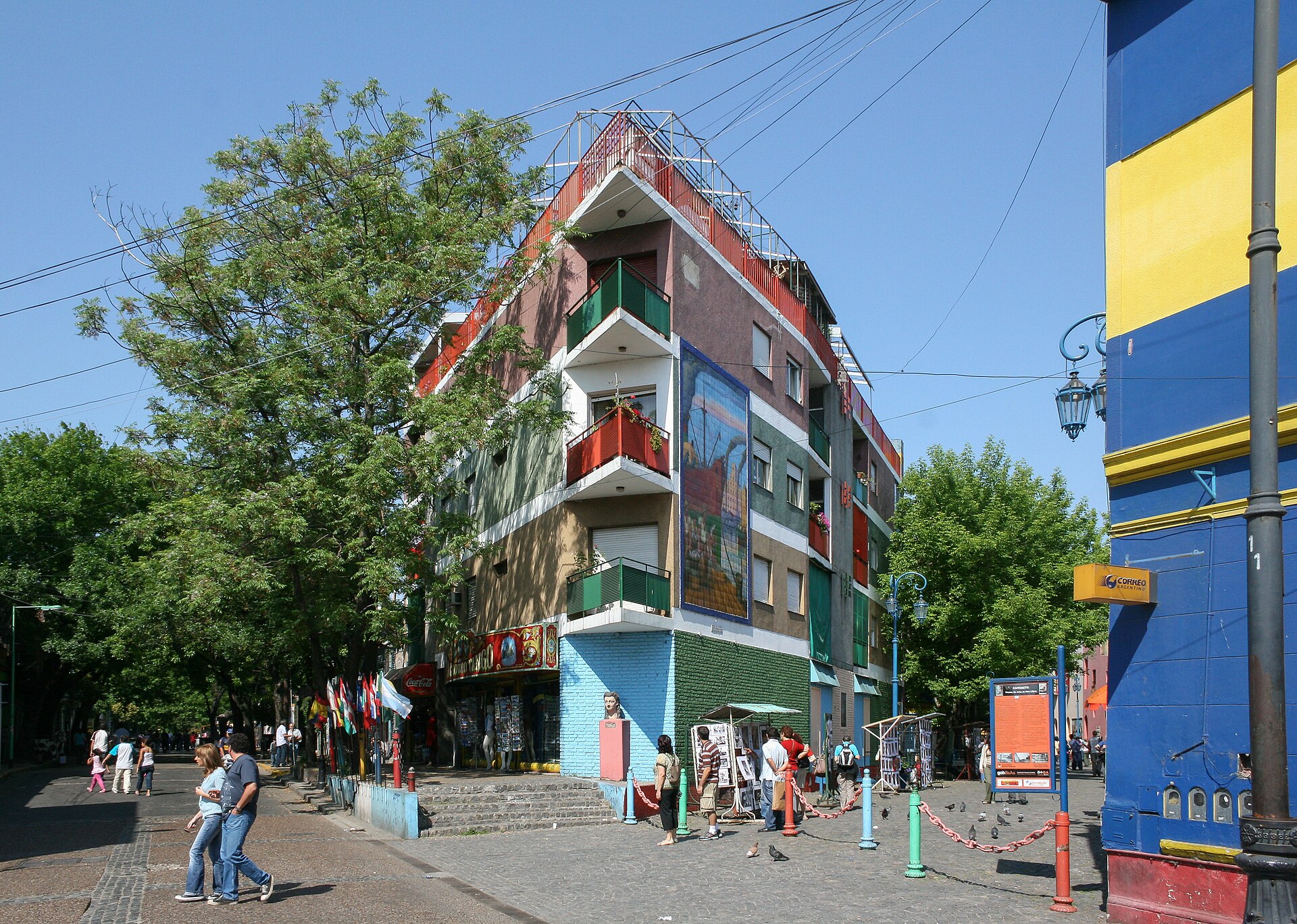
The most photographed working-class block in South America: corrugated tin houses painted blue, yellow, red and green, originally with leftover paint from the port. Genoese immigrant heritage. Street tango, small museums, Quinquela Martín workshop. The Caminito alley is only 200 m / 650 ft — easy 30-minute morning walk before the heat. La Bombonera (Boca Juniors stadium) is 4 blocks away.
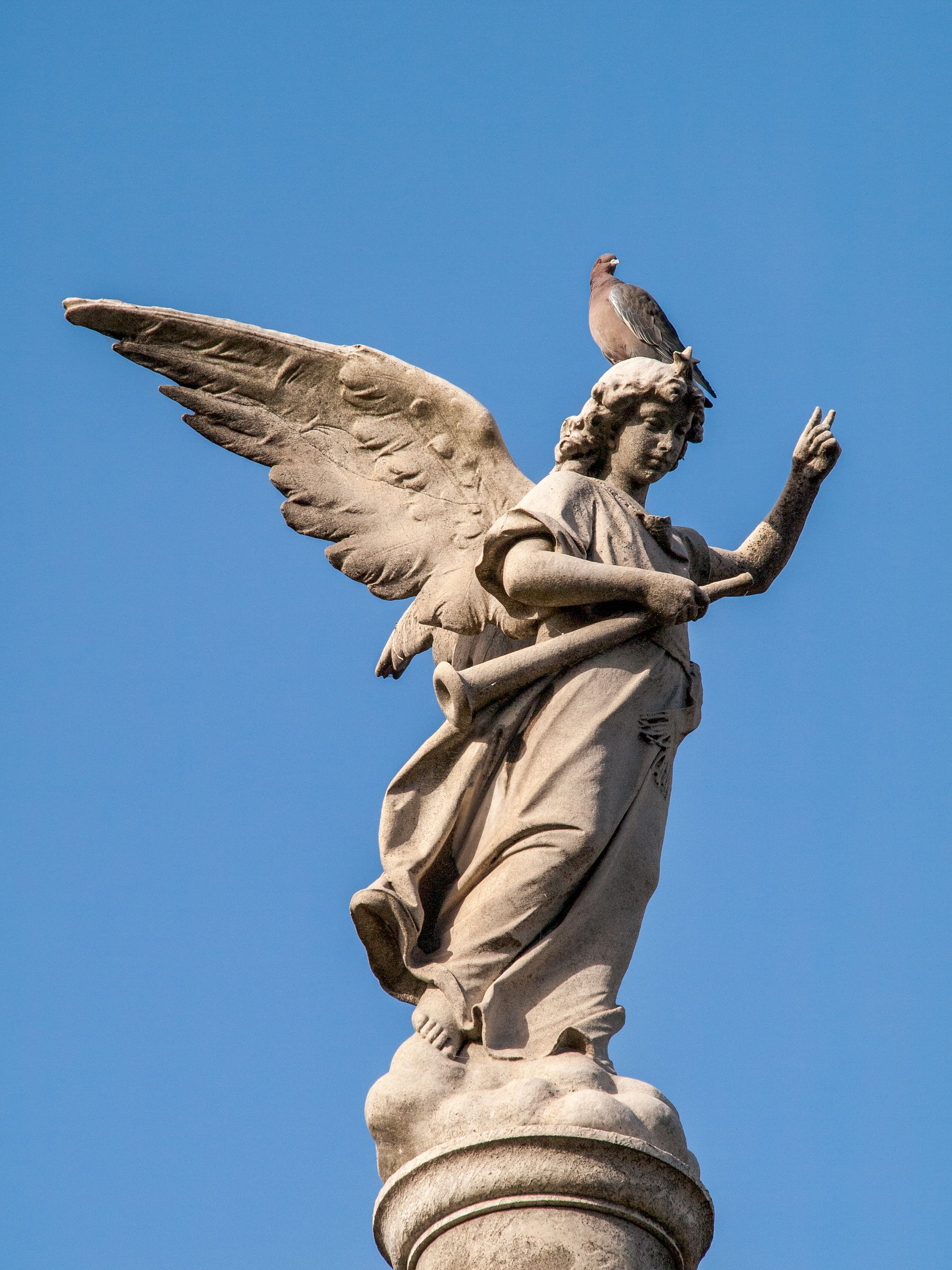
BA's aristocratic necropolis (founded 1822), ranked among the world's 10 most beautiful cemeteries by CNN and BBC. 4,700 mausoleums on 14 acres of marble corridors with French, Italian, art-deco and neo-Gothic architecture. Eva "Evita" Perón rests here (Duarte family vault). A guided tour with a local historian is the best way to get who-was-who in 20th-century Argentina.
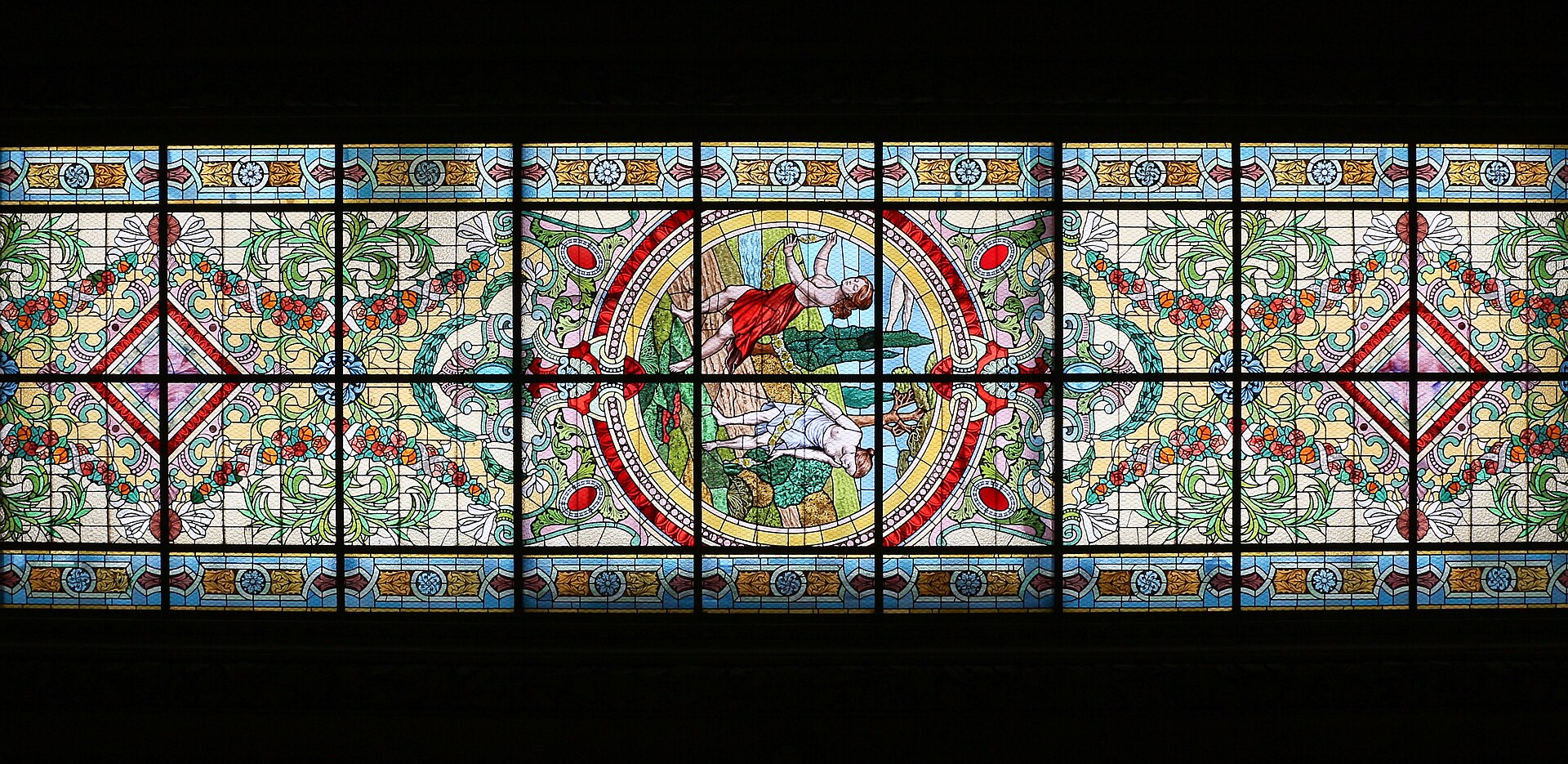
One of the world's top 5 opera houses (The Guardian) alongside La Scala, the Met and Royal Opera London. Opened 1908, 7-tier French horseshoe hall, acoustics rated near-perfect. Daily guided tours 9 am-5 pm (USD 22). Opera, ballet and concert season runs April-November, tickets from USD 15 (top tier) to USD 200 (orchestra).
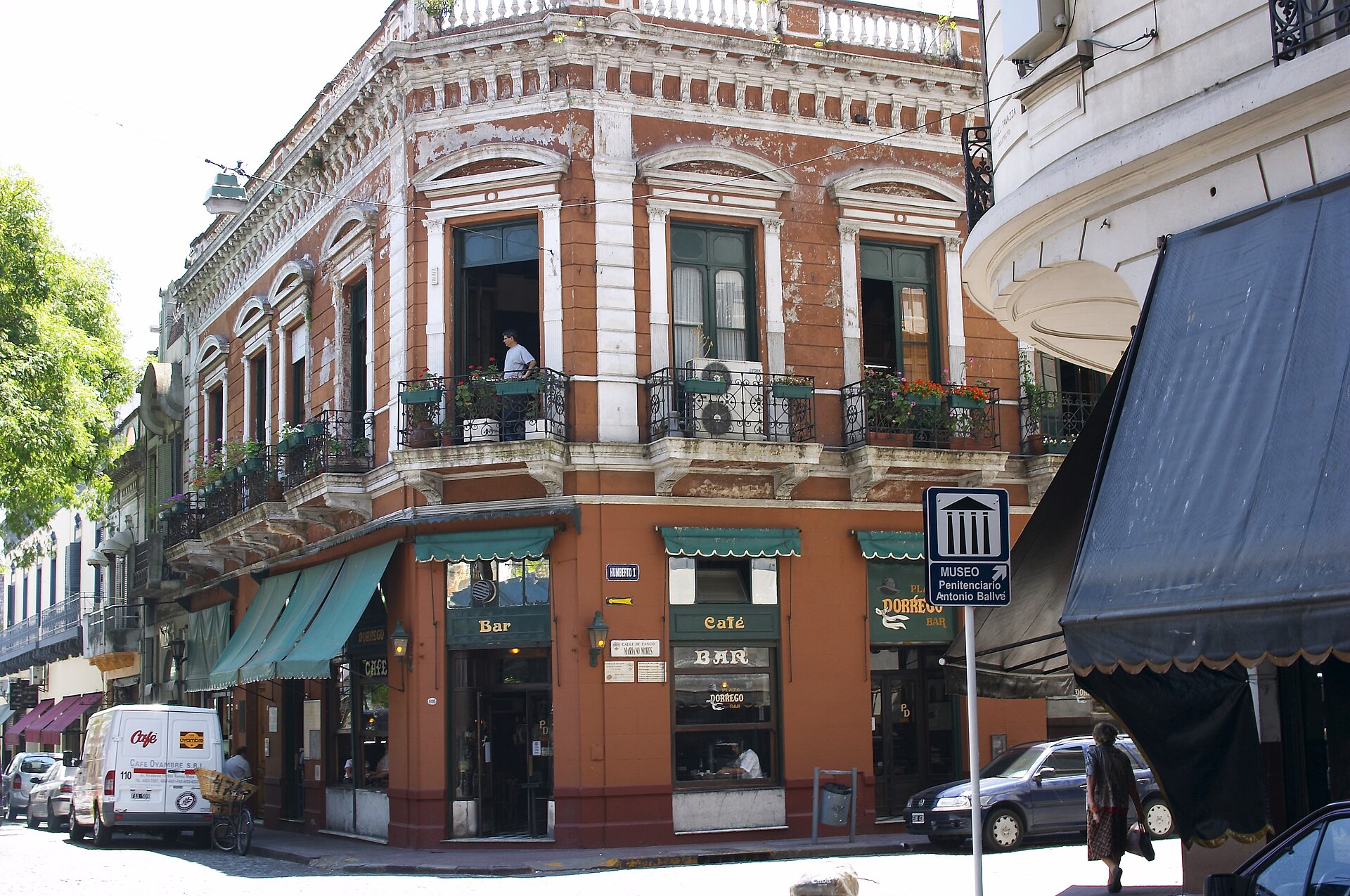
BA's oldest neighborhood, cobblestone streets from 1820, restored mansions. Sundays: the Defensa Antiques Fair on Plaza Dorrego (270 stalls, 10 am-5 pm), street tango, antique dealers, gourmet market. Any other day: heritage cafés, San Telmo Market (1897), used-book stores, piano bars.
BA's biggest neighborhood (3 km² / 1.2 mi²) splits into zones: Palermo Soho (boutiques, restaurants, nightlife), Palermo Hollywood (production studios and bars), Bosques de Palermo (Central Park-style green space, planetarium, rose garden), Plaza Serrano. MALBA holds the best Latin American art collection on the continent (Frida Kahlo, Botero, Xul Solar). Mandatory for food and nightlife.
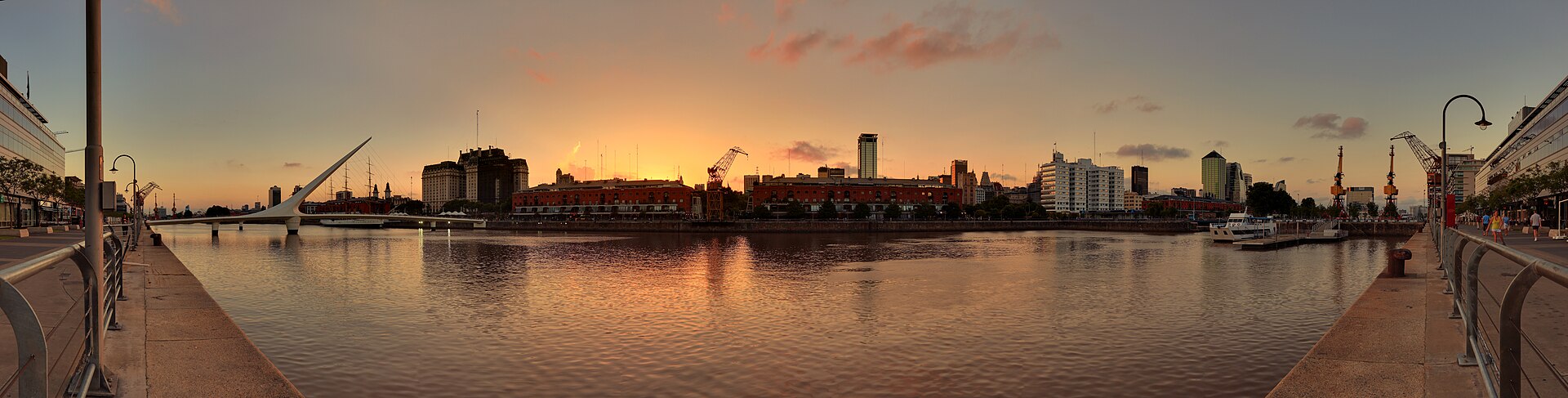
Late-19th-century port redeveloped into BA's financial district: glass towers, premium restaurants, the Calatrava-designed Puente de la Mujer (2001) and the Sarmiento Frigate museum. Behind it sits the Costanera Sur Ecological Reserve, 870 acres of wetlands on the River Plate — free walking and biking trails (8 am-7 pm). Locals' weekend escape without leaving downtown.
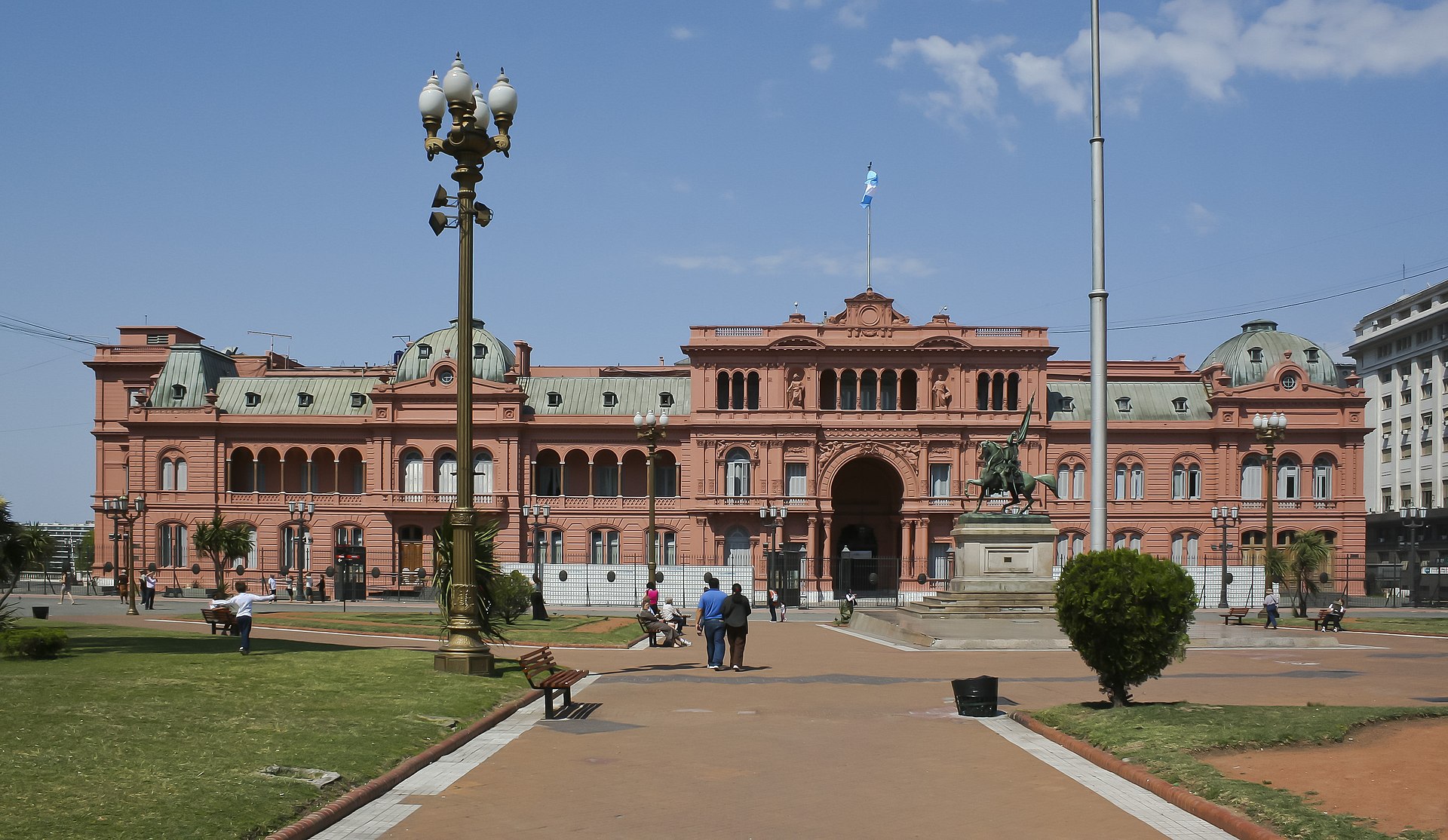
Argentina's political heart since the 1536 founding. On the plaza: Casa Rosada (presidential palace, the Evita balcony), the Cabildo (colonial town hall museum), Metropolitan Cathedral (General San Martín's tomb), Pirámide de Mayo (1811). 30-minute walk covers it all. Sunday: changing of the Granaderos guard and morning Mass at the Cathedral.
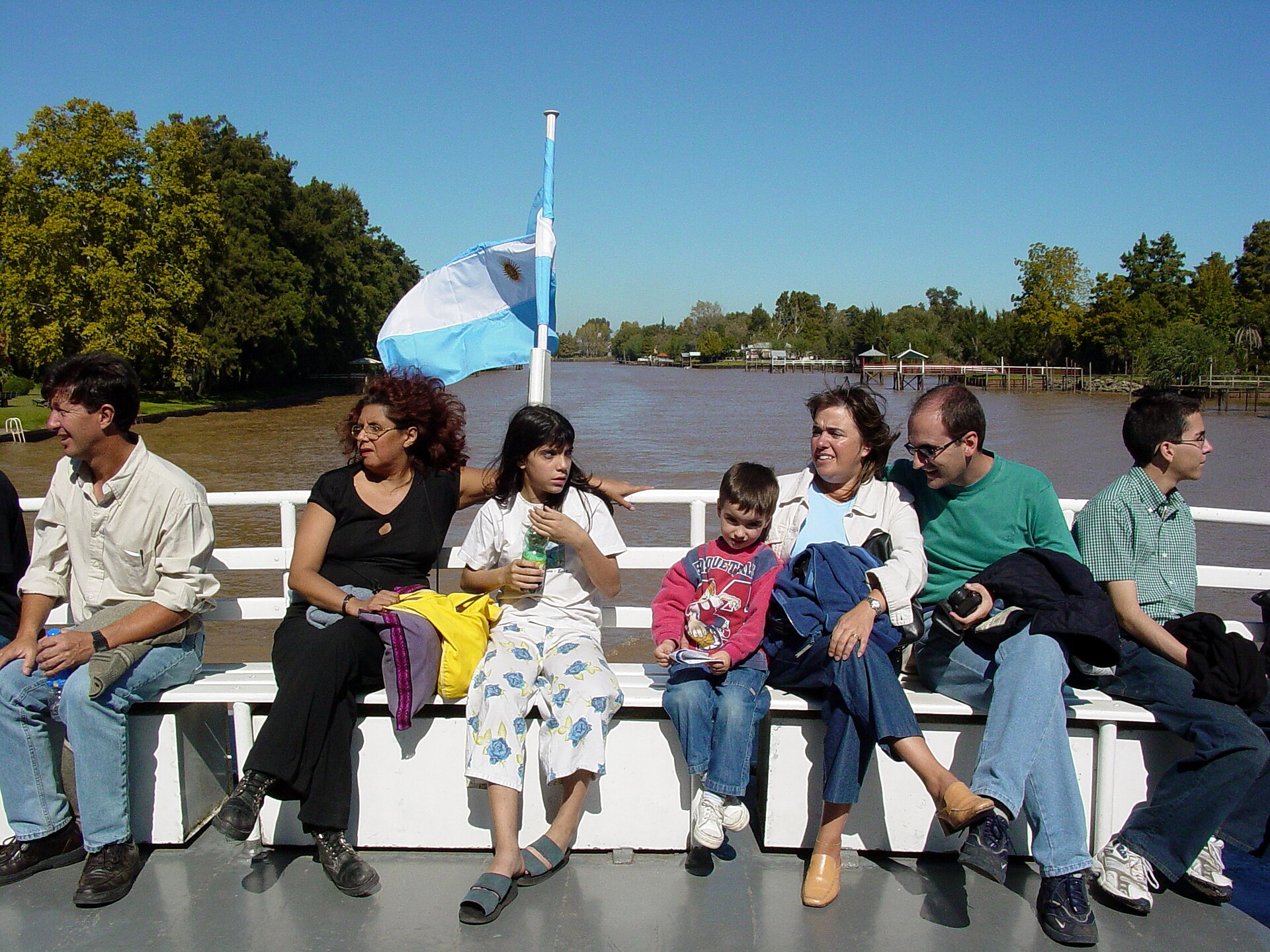
20 mi / 30 km north of BA, one hour on the scenic Tren de la Costa. River town with a marina, the Mercado de Frutos (crafts and food), and shared launches that navigate the delta channels between stilt-house islands. Full-day catamaran USD 35-50 includes the lake cruise plus an island lunch. South America's answer to the Florida Everglades, minus the alligators.
Buenos Aires has a humid temperate climate: hot, sticky summer (Dec-Mar, 77-90°F / 25-32°C, afternoon thunderstorms, real-feel often higher), golden mild fall (Apr-May, 65-75°F / 18-23°C, the plane trees turn yellow on Avenida del Libertador), dry chilly winter (Jun-Aug, 45-60°F / 8-15°C, no snow, perfect for museums and cafés), and blooming spring (Sep-Nov, 65-77°F / 18-25°C, jacaranda trees turn the avenues purple — the city's signature postcard).
The humidity is what catches travelers off guard: 86°F in BA feels worse than 95°F in Phoenix. January-February empty out — locals (porteños) head to Mar del Plata or Punta del Este in Uruguay — and many restaurants close for vacation. For full cultural life (theaters, milongas, weekend ferias), aim for March-May or September-November. Note: Argentina is in the Southern Hemisphere, so seasons are inverted from North America and Europe — your January summer trip lands in their high summer, your July winter trip in their cool winter (no snow in BA, but bring a warm coat).
Buenos Aires: La Boca, Recoleta, Teatro Colón and Puerto Madero
Suggested itineraries
Real routes built by locals — pick the one that fits your days.
3days
Buenos Aires essentials
The minimum to feel the city: historic center + La Boca + Recoleta + a Palermo dinner. Works as a layover before Iguazú or Patagonia.
Highlights
Plaza de Mayo
Caminito
Recoleta Cemetery
Palermo dinner
Tango show
Day by dayHide day by day
Day 1
Historic center + La Boca
Morning: Plaza de Mayo (Casa Rosada, Cabildo, Cathedral), Avenida de Mayo, Café Tortoni (1858), Congress. Lunch at a downtown steakhouse (Don Carlos or Pichuleo). Afternoon: bus 152 or taxi to La Boca, Caminito, Quinquela Martín workshop. Early dinner in San Telmo + tango show.
Day 2
Recoleta + Puerto Madero
Morning: Recoleta Cemetery (free walking tour 11 am in English on demand), Pilar church, Floralis Genérica metal flower. Lunch at La Biela or Croque Madame. Afternoon: walk Puerto Madero, Ecological Reserve, Puente de la Mujer. Dinner in Puerto Madero (Cabaña Las Lilas, Crystal Garden).
Day 3
Palermo + dinner
Morning: Bosques de Palermo, Rosedal, Planetarium. Lunch in Palermo Soho (Las Pizarras, Don Julio if you book ahead, El Preferido). Afternoon: MALBA, Evita Museum, boutique shopping in Palermo Soho. Premium dinner (Don Julio — World's 50 Best, or Tegui, Aramburu for fine dining). Drinks in Palermo Hollywood.
5days
Buenos Aires classic + Tigre
Adds San Telmo on Sunday (fair + street tango) and a Tigre/Delta day. Hits all the marquee names without rushing.
Highlights
San Telmo Sunday fair
Tigre & Paraná Delta
Teatro Colón
Premium tango show
Palermo food scene
Day by dayHide day by day
Day 1
Arrival + center
Plaza de Mayo, Avenida de Mayo, Café Tortoni. Free afternoon. Steakhouse dinner.
Day 2
La Boca + tango
Caminito morning, lunch at Aldo's or La Brigada. Free afternoon. Tango dinner show (Esquina Carlos Gardel, Café de los Angelitos).
Day 3
Recoleta + Teatro Colón
Cemetery, MALBA. Teatro Colón guided tour 11 am or 3 pm (USD 22). Dinner Puerto Madero.
Day 4
San Telmo Sunday
Defensa fair all day (10 am-5 pm), antiques, food, street tango on Plaza Dorrego. Dinner on the Costanera (Los Años Locos with river view).
Day 5
Tigre full day
Tren de la Costa (USD 5) or Mitre line (USD 1) to Tigre. Mercado de Frutos, lunch. 1.5h shared-launch ride through the Delta. Back to BA at sunset. Casual dinner + Palermo Hollywood bar.
7days
Buenos Aires + Colonia + estancia
A full week covers the city plus a Colonia del Sacramento (Uruguay) day and a gaucho estancia at San Antonio de Areco.
Highlights
Colonia del Sacramento (UY)
San Antonio de Areco gaucho day
La Bombonera or Monumental match
Tango lesson
Optional Mar del Plata weekend
Day by dayHide day by day
Day 1
Center + Tortoni
Plaza de Mayo, Casa Rosada, Avenida de Mayo, Tortoni.
Day 2
La Boca + Caminito
Caminito morning, La Bombonera tour if time allows.
Day 3
Colonia del Sacramento (UY)
Buquebus ferry 7 am from Puerto Madero, arrive Colonia 8 am. UNESCO old town, lighthouse, Plaza Mayor, lunch. Return 6 pm. Passport required (visa-free for US, UK, EU, Canada, AU).
San Isidro — Presidential country home, river walk, elegant suburbs.
Local food & where to eat
Argentine cooking is asado + parrilla + pasta + dulce de leche, with deep Italian, Spanish and Sephardic Jewish roots. The parrilla (open-fire grill) is a 2-3 hour ritual: starts with achuras (sweetbreads, intestines, kidney), moves to chorizo and morcilla, then short ribs, flank, ribeye and skirt steak. Eaten with chimichurri (parsley, garlic, chili flakes, vinegar, oil). The benchmarks: Don Julio (#1 in the World's 50 Best Steakhouses 2024), La Cabrera, La Brigada, Parrilla Peña.
Pasta is the Sunday-family pillar — Italian heritage from Genoa, Naples and Sicily: handmade ravioli, sugo-tossed noodles, gnocchi on the 29th of each month (with money under the plate for luck). Milanesa (breaded cutlet) with fries, often topped Naples-style with ham, mozzarella and tomato sauce, is the diner classic every traveler should try. The 60 protected cafés notables serve the porteño breakfast: café con leche, three medialunas (sweet croissants), buttered toast and jam — a tradition from 1880. For dessert: artisan helado (Rapanui, Cadore, Freddo, Lucciano's) or flan with dulce de leche. BA pizza has its own identity: thick crust, lots of mozzarella, fugazza (onion), fainá (chickpea flatbread on top of the slice).
Signature dishes
Argentine asado
Short ribs, flank, ribeye, skirt steak, sweetbreads, chorizo, morcilla. Wood-fire grill with chimichurri. Pair with Malbec.
Breaded cutlet topped with ham, mozzarella and tomato sauce. Served with fries. Diner classic.
BA pizza
Thick "media-masa" crust, generous mozzarella. Fugazza with onion, fugazzeta, calabresa. Side of fainá.
Dulce de leche
BA's signature: in alfajores, flan, pancakes, ice cream (Rapanui), or by the spoon from the jar.
Coffee + medialunas
Porteño breakfast: latte in a small jug, three sweet croissants, buttered toast and jam. Café Tortoni or La Biela.
Food experiences
Premium tango dinner show
Three-course dinner at a heritage tango house (Esquina Carlos Gardel or Café de los Angelitos), followed by a 90-minute show with live tango orchestra. Wine included, 4 hours. English-friendly venues.
4 stops in Palermo bars and bodegones: empanadas, parrilla, artisan gelato, Malbec wine. 3.5 hours, English-speaking local guide. The fastest way to learn BA cooking by mouth.
Full day at a working ranch 70 mi / 110 km from BA: empanada-and-wine welcome, horse breaking, full asado, folk-dance show. Round-trip transport from BA. The classic gaucho experience.
Hands-on with a local chef in Recoleta: hand-folded empanadas, marinade for the parrilla, dulce-de-leche dessert. Dinner from your own work + Malbec. 4 hours, English instruction.
Buenos Aires was built in two waves. The first began in 1810 with the May Revolution (independence from Spain) and surged between 1880 and 1930 with mass immigration: 6 million Europeans landed at the port, mostly southern Italians (Calabria, Sicily, Naples), Spaniards (Galicia, Asturias), and to a lesser extent Sephardic Jews, Russians, Lebanese and Syrians. Each neighborhood inherited a flavor: La Boca went Genoese (Caminito), Once Jewish (synagogues and the textile trade), Belgrano German, Caballito Armenian. Avenida Corrientes — the "street that never sleeps" with bookstores open until 3 am, century-old pizzerias and theaters — is a direct product of that mix.
The second wave kicked off in the 1950s and produced modern Buenos Aires. Eva Perón canonized from the Casa Rosada balcony (1947, "Descamisados!"); the rise of the great newspapers (Clarín, La Nación, Página/12); Borges in Café Tortoni; the Mothers of Plaza de Mayo marching in white headscarves through the 1976-1983 military dictatorship; the 2001 corralito crisis that left the country with five presidents in a single week. The BA you walk today carries those traumas and triumphs: more bookstores per capita than Paris, more practicing psychoanalysts per person than any other capital on earth, and the only city still running open milongas at 1 am on a Tuesday.
Tango was born in the 1880s tenement courtyards of La Boca and San Telmo, fusing Cuban habanera, Afro-Argentine candombe, Río de la Plata milonga and Italian lament. Originally the music of brothels until Carlos Gardel made it respectable in the 1920s-30s. Today the traditional milonga lives on at Confitería La Ideal, Salón Canning, La Catedral. For the real thing — not the tourist show — go to an open milonga on a Tuesday or Wednesday, watch the cabeceo (the head-nod invitation code) for 30 minutes before asking anyone to dance.
Soccer is religion. Boca Juniors (blue-and-gold, La Bombonera in La Boca) and River Plate (red-and-white, El Monumental in Núñez) are the rivalry. The annual Superclásico stops the city. If you want to attend a match, only do it via a tour operator (LandingPadFootball, Tangol, FuturaTour) — they include transport, secured tickets and a guide. For something less intense and cheaper: Argentinos Juniors or San Lorenzo (USD 50-80). The fan culture — flags, 90 minutes of unbroken chanting from the standing terrace — was added to UNESCO's intangible cultural heritage list in 2013.
Where to stay in Buenos Aires
Three zones to match your style: Palermo Soho/Hollywood (trendy, restaurants, nightlife, USD 80-200), Recoleta (elegant, parks, museums, USD 120-400, Paris feel) and Microcentro (cheap and central but empty after dark, USD 40-80). For luxury: Puerto Madero or the Faena Hotel. For bohemian boutique: hotels in San Telmo.
Featured hotels: complete guide · Faena Hotel (5★ Puerto Madero), Palacio Duhau Park Hyatt (5★ Recoleta), Casa Lucía (boutique San Telmo).
How to get to Buenos Aires
By plane (fastest)
Buenos Aires has two airports:
Ezeiza (EZE) — international, 20 mi / 32 km south of downtown (40-60 min by taxi/Uber, USD 25-35 flat rate; Tienda León airport bus is USD 12). Direct flights: JFK 10h30 (American, Aerolíneas Argentinas), Miami 9h (American, Aerolíneas), Madrid 12h (Aerolíneas, Iberia, Air Europa), São Paulo 3h (LATAM, Aerolíneas, Gol), Santiago de Chile 2h, Lima 4h. London via Madrid or São Paulo. Frankfurt via Madrid.
Jorge Newbery (AEP) — domestic + Uruguay/Brazil regional, 5 mi / 8 km from downtown (USD 10-15 taxi). For Mendoza, Bariloche, Iguazú, Salta, Córdoba.
Visa & money
US, UK, EU, Canada, Australia, NZ passport holders: visa-free for 90 days, just an entry stamp. Bring USD cash to exchange at the MEP / "blue" rate (~30-40% better than the official rate; ATMs give the worse official rate). Swiping a foreign card now uses the MEP rate automatically since Nov 2023, so cards work fine for hotels and restaurants. Tip 10% in cash for restaurants.
Punta del Este (UY) → BA: ferry via Colonia, USD 80-150.
Getting downtown
From EZE: Tienda León (official airport bus, USD 12, 45-60 min) or taxi/Uber (USD 25-35, 40-50 min). From AEP: taxi/Uber USD 10-15, 15 min. Subway: 6 lines (A, B, C, D, E, H) cover most of the tourist city. Get a SUBE card at any kiosk (USD 1.50 plus credit). Single ride ~USD 0.50. City bus: same SUBE card, reaches where the subway doesn't — use Google Maps. Walking is best for Recoleta-Palermo and San Telmo-Microcentro corridors.
Getting there — distances & times
From
Distance
Flight
Bus
Drive
New York (JFK)
8500 km
10 h 30 direct
—
—
Miami (MIA)
7100 km
9 h direct
—
—
Madrid (MAD)
10000 km
12 h direct
—
—
São Paulo (GRU)
1700 km
2 h 50
—
—
Santiago (SCL)
1140 km
2 h
20 h
14 h
Mendoza
1050 km
1 h 45
14 h
11 h
Córdoba
700 km
1 h 15
10 h
8 h
Iguazú (IGR)
1300 km
1 h 45
18 h
15 h
Typical prices by category
Category
Budget
Mid-range
Luxury
Hotel/night
USD 20–35
USD 60–110
USD 180–500
Food/day
USD 15–22
USD 30–55
USD 80–200
Tango show
USD 25–40
USD 60–90
USD 120–250
Day tour
USD 30–50
USD 60–90
USD 150–300
Approximate ranges in USD as of April 2026. Subway & bus: flat ~ARS 500 fare.
Frequently asked questions
The questions travelers ask us before they go.
How many days do I need in Buenos Aires?
3 days minimum: historic center + La Boca + Recoleta + Palermo dinner. 5 days add San Telmo (especially if you can hit a Sunday), Puerto Madero, Tigre and a tango dinner show. 7 days open up Colonia del Sacramento (Uruguay), San Antonio de Areco (gaucho estancia), a soccer match, a tango lesson. BA rewards the traveler who slows down.
How much does a Buenos Aires trip cost in 2026?
Five days for an international traveler: USD 800-1,500 excluding international flights. 3-4★ downtown hotel USD 70/night × 5 = USD 350, food USD 30/day × 5 = USD 150, tours USD 200, urban transit USD 30, tango show USD 90. Luxury bracket (Palacio Duhau, Faena Hotel) jumps to USD 3,500+. The city is cheaper than Mexico City or São Paulo in dollar terms thanks to peso depreciation, but premium boutique hotels charge international USD prices.
When is the best time to visit Buenos Aires?
March-May (mild fall, 65-75°F / 18-23°C) or September-November (spring, jacarandas turning the avenues purple in November). Avoid January (heat + city empties for porteño vacations) and August (gray cold). December is fine if you tolerate 86°F + holiday markets. Major events: BA Tango Festival (August), Buenos Aires Book Fair (April-May, La Rural in Palermo), San Telmo Tango World Cup (August).
Is Buenos Aires safe for tourists?
Reasonably safe in tourist zones (Recoleta, Palermo, Puerto Madero, daytime San Telmo). Practical rules: don't flash your phone or wallet on a packed bus, don't go to La Boca after dark (only the Caminito strip in daylight, leave by 6 pm), use Uber/Cabify at night, never accept peso bills as change from a stranger on the street (counterfeit scam). Cemeteries and weekend fairs draw petty pickpockets. Avoid: Once at night, parts of Constitución, the streets behind La Bombonera. La Boca on game day: only via tour.
Is Tigre / Paraná Delta worth a day?
Yes, especially in good weather. The only nature day-trip from BA that's worth it (20 mi / 30 km, 1 h on the Tren de la Costa). Full day: 10 am arrival + Mercado de Frutos crafts and food, lunch on the marina, 1.5-2 h shared launch through the Delta channels between stilt houses. Tour catamarans run USD 35 with island lunch. If you only have a half-day, skip — keep it for next trip. Summer is best if you want to swim in the channels.
How do I get around Buenos Aires?
Subway (6 lines, A B C D E H) covers 80% of the tourist city. Buy a SUBE card at any kiosk (USD 1.50 + credit). Single ride ~USD 0.50. City bus: same card, reaches everywhere the subway doesn't — Google Maps gives accurate routes. Taxi (yellow-and-black): meter starts at ~USD 0.80 + USD 0.10 per 100 m. Uber/Cabify/DiDi: 30-40% cheaper than taxi, all reliable, recommended at night and for long routes. Bike: BA has 155 mi / 250 km of bike lanes; Mi Bici Tu Bici is free for the first 30 minutes with a registered card. Palermo Bosques and the Costanera are fully bike-laned.
Should I see a soccer match?
If you love soccer or want the most authentic Argentine experience, yes. Boca vs River (Superclásico): a unique experience but USD 200-500 with tour, tickets sell out months in advance. Boca at La Bombonera: USD 150-250 with tour (LandingPadFootball, FuturaTour). River at Monumental: USD 130-220. Mid-tier clubs (Argentinos Juniors, Lanús, Defensa y Justicia): USD 50-80, more relaxed atmosphere. Stadium-only tour, no match: La Bombonera USD 30, Monumental USD 25 (both have museums). For safety: never go solo to a match — always with an organized tour.
Where should I stay in Buenos Aires?
Three recommended areas. Palermo Soho/Hollywood: trendy, restaurants, nightlife, boutique hotels USD 80-200. Best for foodies and younger travelers. Recoleta: elegant, museums, parks, 4-5★ hotels USD 120-400. The "Paris" feel. Microcentro: cheap (USD 40-80), great location for Plaza de Mayo and Teatro Colón, but the area empties after office hours (be careful at night). Puerto Madero: luxury, river views, USD 200-500, but no street life. San Telmo: bohemian, USD 60-150 boutique, unique vibe but petty crime on some side streets at night.
Where can I see good tango?
Three tiers. Tourist dinner show (USD 80-130): Esquina Carlos Gardel, Café de los Angelitos, Tango Porteño, El Querandí. Three-course dinner + 90-minute show with live orchestra. Polished, ideal for first-timers. Street tango: Caminito, San Telmo (Plaza Dorrego on Sunday) — free with a USD 5-10 tip, authentic. Real milonga: Confitería La Ideal (1912, Wednesdays), Salón Canning (Tue-Sun), La Catedral (Almagro, younger crowd). USD 8 entry, no show, everyone dances, the cabeceo invitation code, 7-8 pm beginner class. For real Argentina, milonga. To impress, dinner show.
Is Buenos Aires worth it on a layover?
If you have under 8 hours at Ezeiza, no — 1 h in + 1 h out + traffic = 4 h in transit. 8-12 hours: a downtown hop is doable (Plaza de Mayo + Café Tortoni + Recoleta + Palermo dinner) by taxi USD 60 round-trip, or USD 90 express tour with guide. 24 hours: hotel near AEP, full day (center + La Boca + tango dinner + flight next morning). Ideal: plan at least 2 nights in BA when possible. EZE has a 24-hour Plaza Premium lounge with showers (USD 35) if you just want to rest.
Sources & methodology
Last updated:
How we built this guide
This guide updates quarterly (last: April 2026). Prices verified against Civitatis, GetYourGuide and Booking.com, converted to USD at the MEP rate. Distances and transit times measured on Google Maps in weekday business hours. Attraction selection based on actual visitor data: 5,360 reviews on Recoleta, 4,120 on Caminito, 1,880 on Teatro Colón. Local knowledge: Sebastián, the site author, lived 8 years in Buenos Aires (Palermo and Recoleta) before moving to Tel Aviv.