Argentina's American Southwest — Triassic canyons, the world's oldest dinosaurs, and high-altitude Syrah
Last updated: April 2026
San Juan is Argentina's American Southwest — high desert with red sandstone canyons, 320+ sunny days a year (the clearest skies in Argentina, comparable to the Atacama), and a paleontological record that rewrote the textbook on early dinosaur evolution. The Ischigualasto Provincial Park (popularly the "Valle de la Luna," UNESCO World Heritage 2000) is where in 1991 paleontologist Paul Sereno unearthed Eoraptor lunensis — a small bipedal predator from 231 million years ago, one of the oldest dinosaurs known to science. The 60,000-acre / 24,000-hectare park preserves an intact Triassic stratigraphy that geologists compare to North America's Petrified Forest National Park and the Badlands of South Dakota — but with stronger paleontological yield. Adjacent Talampaya National Park (technically La Rioja province but visited as a combo) holds 145-meter / 480-foot vertical red canyons reminiscent of Utah's Bryce or Capitol Reef.
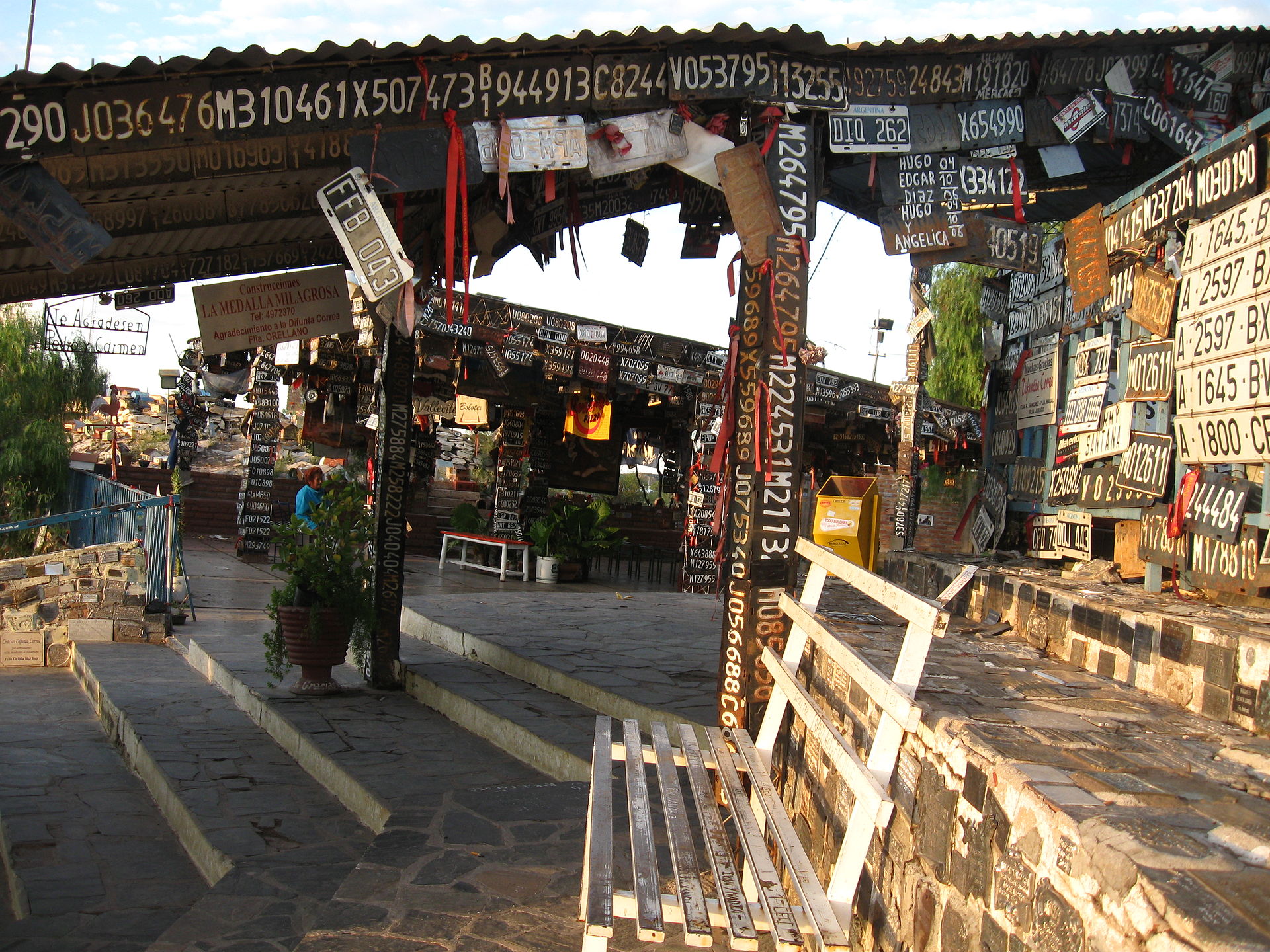
San Juan is also Argentina's second wine region — but with a key differentiator that wine geeks should note: the signature here is high-altitude Syrah, not Malbec. The Pedernal Valley sits at 4,100-4,400 ft / 1,250-1,350 m, producing Syrah with a profile distinct from Australian Shiraz, French northern Rhône, or Mendoza Malbec — peppery, structured, and increasingly recognized in Decanter and Wine Spectator. Other unique stops: the Difunta Correa folk shrine in Vallecito (more than 1 million pilgrims yearly, comparable in popular reverence to Mexico's Niño Fidencio or Brazil's Padre Cícero); the Cuesta del Viento reservoir at Rodeo (a wind regime so consistent it draws kitesurfers globally — Argentina's answer to Hood River, Oregon, but in a sublime Andean setting); the Cesco-CASLEO observatory at Pampa del Leoncito for astrotourism. 3 days: city + Ischigualasto + Pedernal wineries. 5 days: add Talampaya combo, Difunta Correa, Barreal. 7 days: throw in Reserva San Guillermo (vicuña reserve at 13,000 ft / 4,000 m) and Cuesta del Viento.
Top attractions in San Juan
Real traveler data: Civitatis, GetYourGuide, verified reviews — April 2026.
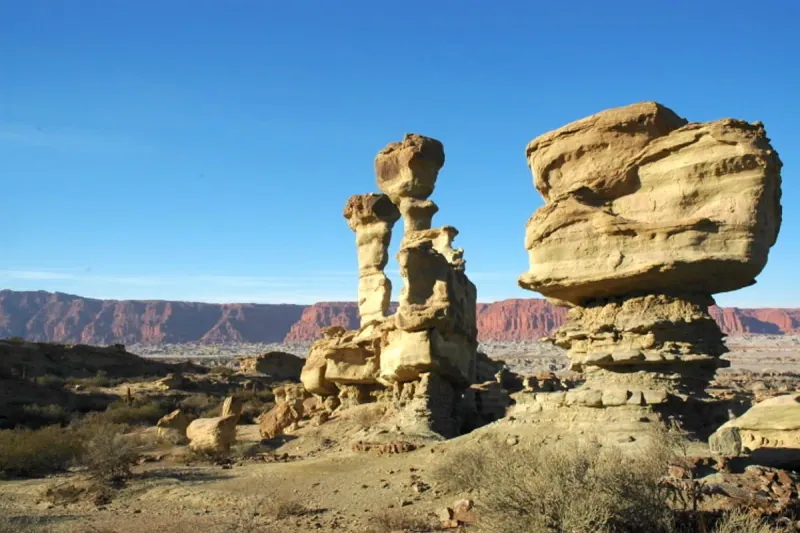
UNESCO World Heritage since 2000. 148,000 acres / 60,000 hectares of Triassic-era badlands with sandstone formations sculpted by 231 million years of erosion — the place where <strong>Eoraptor lunensis</strong>, one of the world's oldest known dinosaurs, was unearthed in 1991. Mandatory guided visit (you drive your own car in a convoy behind the ranger), 4-5 hours, 25 mi / 40 km circuit. Highlights: Cancha de Bochas (the "bowling court" — perfectly spherical concretions), El Submarino, El Hongo, Valle Pintado. 167 mi / 270 km north of the city. USD 35 entry for foreigners + USD 95 with full tour from San Juan. Comparable in geological feel to Petrified Forest National Park (Arizona) but with deeper Triassic stratigraphy.
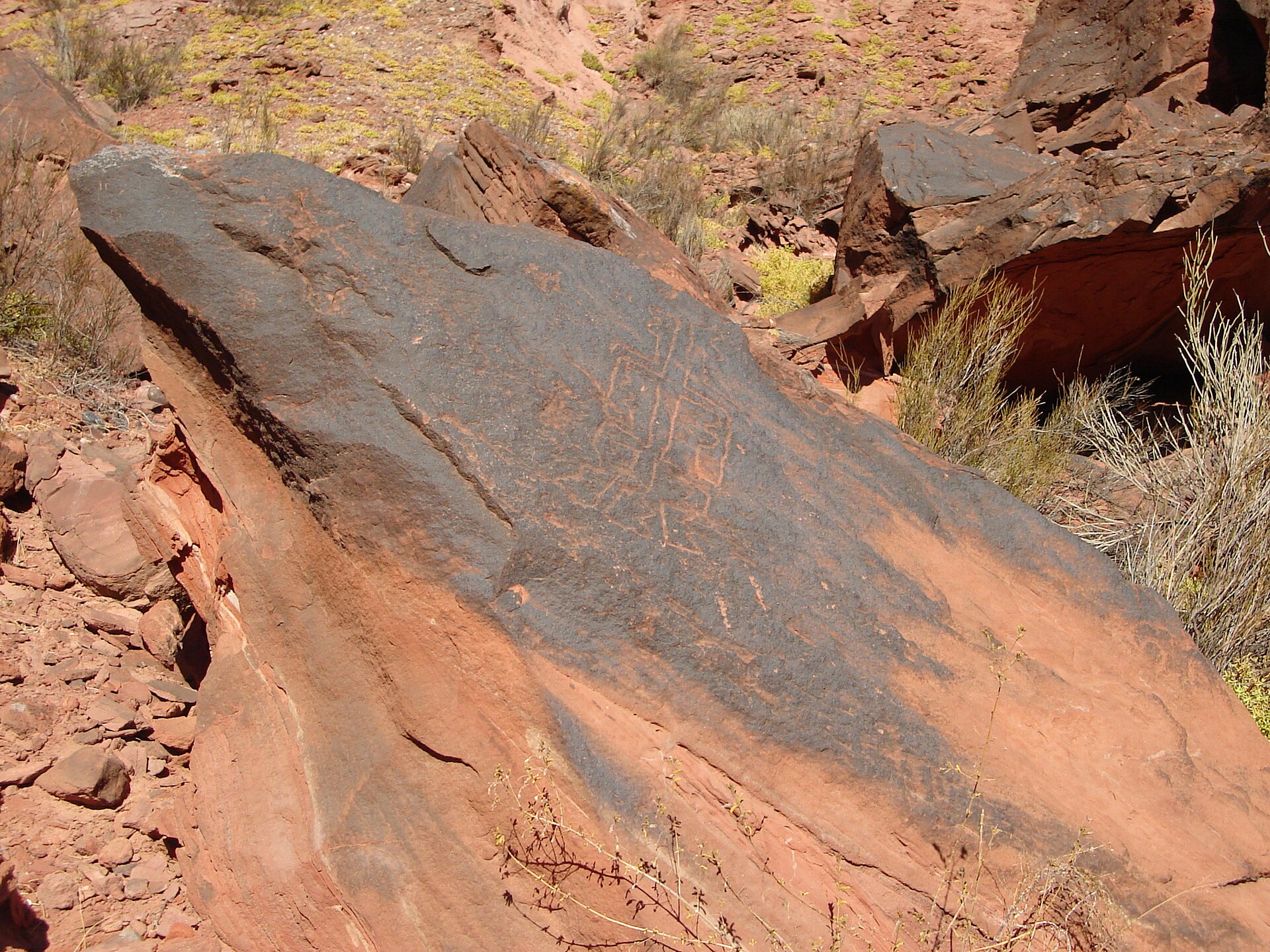
UNESCO World Heritage 2000 (jointly listed with Ischigualasto). Vertical red sandstone canyons up to 480 ft / 145 m — comparable to Utah's Capitol Reef or Bryce Canyon's Wall Street narrows. Although administratively in La Rioja province, combined Ischigualasto + Talampaya tours depart from San Juan. Mandatory guided 4x4 tour. Pre-Columbian petroglyphs at the canyon mouth, including the Tablero de Petroglifos. USD 110 with combo tour from San Juan or San Agustín de Valle Fértil.
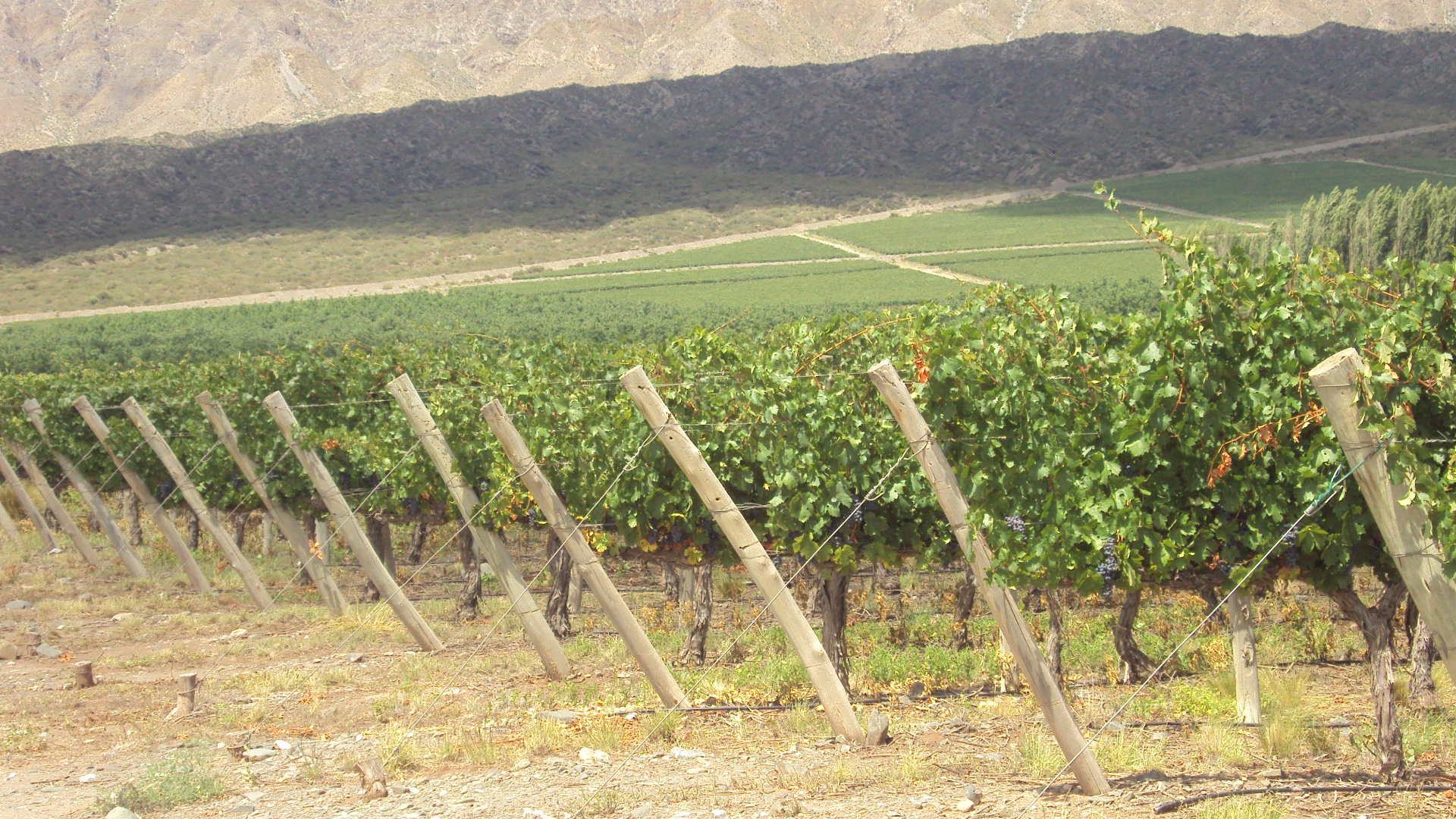
Argentina's second-highest wine terroir at 4,100-4,400 ft / 1,250-1,350 m (after Cafayate-Salta). What makes it unique: <strong>San Juan specializes in Syrah</strong>, not Malbec. The Pedernal Valley's Syrah has been recognized in <em>Decanter</em> and <em>Wine Spectator</em> with profiles distinct from Australian Shiraz or northern Rhône Hermitage — peppery, structured, with high-altitude acidity. Wineries: <strong>Pyros (Familia Mauricio)</strong>, Callia, Las Marianas, Don Salomón. Full-day tour with lunch USD 65 from the city. Wine geeks should sequence Mendoza → San Juan, not the reverse.
40 mi / 64 km east of the city. The largest folk-religion pilgrimage site in Argentina (not officially recognized by the Catholic Church). The legend: Deolinda Correa, a 19th-century woman who followed her conscripted husband across the desert and died of thirst — but her infant survived nursing at her dead body, sustained by a miracle. More than <strong>1 million pilgrims a year</strong>, especially during Holy Week and the months around it. Truckers, road travelers and migrants leave bottles of water as offerings (representing the water she didn't have). Free, 1-2 hour visit. For US visitors: comparable in tone and devotion intensity to the Santuario de Chimayó in New Mexico.
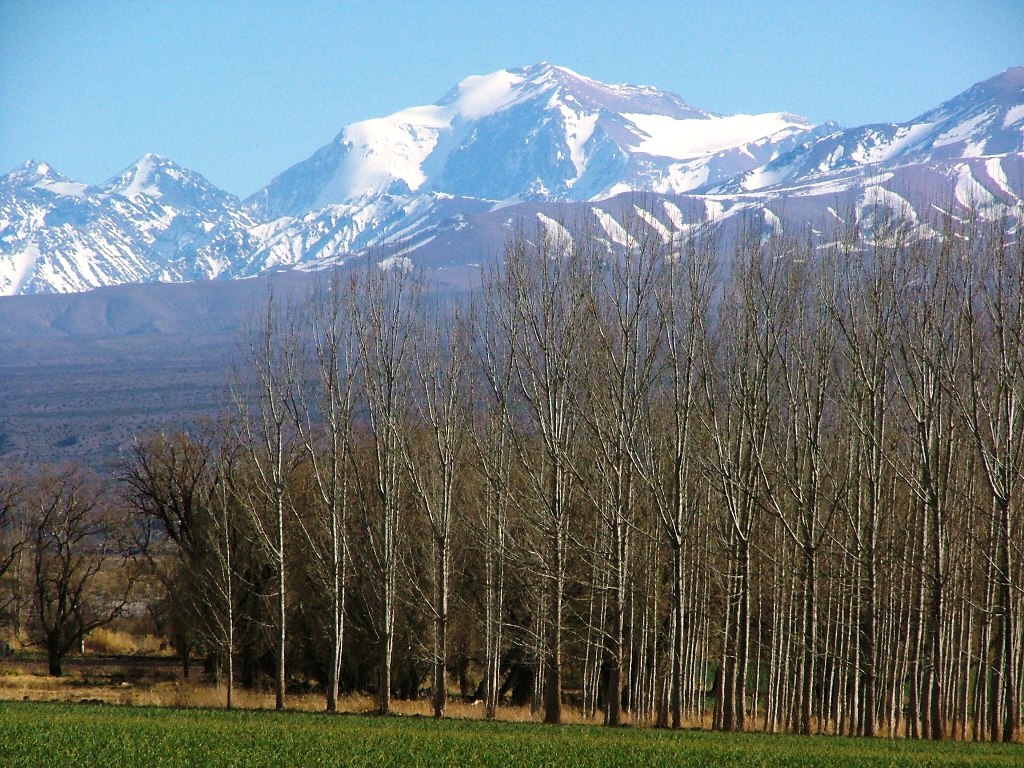
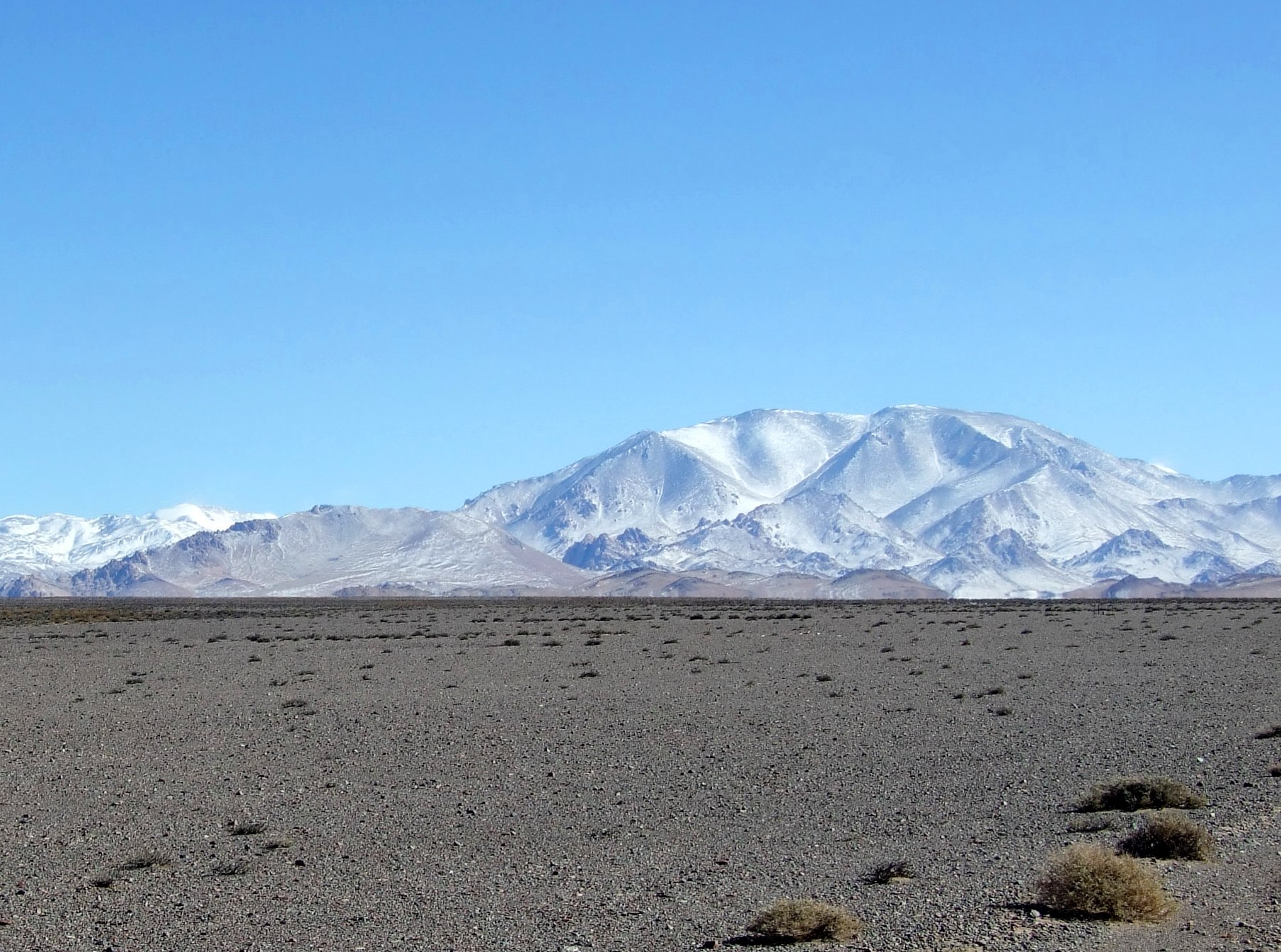
124 mi / 200 km west of the city, in Calingasta department. Andean village at 5,400 ft / 1,650 m with the <strong>Barreal Blanco</strong>: a flat 9-mile / 14-km dry lakebed used for <em>carrovelismo</em> (land-sailing) — the world record of 130 km/h was set here. Adjacent: El Leoncito National Park + the <strong>CASLEO observatory</strong> (free public night-sky visits, one of the southern hemisphere's key astronomical research stations). View of Cerro Mercedario (22,047 ft / 6,720 m, the eighth-highest peak in the Andes).
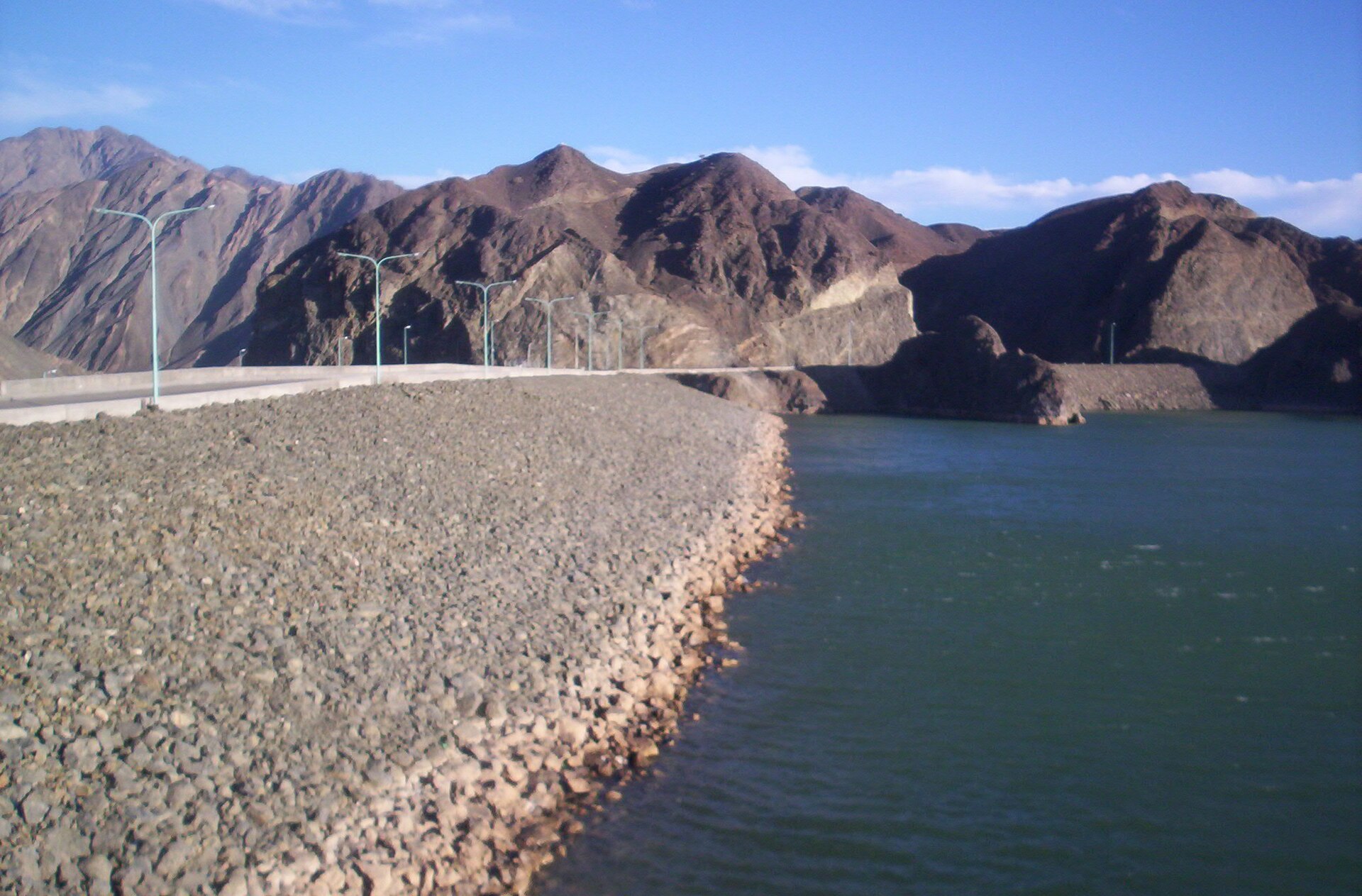
Reservoir in Iglesia department, 124 mi / 200 km northwest of the city. <strong>One of the most reliable wind regimes on Earth</strong>: 50-75 mph / 80-120 km/h thermal winds blowing 11am to sunset, daily, November through March — like a metronome. Argentina's answer to Hood River, Oregon, or the Columbia River Gorge for the kite community, but at higher altitude and in a stark Andean setting. The village of Rodeo (5 min away) hosts kite schools and outfitters. For dedicated kitesurfers; not a casual stop.
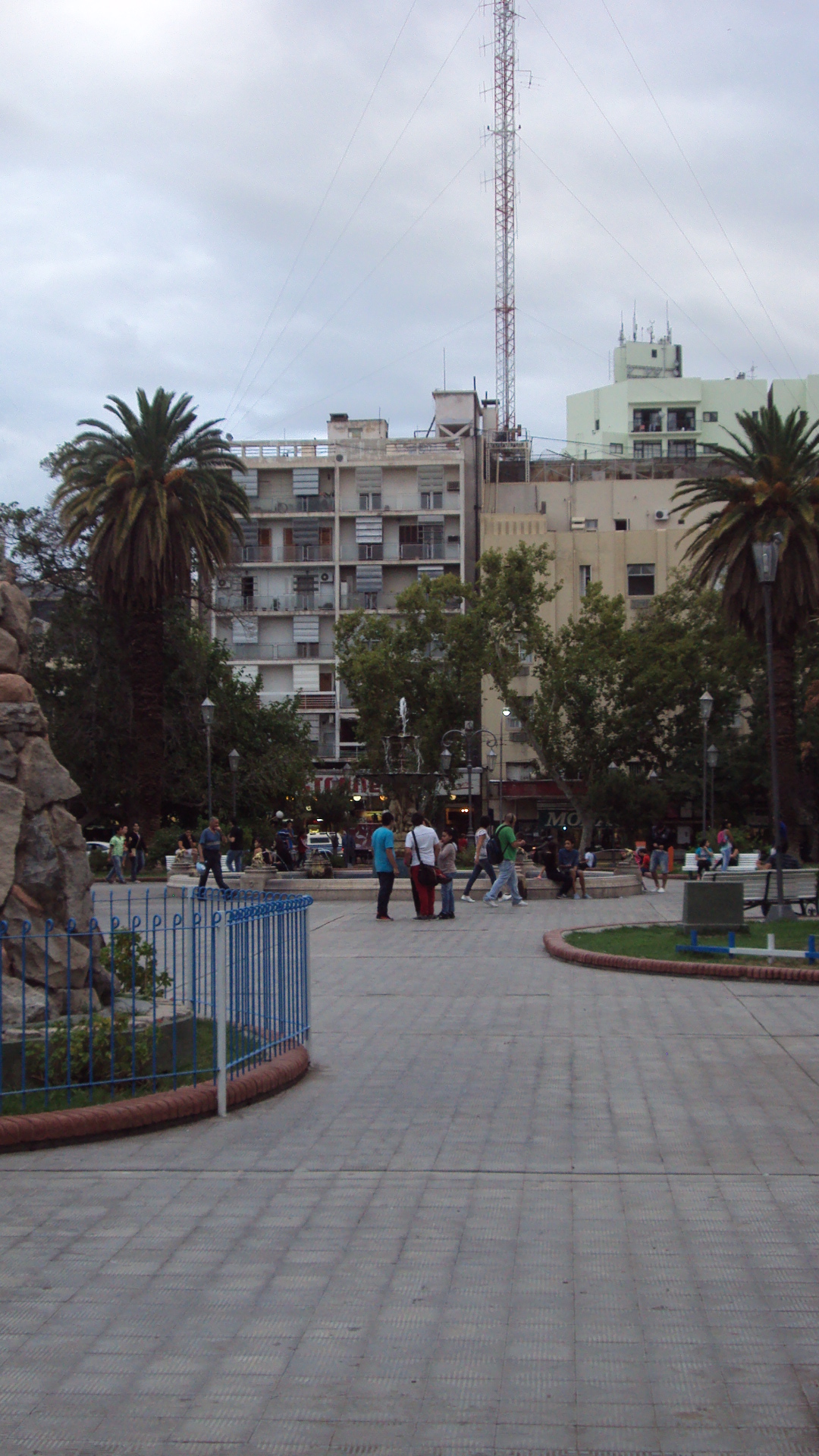
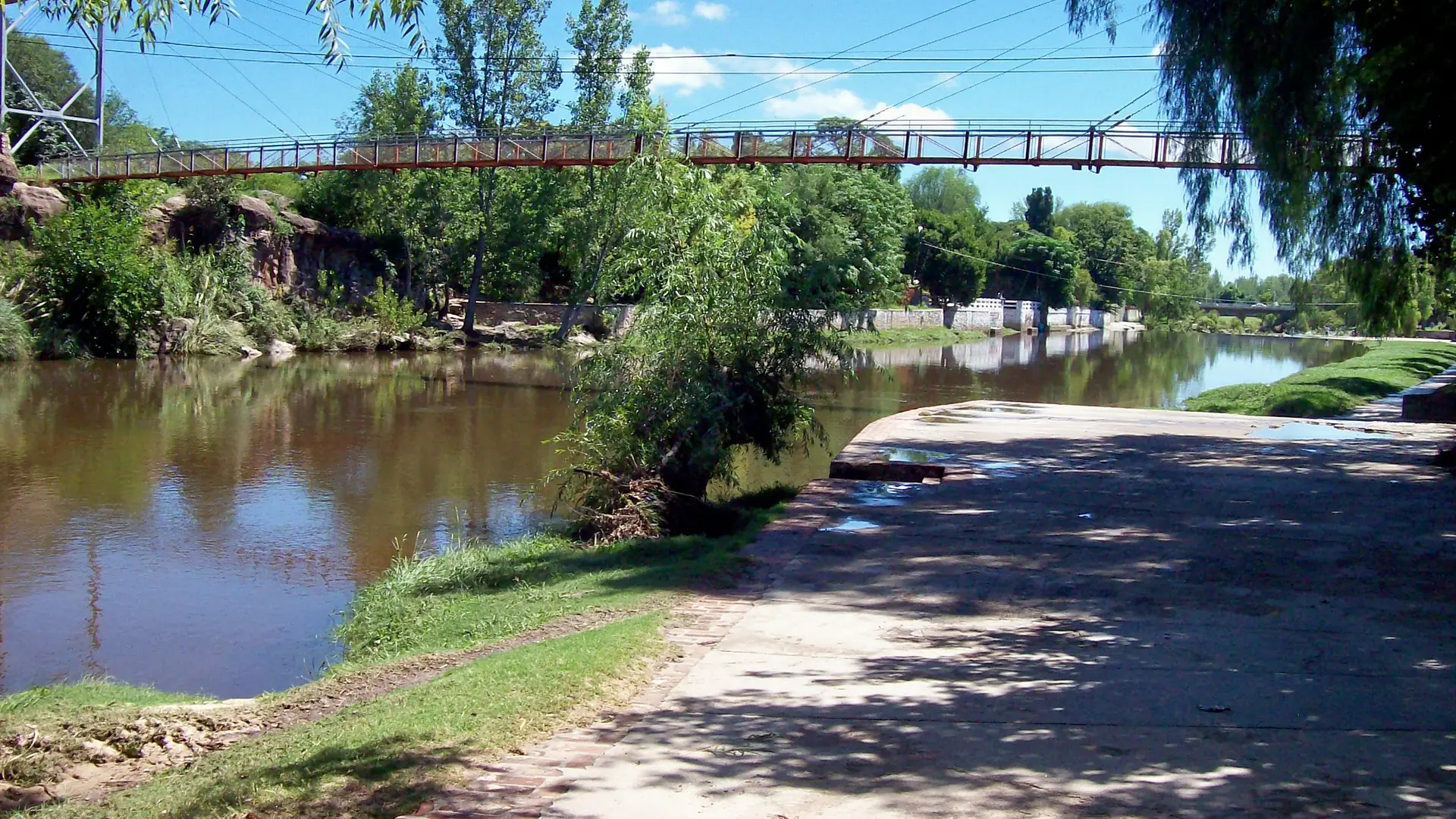
The provincial capital, rebuilt after the catastrophic <strong>1944 earthquake</strong> (M 7.4, the deadliest in Argentine history with ~10,000 fatalities). The reconstruction — wide streets, low seismically-resistant buildings, frequent plazas — is its defining feature, in contrast to Mendoza's preserved colonial grid. <strong>Casa Natal de Sarmiento</strong> is the birthplace of Domingo F. Sarmiento (Argentina's 7th president, 1868-1874, the country's most important education reformer — declared by Argentine law a National Historic Site). Walking tour 2-3 hours from the central Plaza 25 de Mayo.
UNESCO Biosphere Reserve at 13,000 ft / 4,000 m in the high San Juan puna. Holds <strong>the largest concentration of wild vicuñas and guanacos in South America</strong> — densities visitors won't see anywhere else outside specific Bolivian and Chilean sites. Andean condors regular. Access strictly limited to 30 visitors per day with licensed guide (no self-driving). Full-day 4x4 from Rodeo. USD 130 with guide. For wildlife photographers and high-altitude enthusiasts willing to acclimatize.
San Juan has the most arid continental climate in Cuyo: hot dry summer (Dec-Feb, 64-95°F / 18-35°C, almost no rain but afternoon thunderstorms in the high Andes, 100°F+ days possible at Ischigualasto), golden harvest fall (Mar-May, 50-86°F / 10-30°C, vineyards in color), cold sunny winter (Jun-Aug, 37-64°F / 3-18°C — ideal for Ischigualasto without dust haze) and flowering spring (Sep-Nov, 46-86°F / 8-30°C). The 320+ sunny days per year give San Juan astronomical conditions equal to the Atacama Desert.
Altitude rules everything: the city sits at 2,130 ft / 650 m, Pedernal Valley at 4,400 ft / 1,350 m, Barreal at 5,400 ft / 1,650 m, Mercedario base camp at 14,800 ft / 4,500 m. In summer the city tops 100°F / 38°C — escape into the Andes is mandatory. Winter brings snow to the high mountains and mild dry days in the city (60°F / 16°C). The Pedernal Valley enjoys 30°F / 17°C diurnal temperature swings — the secret of its high-altitude Syrah.
San Juan: Ischigualasto, Talampaya, Pedernal vineyards, Barreal
Suggested itineraries
Real routes built by locals — pick the one that fits your days.
3days
San Juan essentials
City + Ischigualasto + Pedernal wineries. The express version, ideal as a Cuyo combo with Mendoza.
Highlights
Plaza 25 de Mayo
Casa Natal Sarmiento
Ischigualasto full day
Pedernal Syrah
Day by dayHide day by day
Day 1
Arrival + city
Flight BUE-UAQ. Historic center, Casa Natal de Sarmiento, the cathedral. Dinner at a local parrilla — try cabrito (kid goat) with regional Syrah.
Day 2
Ischigualasto full day
Departure 7am. 167 mi / 270 km north on Route 150. Mandatory guided tour 4-5 hours in your own vehicle behind the ranger. Lunch in San Agustín de Valle Fértil. Return 9pm.
Day 3
Pedernal wineries + flight out
Morning at a high-altitude winery (Pyros or Callia) with multi-vintage Syrah tasting and lunch. Afternoon free. Evening flight out.
4days
San Juan + Talampaya
Adds Talampaya (red canyons) in a combined day from San Agustín de Valle Fértil. Best length for the geological-paleontological core experience.
Highlights
Ischigualasto
Talampaya canyons
San Agustín overnight
Pedernal wineries
Day by dayHide day by day
Day 1
City + Difunta Correa
Historic center + Sarmiento's birthplace. Afternoon: Difunta Correa shrine (40 mi east). Drive to San Agustín de Valle Fértil for overnight (149 mi from city, 3.5h).
Day 2
Ischigualasto
Full day in the Triassic park, 4-5 hour guided convoy circuit. Eoraptor exhibit at the visitor center.
Day 3
Talampaya
Drive across to Talampaya National Park (60 mi). 4x4 guided tour through the red canyons, petroglyph stop, lunch. Return to San Agustín or push back to San Juan.
Day 4
Pedernal wineries + flight out
Drive back. Wine afternoon in Pedernal. Evening flight.
6days
San Juan complete with Barreal and Cuesta del Viento
The complete circuit: Triassic parks + wine + Andean village + kitesurf reservoir. For travelers wanting the full Cuyo high desert.
Highlights
Ischigualasto + Talampaya
Pedernal Syrah
Barreal + CASLEO observatory
Cuesta del Viento
Difunta Correa
Day by dayHide day by day
Day 1
City + Difunta Correa
Historic center + folk shrine.
Day 2
Ischigualasto
Full day Valle de la Luna.
Day 3
Talampaya
Day in the red canyons.
Day 4
Pedernal wineries
Wine day at altitude (Pyros, Callia).
Day 5
Barreal + CASLEO
Drive 124 mi west. Pampa del Leoncito + observatory night session.
Day 6
Cuesta del Viento + flight
Drive to Rodeo. Watch kitesurfers on the reservoir (Nov-Mar peak). Return UAQ for evening flight.
All San Juan destinations
San Juan splits into the Triassic-park core, the Calingasta-Iglesia high-Andean corridor, and the city. Each destination has its own complete guide:
San Juan cooking centers on three pillars: cabrito al asador, carbonada, and high-altitude wine. Cabrito al asador (kid goat slow-roasted over wood embers on an iron cross) is the pre-Andean village specialty — Calingasta, Iglesia, and Jáchal hold the best pits. Carbonada is a colonial heritage stew — beef with corn, squash and potatoes, often served inside a hollowed-out winter squash. The empanadas sanjuaninas have a distinctive twist: minced beef + onion + raisins (no other Argentine empanada uses raisins as routinely), oven-baked, thinner pastry than the Salta or Mendoza versions.
The wines are the differentiator: high-altitude Syrah from Pedernal has a profile distinct from Australian Shiraz or French northern Rhône — peppery, structured, with the high-altitude acidity that defines Andean wines. Producers: Pyros (Familia Mauricio), Callia, Don Salomón, Las Marianas. Also Malbec with a more austere profile than Mendoza's, and Bonarda. For dessert: arrope de uva (concentrated grape syrup, an Arab-Spanish heritage) over goat cheese. To drink: Bianchi sparkling (San Juan also makes excellent traditional-method bubbly), or rustic vino patero in Jáchal. The "high-altitude" label is more than marketing — vineyards over 4,000 ft show measurable differences in tannin structure and aromatic concentration.
Signature dishes
Cabrito al asador
Kid goat slow-roasted 4-5 hours on an iron cross over wood embers. Pre-Andean village specialty (Calingasta, Iglesia, Jáchal). Pair with a Pedernal Syrah.
Empanadas sanjuaninas
Distinctive: minced beef + onion + raisins. Thinner pastry than Salta, baked. The raisin element makes them recognizable across Argentina.
Carbonada en zapallo
Beef stew with corn, squash, potatoes. Often served inside a hollowed winter squash. Family Sunday dish, colonial heritage.
High-altitude Syrah
San Juan's signature: peppery, structured Syrah from 4,000+ ft / 1,250+ m elevation. Profile distinct from Australian Shiraz or Hermitage. Pyros and Callia are the benchmark producers.
Sopaipillas
Fried bread of criolla dough with dulce de leche or honey. Traditional accompaniment to mate.
Arrope de uva
Concentrated grape syrup made by reduction. Arab-Spanish heritage. Served over goat cheese as a dessert.
Food experiences
Pedernal Valley wine tour — high-altitude Syrah
Visit 2-3 wineries (Pyros, Callia, Don Salomón). Tasting flight of Syrah + Malbec + Bonarda paired with a regional cheese-and-charcuterie board. Optional vineyard lunch. 6 hours including transfers.
Slow-roasted kid goat at a working family estancia in Barreal or Iglesia. 4-5 hour cook + Andean salads + cayote-jam dessert. High-altitude Syrah included. 4-hour experience.
3 stops in the city: empanada house (try the raisin-included sanjuanina version), traditional parrilla, dessert spot for arrope and sopaipillas. 3 hours with local guide.
Learn to make San Juan-style empanadas (with the raisin twist) and carbonada en zapallo. Dinner with your own work paired with Pedernal Syrah. 4 hours, recipes to take home.
The Triassic, the 1944 earthquake, and high-altitude wine
San Juan is the most Andean province in Cuyo: 70% of its surface lies above 6,500 ft / 2,000 m elevation. Before Spanish contact, the Huarpe people (the same ethnic group across Mendoza) farmed the high valleys with irrigation systems already 2,000 years old. The Spanish founding of San Juan dates to 1562 — five years after Mendoza. The city was part of the Viceroyalty of Peru and, from 1776, of the Río de la Plata.
The January 15, 1944 earthquake defines modern San Juan. Magnitude 7.4, it destroyed 80% of the city and killed approximately 10,000 people — about 3% of the entire provincial population. It was during this disaster that Juan Domingo Perón, then Secretary of Labor in the military government, organized the national relief effort and met Eva Duarte, then a young radio actress leading the fundraising drive. That meeting, born from earthquake aftermath, would shape Argentine politics for half a century. The reconstructed city has wide seismically-resistant streets, low buildings, and frequent plazas — quite unlike Mendoza's preserved colonial grid (which itself was rebuilt after the 1861 earthquake, but in a different era of building science).
The Ischigualasto Provincial Park (UNESCO 2000) is the most important Triassic-era paleontological site in the world. The 1991 discovery here of Eoraptor lunensis — by a team led by University of Chicago paleontologist Paul Sereno — pushed the dinosaur fossil record back significantly and reshaped scientific understanding of dinosaur origins. Adjacent Herrerasaurus, the precursors to mammals, and an extraordinarily complete sequence of Triassic continental ecosystems make Ischigualasto a reference site for global paleontology. The wind-sculpted clay-and-sandstone formations created the "lunar" landscape that gave the park its popular name.
San Juan wine has run a parallel history to Mendoza's but with less international recognition. Until 1970, San Juan actually produced more wine than Mendoza — mostly cheap bulk wine for the domestic table. The Argentine wine crisis of the 1980s forced modernization: today the Pedernal Valley wineries — Pyros, Callia, Las Marianas, Don Salomón — produce single-variety high-altitude Syrah, Malbec, and Bonarda recognized in Decanter and Wine Spectator. The high-altitude (4,100-4,400 ft / 1,250-1,350 m) gives wines diurnal temperature swings that intensify color and aromatic concentration without losing freshness. The Difunta Correa, the folk shrine in Vallecito, represents the parallel popular spirituality: Deolinda Correa's legend has generated more than a million pilgrims annually, particularly among truckers seeking protection on the road. Argentina's comparable to the way Mexican drivers invoke Jesús Malverde, or how American long-haul truckers stop at the Wall Drug compound in South Dakota — these are the secular shrines of road travel.
Where to stay in San Juan
Three options: San Juan City center (3-4★ hotels USD 50-150, walking distance to Sarmiento\'s birthplace and the cathedral), San Agustín de Valle Fértil (37 mi from Ischigualasto entrance, USD 50-100, ideal overnight if combining Ischigualasto + Talampaya), Barreal in Calingasta (boutique USD 70-200, the high-Andean immersion option). Luxury: Finca Las Marianas wine lodge in Pedernal (USD 250+).
Mendoza → UAQ: no direct flight available; 2h 30 by bus (USD 15) or car.
Córdoba → UAQ: connections through BA. 9h direct bus alternative.
From the US: no direct flights. Miami → BA (9h on AA) or Atlanta → BA, then 1h 50m domestic. Total 14-17h.
From the UK/EU: London/Madrid → BA via Madrid or São Paulo (15-18h), then domestic.
By long-distance bus
Buenos Aires (Retiro) → San Juan: 14-16 hours, USD 50-90. Andesmar, Cata, El Cóndor.
Mendoza → San Juan: 2-3 hours, USD 15-25. Hourly frequencies.
Córdoba → San Juan: 9 hours, USD 35.
La Rioja → San Juan: 5 hours, USD 25.
By car
From Buenos Aires via Routes 7 + 20: 708 mi / 1,140 km, 13h. From Mendoza via Route 40: 106 mi / 170 km, 2h 30. Renting at UAQ: USD 35-55/day. For Ischigualasto, Talampaya and Barreal: rental car strongly recommended. 4x4 NOT required for the classic circuits (all paved).
Getting around
The city center is walkable. For Ischigualasto/Talampaya, the choice is between (1) organized day-tour USD 95-110 (12-13h, leaves 6am), (2) self-driven rental car (you still need the in-park guide — pay separately), or (3) overnight in San Agustín de Valle Fértil (37 mi / 60 km from Ischigualasto) to break up the drive. Tip: refuel before any long stretch — gas stations are 60-100 mi apart in the desert.
Getting there — distances & times
From
Distance
Flight
Bus
Drive
New York (JFK)
8400 km
11 h via Buenos Aires
—
—
Miami (MIA)
7000 km
9 h + 2 h domestic
—
—
Madrid (MAD)
9900 km
13 h + AR domestic
—
—
Buenos Aires (EZE)
1110 km
1 h 40
14–16 h
—
Mendoza
170 km
—
2 h 30
2 h
Córdoba
580 km
—
8 h
6 h 30
Frequently asked questions
The questions travelers ask us before they go.
Is San Juan worth visiting?
Yes, with context. Strengths: Ischigualasto-Talampaya UNESCO sites (the world's key Triassic paleontological site, where Eoraptor was discovered in 1991), Argentina's clearest skies (320+ sunny days, equal to the Atacama), high-altitude Syrah wines distinctively different from Mendoza's Malbec, Cuesta del Viento for dedicated kitesurfers. Limits: less famous than Mendoza for casual wine tourists, infrastructure thinner than Buenos Aires or Iguazu, fewer English-speaking guides. Best fit: 3-5 day add-on to Mendoza (2.5 hour drive), or for travelers on their second or third Argentine trip looking for the American-Southwest equivalent.
Valle de la Luna vs Atacama Chile?
Different experiences with overlapping aesthetic. Valle de la Luna / Ischigualasto is a single ~60,000-hectare park focused on Triassic geology + paleontology — Eoraptor was found here. Half-day visit. Atacama (Chile) is an entire region with multiple sites (Valle de la Luna near San Pedro, El Tatio geysers, salt flats, lagoons, observatories) — minimum 3-4 days. Atacama has more variety; Ischigualasto has deeper paleontological yield and is half the cost. If you can do both, do both: they're geological siblings on opposite sides of the Andes.
Eoraptor dinosaur — what's the significance?
Eoraptor lunensis is one of the oldest known dinosaurs — 231 million years old, from the Late Triassic. Discovered in Ischigualasto in 1991 by a team led by University of Chicago's Paul Sereno, it pushed the dinosaur fossil record back significantly and helped reshape scientific understanding of how dinosaurs evolved from earlier archosaurs. Small (3 ft / 1 m long), bipedal, omnivorous. The visitor center at Ischigualasto has a full skeleton display and an excellent interpretive layout. For paleontology enthusiasts, this is one of the most consequential dinosaur sites in the world — comparable in scientific weight to Wyoming's Cleveland-Lloyd Quarry or Arizona's Petrified Forest, with a deeper Triassic record.
San Juan Syrah wine — how is it different?
San Juan specializes in Syrah, not Malbec — the diametric opposite of Mendoza. Pedernal Valley Syrah at 4,100-4,400 ft / 1,250-1,350 m elevation has a profile distinct from Australian Shiraz (warmer, jammier) or French northern Rhône Hermitage / Côte-Rôtie (cooler, more savory). The high-altitude version is peppery and structured with high natural acidity — comparable in character to Chilean high-altitude Syrah from Elqui or Limarí. Producers: Pyros (Familia Mauricio) is the benchmark and consistently scored 90+ in Decanter; Callia is the volume player; Don Salomón makes single-vineyard expressions. Wine geeks: do Mendoza first, then San Juan — order matters.
How many days do I need for San Juan?
3 days: city + Ischigualasto + Pedernal wineries. 4 days: add Talampaya (combined day from San Agustín de Valle Fértil). 6 days: cover Barreal + Cuesta del Viento + Difunta Correa. 7+ days: add Reserva San Guillermo for vicuña watching at 13,000 ft. San Juan complements Mendoza well (2.5 hour drive) — the classic Cuyo combo.
How much does a San Juan trip cost?
For 5 days: USD 600-1,100 excluding international flights. Round-trip BA-UAQ USD 180, hotel 3-4★ USD 50/night × 5 = USD 250, food USD 25/day = USD 125, car rental USD 175, tours USD 200. Luxury at Finca Las Marianas wine lodge or boutique in Barreal: USD 200+/night, total USD 2,500-3,500. San Juan runs 30-40% below Mendoza in hotel costs.
When is the best time to visit?
March-May (fall + harvest + ideal weather, 50-86°F) or September-November (spring, no domestic crowds). For Cuesta del Viento kitesurfing: November-March (peak wind season). For CASLEO astrotourism: winter (May-Sep, clearest most stable skies). Avoid January (100°F+ at Ischigualasto, peak Argentine domestic crowds, summer pricing). The 320+ sunny days mean weather rarely cancels plans.
How do I visit Ischigualasto?
Three options. (1) Organized day tour: USD 95-110 from San Juan, 12-13h round trip leaving 6am. Includes transport + entry + guide. (2) Self-driven: 167 mi / 270 km on Route 150, 3.5h each way. You drive to the park entrance, then follow the ranger in your own car for the 25-mile / 40-km circuit (mandatory guided convoy — you can't go alone). (3) Overnight in San Agustín de Valle Fértil: 37 mi / 60 km from the park entrance, hotels USD 50-100/night, ideal if combining with Talampaya the next day. The visitor center has the Eoraptor exhibit and excellent interpretation in English.
Is San Juan safe for travelers?
Yes — generally safer than Buenos Aires or Rosario. The capital has low violent crime; the Andean towns (Barreal, Iglesia, Calingasta) are extremely safe. Driving precautions: refuel whenever possible (stations 60-100 mi apart in the desert near Ischigualasto), carry water, avoid driving at night around the Difunta Correa shrine area (heavy trucker traffic). For San Guillermo at 13,000 ft: hydrate well, avoid alcohol on day one, watch for altitude symptoms. No special crime concerns.
Do I need a 4x4?
No, not for the classic circuits. Ischigualasto, Talampaya, Pedernal Valley, Difunta Correa, Barreal — all paved. 4x4 recommended only for: Reserva San Guillermo (13,000 ft, gravel), or back-road shortcuts between San Agustín and Talampaya. Any standard rental car handles 90%+ of the tourist circuit. If you're not specifically going to San Guillermo, save the 4x4 upgrade.
Sources & methodology
Last updated:
How we built this guide
This guide updates quarterly (last: April 2026). Prices verified against Civitatis, GetYourGuide, Booking.com converted to USD at the MEP rate. Distances measured on Google Maps. Attraction selection based on real visitor data. Local knowledge: Sebastián, the site author, has visited San Juan 4 times (Ischigualasto + Talampaya + Pedernal + Barreal).