Argentina's Mesopotamia — Carnaval del País, accidental hot springs, the world's largest yatay palm preserve, and Volga-German heritage between two great rivers
Last updated: April 2026
Entre Ríos is Argentina's "Mesopotamia" — a low-lying province wedged between the Paraná River (west) and the Uruguay River (east), the only Argentine province bounded entirely by water. Three big draws: the Carnaval del País in Gualeguaychú (the country's biggest carnival, held every Saturday in January and February at a dedicated 35,000-seat sambadrome — comparable in scale and tradition to Mardi Gras in New Orleans and the Trinidad Carnival, less famous than Rio but ranked top-3 in South America by cultural-studies consensus), the Termas de Federación hot springs (an accidental 1994 discovery during oil exploration — a geological serendipity that parallels Hot Springs National Park, Arkansas, which built a federal reservation around mineral waters that came up unbidden), and El Palmar National Park (8,500 hectares / 21,000 acres protecting the world's last large stand of Butia yatay palms — the kind of single-species iconic landscape Americans recognize from Joshua Tree NP or Saguaro NP: a botanical signature you only get in one geography on Earth).
The cultural layer is dense and underrated. Entre Ríos drinks more mate per capita than any other Argentine province — this is the mate heartland, and the ritual carries cultural weight comparable to the Brazilian coffee-belt (Minas Gerais / São Paulo) for everyday social life. The twin-river geography defines everything: the Paraná is a Mississippi-class river system at the Plata basin scale, while the Uruguay forms the international border with the country of the same name — the closest US analog for the dual-river identity is the Hudson-Delaware corridor (East Coast twin rivers separating distinct cultural zones). The province also holds Argentina's most diverse 19th-century immigration heritage: Volga-German villages (Aldea Brasilera, Aldea San Antonio — direct parallel to the Volga-German Mennonite communities of Kansas and Nebraska, same migration push from Tsarist Russia, same retention of German liturgy and recipes for three generations), Swiss colonies, Piedmontese Italians, and Jewish farming colonies sponsored by Baron Hirsch. Justo José de Urquiza, born in Entre Ríos, became Argentina's first constitutional president (1854-1860) after defeating the Rosas dictatorship — an institutional-consolidation arc structurally similar to Andrew Johnson's role in stabilizing the Union after Lincoln (the historical fit is the post-civil-conflict president who codified the constitutional order). 3 days: Federación + El Palmar + Colón. 5 days: add Gualeguaychú (Carnival if Jan-Feb) + Concordia + Paraná capital. 7 days: include Concepción del Uruguay (Palacio San José), the Volga-German village route, and Diamante.
Top attractions in Entre Ríos
Real traveler data: Civitatis, GetYourGuide, verified reviews — May 2026.
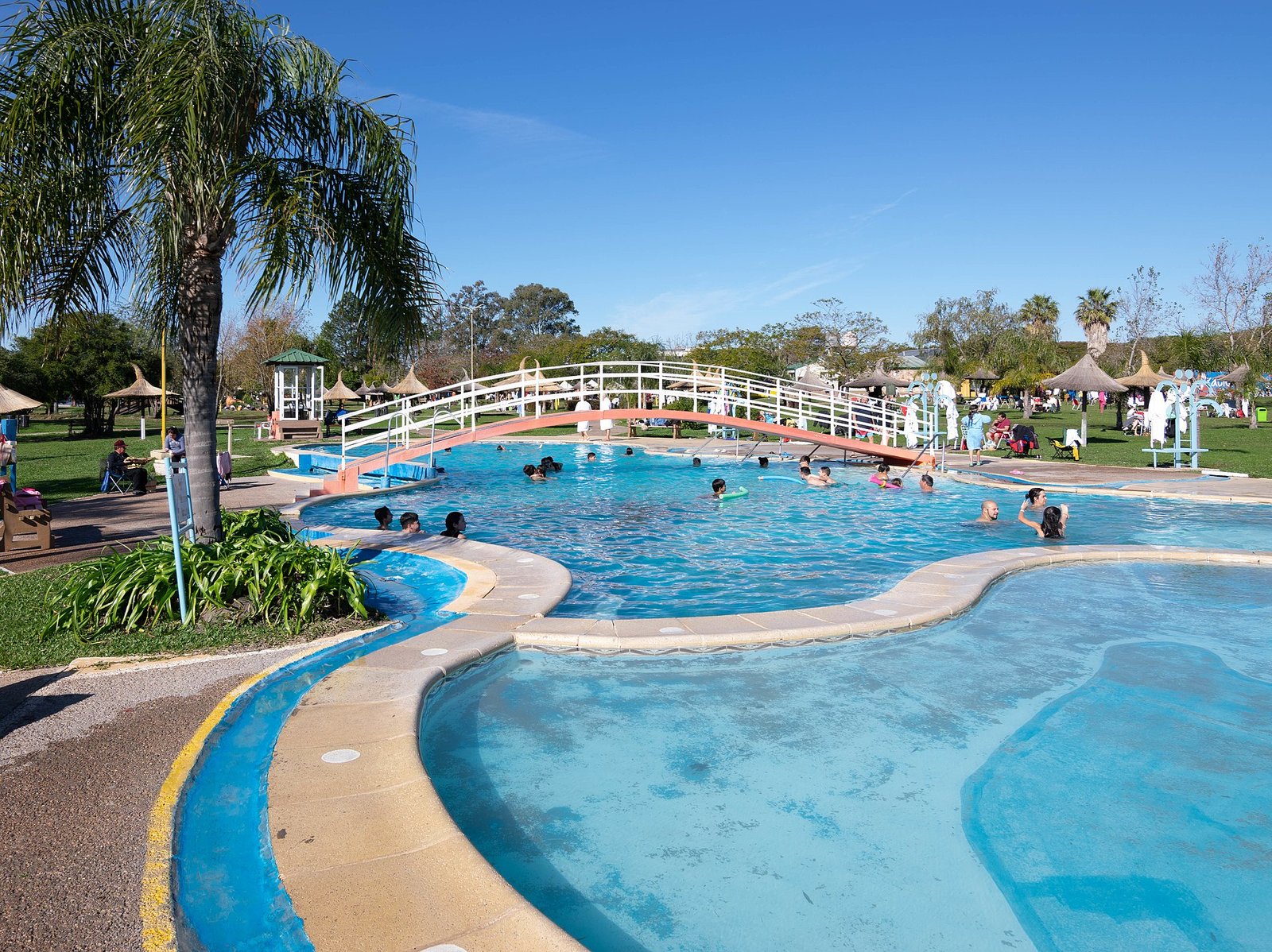
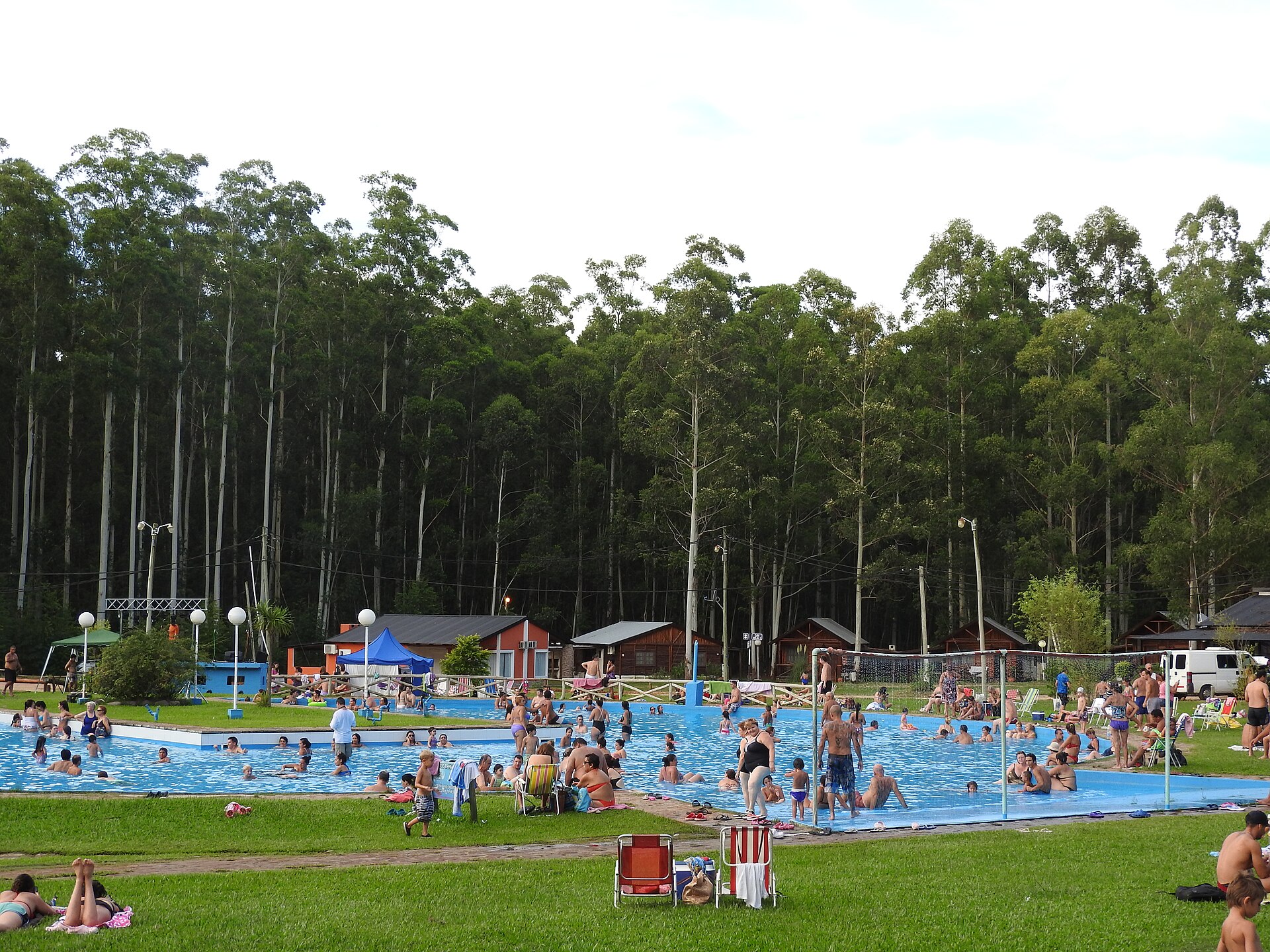
The flagship hot-springs complex of Argentina. <strong>Discovered accidentally in 1994</strong> when an oil-exploration drill hit thermal water at 41°C / 106°F — a serendipity story closely paralleling <em>Hot Springs National Park, Arkansas</em>, where the federal government built a reservation around mineral waters that came up without anyone planning it. 8 stepped pools at different temperatures, water-park slides, spa, on-site thermal lodging. Day pass USD 25-40, family pass USD 70. The town of Federación itself was rebuilt for thermal tourism after the original site flooded under the Salto Grande dam.
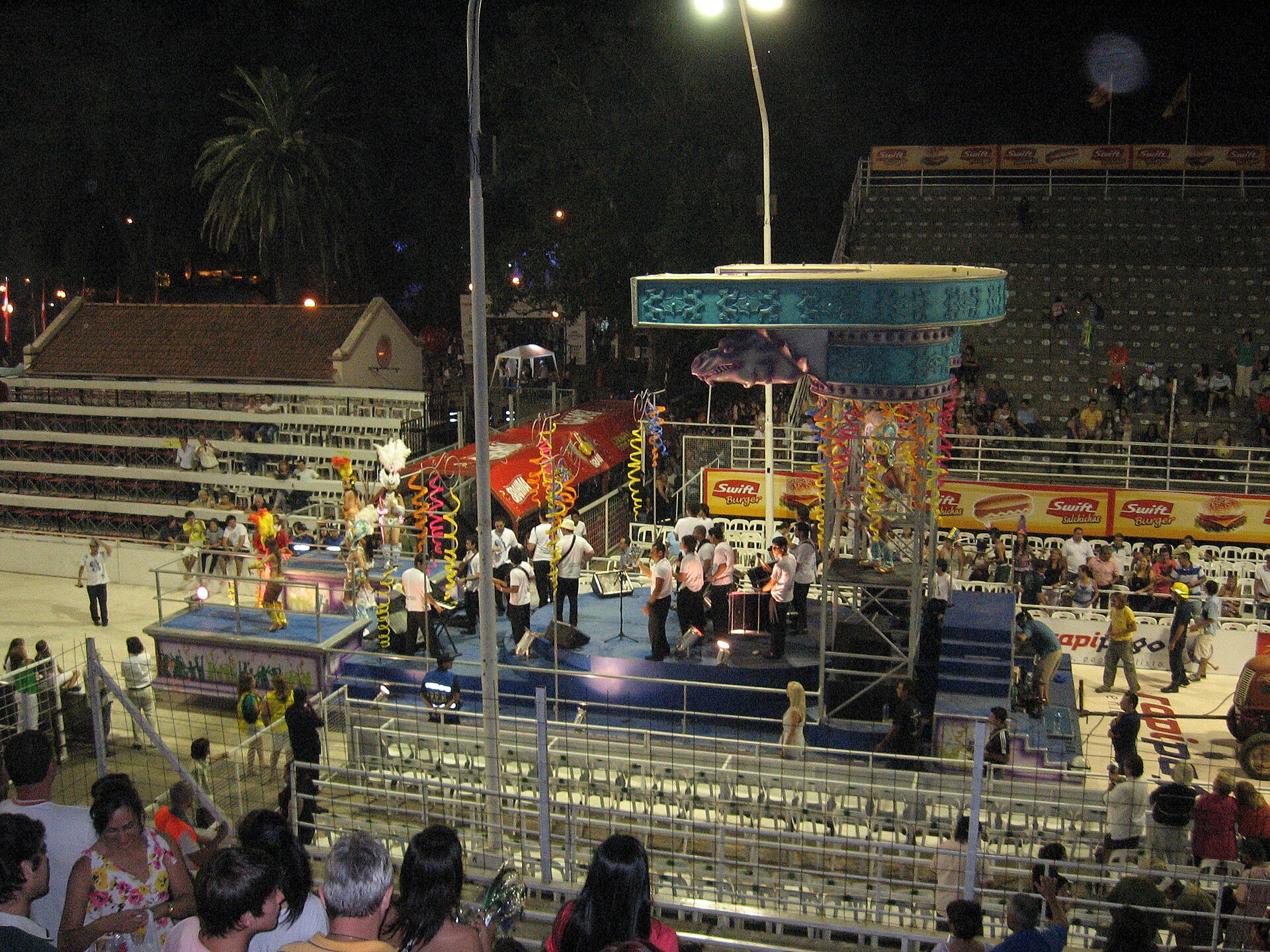
Argentina's biggest carnival and a serious cultural-studies entry on the South American carnival map. Held at the <strong>Corsódromo</strong>, a dedicated 35,000-seat sambadrome modeled on Rio's Sambódromo. Comparsas Marí Marí, Papelitos, Ará Yeví, and O'Bahía compete every Saturday from January through February (10-11 nights). <strong>For US visitors</strong>: the closest experiential parallel is <em>Mardi Gras in New Orleans</em> (same elaborate floats + costumed dance troupes + city-takeover energy) crossed with the <em>Trinidad Carnival</em> (same Caribbean-tropical pacing). Less famous globally than Rio but consistently ranked top-3 in South America. General admission USD 20-40, premium boxes USD 80-150.
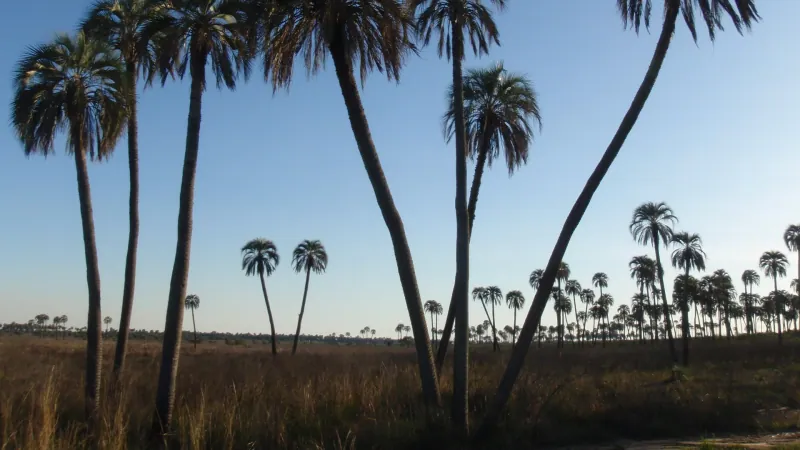
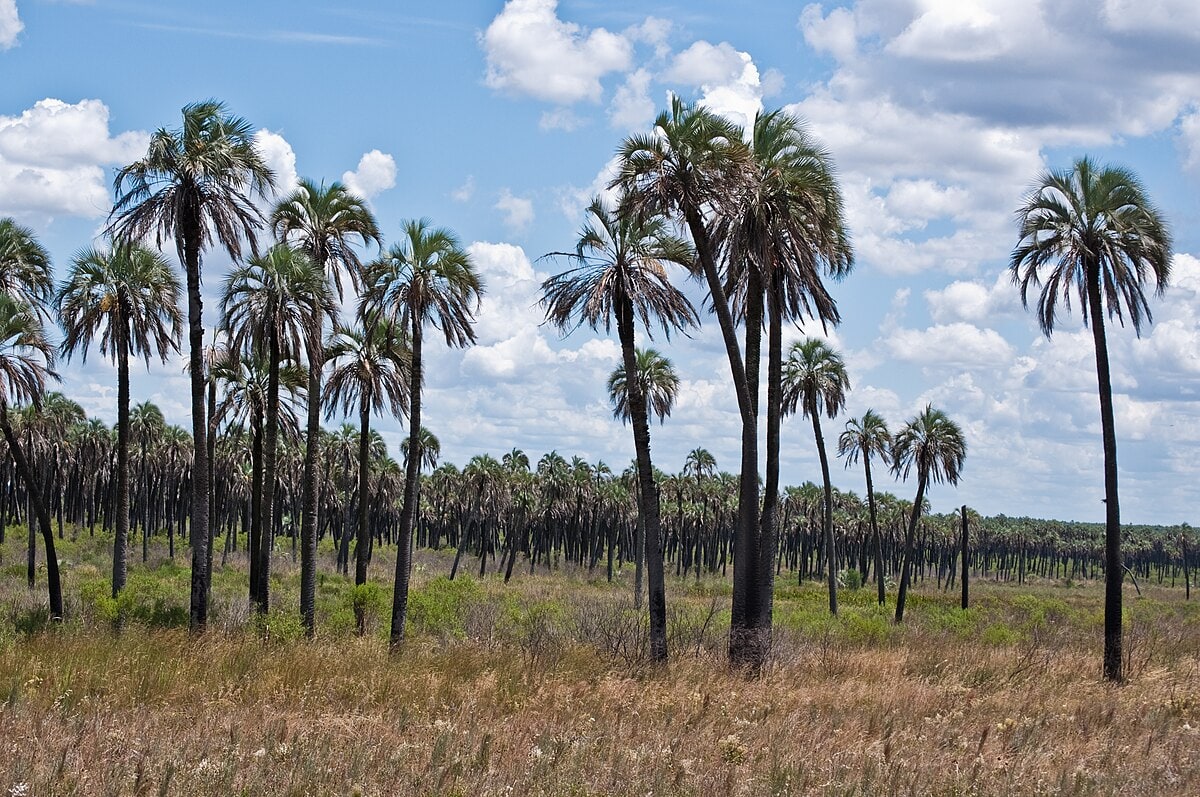
31 mi / 50 km north of Colón on Route 14. <strong>The world's largest preserved stand of Butia yatay palms</strong> (8,500 ha / 21,000 acres, an endangered species elsewhere). The landscape is unique: open grassland with thousands of tall palms scattered like an African savanna. <strong>For US visitors</strong>: the single-species iconic-landscape framing parallels <em>Joshua Tree National Park</em> (Joshua trees, Mojave) or <em>Saguaro National Park</em> (saguaro cactus, Sonoran) — a botanical signature you only encounter in one geography on Earth. Self-guided trails, Río Uruguay overlooks, 300+ bird species, free-roaming capybaras and rheas. Foreign-visitor entry USD 15. No overnight inside the park (designated camping only).
Largest thermal complex in Entre Ríos by area (32 hectares / 79 acres of park grounds), water at 36-43°C / 97-109°F. Spa, water park, fitness trails, on-site dining. 3 mi / 5 km from downtown Concordia (180,000 inhabitants). Combinable with <strong>Salto Grande</strong> — the Argentine-Uruguayan binational hydroelectric dam (free public visit, drive across to Salto, Uruguay). The Concordia-Federación corridor is the most thermally-dense stretch of Argentina. Day pass USD 25-35.
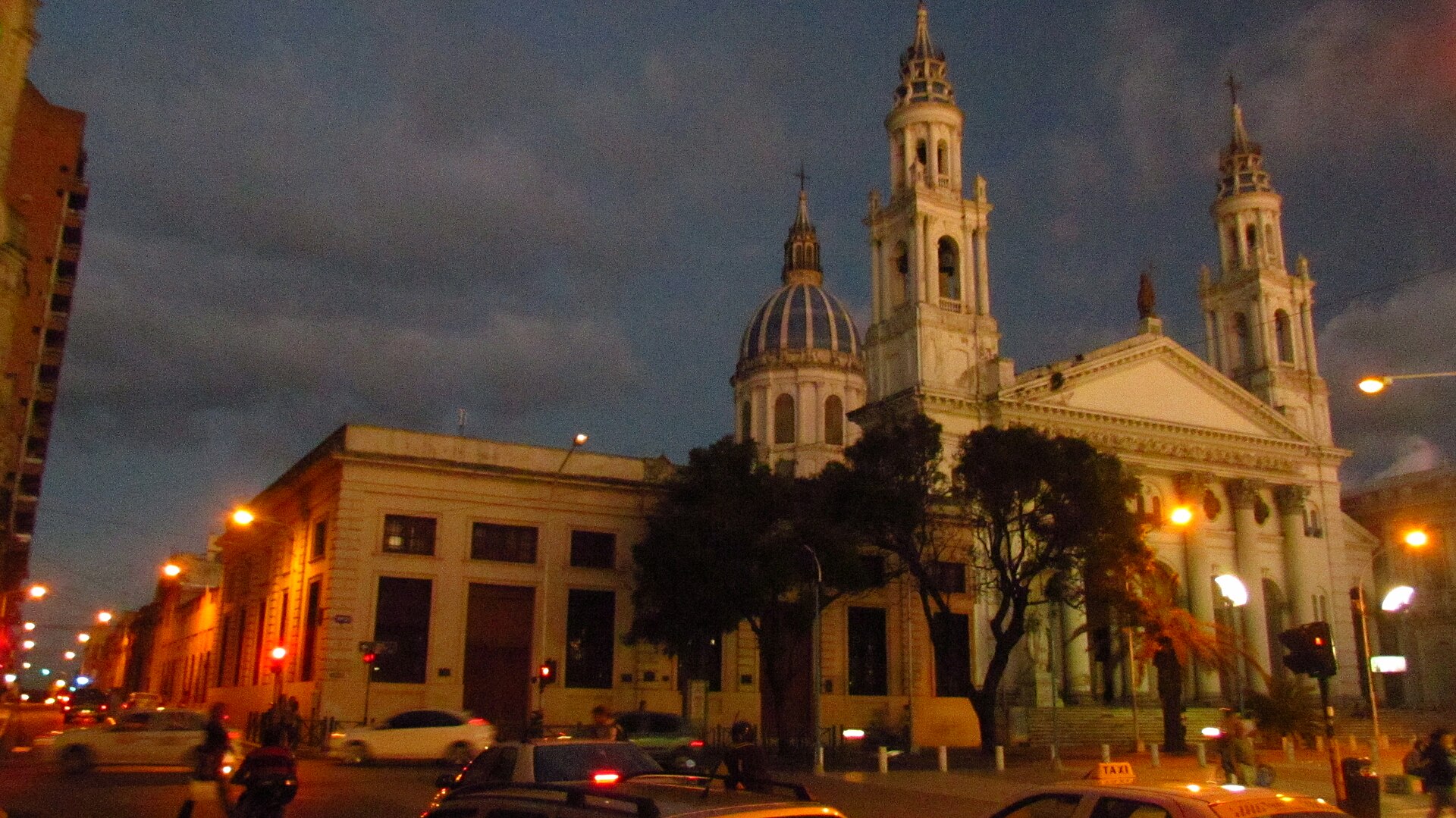
Provincial capital, 286,000 inhabitants, perched on the high bluff over the Paraná River. <strong>Subfluvial Tunnel Hernandarias-Uruguay</strong>: a 7,860-ft / 2,397-m road tunnel running 105 ft / 32 m below the Paraná riverbed, connecting to Santa Fe (Argentina's only sub-fluvial road tunnel, opened 1969 — a unique South American engineering landmark). Historic center: Cathedral, Government Palace, Plaza 1° de Mayo. <strong>Parque Urquiza</strong>: 6 km / 4 mi riverfront promenade with sculptures and fishing platforms. Sunset over the Paraná from the bluff is the photo.
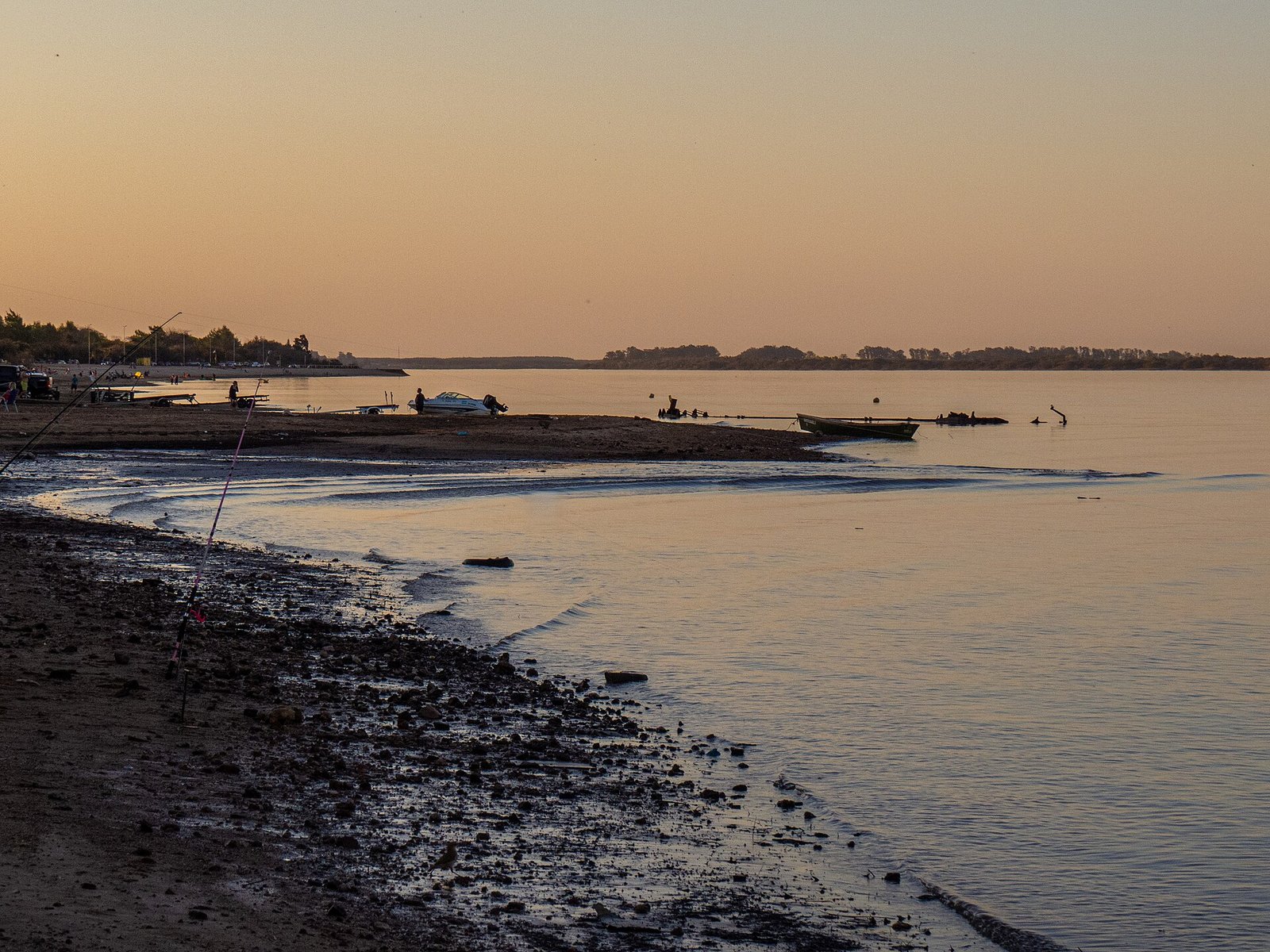
Riverside town (32,000 inh.) on the Uruguay River — Argentina's most popular freshwater beach destination. <strong>Soft-sand beaches</strong>: Playa Norte, Playa Inkier, Las Avenidas. The Río Uruguay here runs calm and warm (very different from Atlantic surf). Termas Villa Elisa 22 mi / 35 km away. Combinable with El Palmar (31 mi / 50 km north). <strong>International bridge</strong> to Paysandú, Uruguay (free passport-only crossing for foreigners) — Colón is one of the simplest US-passport gateways into Uruguay if you want to add a stamp.
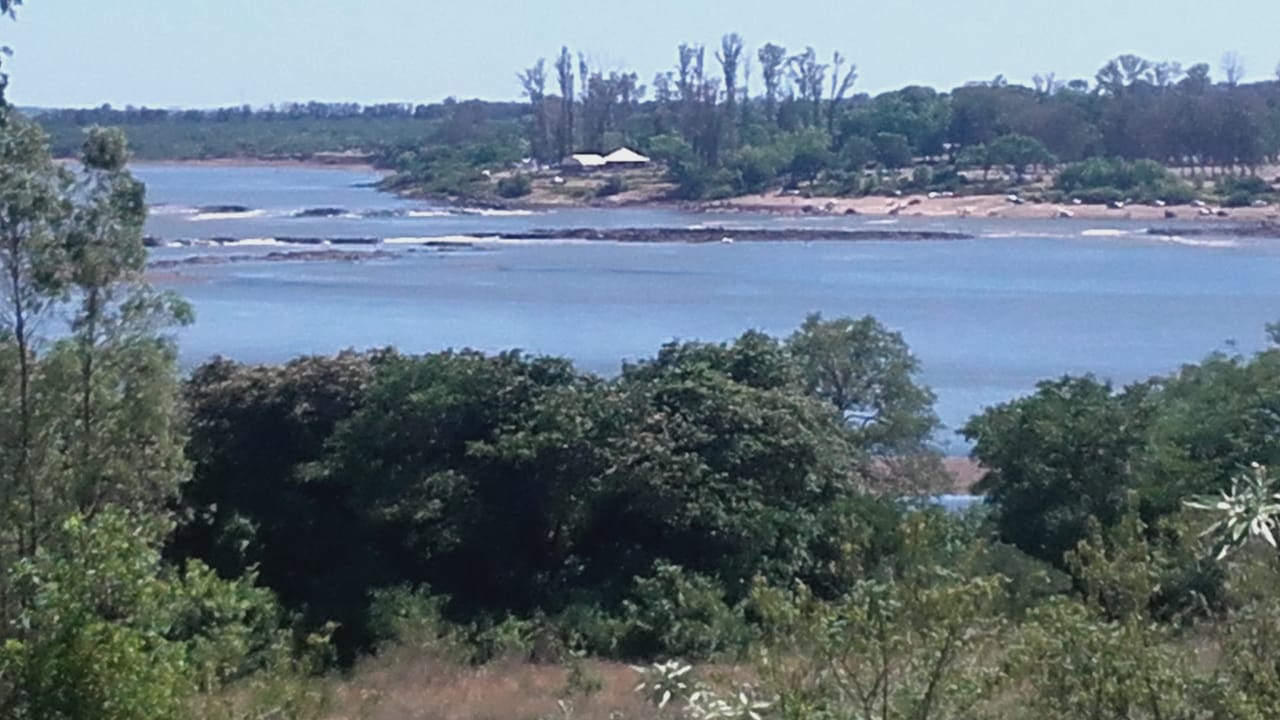
Historic city on the Uruguay River, 73,000 inh. <strong>Palacio San José</strong>: the residence of <strong>Justo José de Urquiza</strong>, Argentina's first constitutional president (1854-1860, the leader who codified the post-Rosas constitutional order — a role structurally similar to Andrew Johnson's in stabilizing the post-Lincoln Union). National Historic Monument and museum. Adjacent <strong>Colegio Nacional del Uruguay</strong>, founded by Urquiza in 1849 — Argentina's second-oldest secondary school, alma mater to two future presidents (Roca, Sarmiento). Riverfront with Banco Pelay beach.
Cluster of villages founded by <strong>Volga-German immigrants</strong> between 1878 and 1900 (ethnic Germans who settled the Volga River basin in Catherine the Great's Russia and emigrated to the Americas after Tsarist privileges were revoked). <strong>For US visitors</strong>: the direct heritage parallel is the <em>Volga-German communities of Kansas, Nebraska, and Colorado</em> (Hays KS, Sutton NE) — same migration trajectory, same retained Lutheran-Catholic liturgy, same wheat-belt agricultural choice, often family ties on both sides. Aldea Brasilera + Aldea Protestante + Valle María: Germanic architecture on the pampa, Lutheran churches, Central European cuisine (kuchen, varenikes, gulasch criollo). Volga-German cemetery with Cyrillic inscriptions on tombstones.
Entre Ríos has a humid subtropical climate — hot wet summers, mild dry winters. Hot summer (Dec-Feb, 68-91°F / 20-33°C with high humidity, heat index pushes 100°F+). Mild fall (Mar-May, 57-82°F / 14-28°C — best window for everything). Cool winter (Jun-Aug, 45-66°F / 7-19°C — peak hot-springs season for the thermal contrast). Spring (Sep-Nov, ceibos in bloom; Carnival peaks in February).
The province is mostly flat (130-330 ft / 40-100 m elevation) with no major altitude effects. Hot springs season: winter (May-Sep) is the most popular for thermal contrast — locals come specifically to feel the cold-out / hot-in shock. In summer the springs work but the experience is less compelling. Carnival logistics: Gualeguaychú parades happen every Saturday in January and February at the Corsódromo. El Palmar timing: visit any month, but summer brings horseflies (carry repellent).
Entre Ríos: hot springs, carnival, yatay palms and the rivers
Suggested itineraries
Real routes built by locals — pick the one that fits your days.
3days
Entre Ríos essentials — hot springs + Palmar
Federación + El Palmar + Colón. Doable as a long-weekend road trip from Buenos Aires (3-4h drive each way).
Highlights
Termas Federación
El Palmar
Colón river beach
Río Uruguay
Day by dayHide day by day
Day 1
Arrival + Federación
Drive 5h from BA on Route 14. Check in to thermal lodging. Afternoon: thermal water park. Dinner in town.
Day 2
El Palmar + Colón
Morning: Parque Nacional El Palmar (1h south). Trails, Río Uruguay overlooks. Lunch in Colón. Afternoon: Playa Norte beach.
Day 3
Concordia thermal + return
Morning at Termas Concordia (en route). Drive back to BA, arriving by sunset.
5days
Entre Ríos complete
Adds Gualeguaychú (Carnival if Jan-Feb) and Paraná capital. The version that covers the whole province.
Highlights
Gualeguaychú
Federación
El Palmar
Colón
Paraná capital
Day by dayHide day by day
Day 1
BA → Gualeguaychú
143 mi / 230 km on Route 14. Saturday: Corsódromo Carnaval del País (if Jan-Feb). Other dates: riverside boardwalk and plazas.
Day 2
Concepción del Uruguay
Drive 50 mi / 80 km north. Palacio San José (Urquiza), Colegio Nacional. Overnight in Colón.
Day 3
El Palmar + thermal
Morning at El Palmar, afternoon at Colón beach or Villa Elisa hot springs.
Day 4
Federación
Drive 124 mi / 200 km north. Full-day at the thermal water park. Overnight in Federación.
Day 5
Paraná capital + return
Drive 180 mi / 290 km south. Historic center, Subfluvial Tunnel (drive across to Santa Fe and back). Return to BA via Route 12.
7days
Entre Ríos in depth
The longest version: includes the Volga-German village route, Diamante, and the entire Uruguay River coast. For travelers who want the immigrant-heritage layer.
Highlights
Gualeguaychú
Concepción Uruguay
Colón + Palmar
Federación
Paraná
Volga-German villages
Diamante
Day by dayHide day by day
Day 1
BA → Gualeguaychú
Carnival (if Jan-Feb) or riverside.
Day 2
Concepción Uruguay
Palacio San José + Colegio Nacional.
Day 3
Colón + El Palmar
Beach + yatay palmlands national park.
Day 4
Federación thermal
Full day at the water park.
Day 5
Concordia + Salto Grande
Termas Concordia + binational hydroelectric dam.
Day 6
Paraná + Volga-German villages
Capital + Aldeas Alemanas circuit from Diamante (kuchen tasting, Lutheran churches).
Entre Ríos cuisine is river fish + grilled meats + mate. The province is the Argentine mate capital — Entre Ríos consumes roughly twice the national per-capita average, and bitter mate (no sugar) is identity. River fish: dorado (king of the Paraná, sport-fishing prize), surubí baked with white wine, pacú grilled, boga fried.
Entrerriano asado: vacío (flank), short ribs, bondiola (pork shoulder) with chimichurri. Folk music (chacareras and polkas) accompanies rural meals. From Volga-German immigration: kuchen (sweet seasonal-fruit cake), varenikes (potato-and-cheese dumplings, kin to Eastern European pierogi), gulasch criollo. From Piedmontese-Italian immigration: handmade pastas, salami from Colonia Caroya. Desserts: alfajor entrerriano (dulce-de-leche sandwich cookie with white glaze), arroz con leche cinnamon. To drink: Concordia craft beer, small-batch hybrid-grape entrerriano wines (limited but interesting).
Signature dishes
Grilled dorado
King of the Paraná. Large lean fish (10-65 lbs), distinctive flavor. Served whole over wood embers.
Baked surubí
Large catfish from the Paraná and Uruguay, firm white flesh. Baked with white wine.
Grilled pacú
Large-scaled fish, sweet flavor. Specialty of the island zones.
Asado entrerriano
Vacío + short ribs + bondiola with chimichurri. Beef from local Hereford and Aberdeen Angus herds.
Volga-German kuchen
Sweet cake with seasonal fruit. Heritage from the Volga-German villages.
Bitter mate
Entre Ríos identity marker. No sugar, water at 75-80°C / 167-176°F, yerba con palo. Drink it like locals do.
Food experiences
Dorado sport-fishing day trip
Boat outing on the Paraná or Uruguay River with a licensed guide. Live-bait fishing for dorado. Mandatory catch-and-release for trophy specimens (sustainability rule). 6 hours. Includes riverside fish lunch.
Asado dinner at an entrerriano estancia. Hands-on lesson in pouring mate correctly (technique + tradition). 4 hours with a gaucho family. Authentic experience.
Circuit through Volga-German villages (Aldea Brasilera, Valle María). Lunch with kuchen + varenikes + gulasch. Visit to a Lutheran church and historic cemetery. 5 hours from Diamante or Paraná.
Volga-Germans, Urquiza's constitution, and the Carnaval del País
Entre Ríos has the most diverse 19th-century immigration heritage of any Argentine province. Between 1880 and 1930 the region absorbed waves of Volga-Germans (ethnic Germans who had settled the Volga basin under Catherine the Great's privileges, then fled when Tsar Alexander II revoked them — the same migration push that produced the Volga-German communities of Kansas and Nebraska, with families often split between the two destinations), Swiss (Colonia San José, founded 1857, Argentina's first successful agricultural colony), Piedmontese Italians (Concepción del Uruguay, Concordia), Savoyard French, and Jewish farmers sponsored by Baron Hirsch's Jewish Colonization Association — Colonia Clara and Domínguez became refuges from Tsarist anti-Semitism, and the resulting "Jewish gauchos" are the subject of Alberto Gerchunoff's 1910 literary classic. Each community left a footprint in architecture, kitchens, and surnames.
The Río Uruguay is geopolitically loaded: it forms the international border with the Eastern Republic of Uruguay (the country, separate from the river). Three bridges link the two countries: Salto Grande/Concordia, Colón/Paysandú, and Concepción del Uruguay/Fray Bentos — all open to US-passport foot traffic with a simple stamp, no visa. The Río Paraná on the west is the principal navigable artery of the Plata basin: this is where Paraguay's and northern Argentina's exports float down to the Rosario port complex and out to the Atlantic. The Subfluvial Tunnel Hernandarias-Uruguay (1969) — running 105 ft / 32 m below the Paraná riverbed — was a pioneering South American engineering project, and remains Argentina's only sub-fluvial road tunnel (the country's other big river crossings are bridges).
The Argentine Constitution of 1853 was drafted in Santa Fe but politically driven by Justo José de Urquiza, governor of Entre Ríos and then president of the Argentine Confederation (1854-1860). His residence — the Palacio San José in Concepción del Uruguay — is now a museum and National Historic Monument. Urquiza defeated Juan Manuel de Rosas at the Battle of Caseros (1852) and opened Argentina's constitutional period. For US history readers: the structural fit is Andrew Johnson's role in stabilizing the post-Lincoln Union — Urquiza was the post-civil-conflict leader who codified the constitutional framework rather than the founding revolutionary himself, and like Johnson he was both indispensable and politically isolated. His 1870 assassination at his own palace by a local faction was one of Argentina's foundational political shocks.
The Carnaval del País in Gualeguaychú is a story of cultural transmission. In the 1970s young Entrerrianos traveled to the Carnaval in Rio de Janeiro and came back determined to recreate the experience at home. The four comparsas (Marí Marí, Papelitos, Ará Yeví, O'Bahía) compete every Saturday in January and February at the Corsódromo (35,000-seat sambadrome). Technical quality of plumes, floats, and batucada is comparable to the second-tier samba schools of Rio. For US visitors: the closest parallel is Mardi Gras in New Orleans (same elaborate floats, same costumed troupes, same city-takeover energy) crossed with the Trinidad Carnival (same Caribbean-tropical pacing). Gualeguaychú is more accessible and less expensive than Rio for a first South American carnival. Hotel reservation: 60-90 days ahead for any Saturday.
Where to stay in Entre Ríos
Three main bases: Federación (USD 50-150 with thermal lodging — best for spa-focused trips), Colón (USD 35-90 — best base for El Palmar + Uruguay River beaches + crossing to Paysandú/Uruguay), and Gualeguaychú (USD 70-180 in carnival season — required if you're coming for the Corsódromo Saturdays). Hostels USD 12-22 in most towns. For the Paraná capital + Volga-German village circuit: city hotel USD 60-95 plus optional rural-stay add-on near Diamante.
Entre Ríos is fundamentally a road-trip destination from Buenos Aires:
BA → Gualeguaychú via Route 14: 143 mi / 230 km, 3 h, USD 8-10 tolls.
BA → Colón: 199 mi / 320 km, 4 h.
BA → Concordia: 261 mi / 420 km, 5 h.
BA → Federación: 298 mi / 480 km, 5 h 30.
BA → Paraná capital via Route 12: 317 mi / 510 km, 6 h.
Rental in BA: USD 30-45/day. Any standard car works — the entire province has well-paved roads.
By long-distance bus
BA (Retiro) → Gualeguaychú: 3 hours, USD 15.
BA → Colón: 4 hours, USD 20.
BA → Concordia: 5 h 30, USD 25.
BA → Federación: 6 hours, USD 30.
BA → Paraná capital: 6 h 30, USD 30.
By plane
General Justo José de Urquiza Airport (PRA) in Paraná has limited commercial service:
BA (AEP) → Paraná: 1 h 5, USD 80-110 (Aerolíneas Argentinas, 3-4 flights/week).
From the US: no direct flights. Miami → Buenos Aires (9h on AA), then domestic to Paraná or drive.
From the UK/EU: London/Madrid → BA (15-18h via Madrid or São Paulo), then domestic.
For the rest of the province: land in Buenos Aires and drive or bus — far more practical.
Getting there — distances & times
From
Distance
Flight
Bus
Drive
Buenos Aires (AEP)
490 km
1 h
6 h
5 h
Rosario
150 km
—
2 h
1 h 45
Santa Fe capital
30 km
—
40 min
30 min
Gualeguaychú
220 km
—
3 h
2 h 30
Federación hot springs
350 km
—
5 h
4 h
Colón / Salto Grande
280 km
—
4 h
3 h 30
Typical prices by category
Category
Budget
Mid-range
Luxury
3★ hotel Paraná (double)
USD USD 35-55
USD USD 55-90
USD USD 110-180
Federación thermal hotel (double)
USD USD 50-80
USD USD 90-150
USD USD 180-300
Capital hostel (dorm)
USD USD 12-22
USD USD 25-40
—
Regional lunch (surubí, mbaipy)
USD USD 10-15
USD USD 18-30
USD USD 35-55
Gualeguaychú Carnival ticket
USD USD 18-30
USD USD 40-65
USD USD 90-160
Federación full-day spa
USD USD 15-25
USD USD 30-50
USD USD 70-110
Palacio San José tour
USD USD 8-15
USD USD 25-40
—
Surubí fishing (½ day, guided)
USD USD 80-120
USD USD 180-280
USD USD 400-650
Prices April 2026. Country's Carnival (Jan-Feb, Saturdays): Gualeguaychú hotels +80-150%. Book Carnival 90+ days ahead.
Frequently asked questions
The questions travelers ask us before they go.
Where is Entre Ríos, Argentina?
Entre Ríos is a province in northeast Argentina, the southern half of the "Mesopotamia" region (the Argentine territory between the Paraná and Uruguay rivers). Capital: Paraná, on the western bank of the Paraná River. Provincial population: 1.38 million (2022 census). Land area: 78,781 km² / 30,418 sq mi. The province borders the Republic of Uruguay (the country) along its eastern edge — three road bridges link the two countries. From Buenos Aires, the closest entry point (Gualeguaychú) is a 3-hour drive on Route 14.
Is Entre Ríos worth visiting?
Yes — and underrated for international visitors. Strengths: the Carnaval del País in Gualeguaychú (Argentina's biggest, top-3 in South America), 11 hot-springs complexes within driving distance, Parque Nacional El Palmar (the world's largest yatay palm preserve — single-species iconic landscape, comparable to Joshua Tree NP), Argentina's most diverse 19th-century immigrant heritage (Volga-Germans, Swiss, Italians, Jewish gauchos), and easy combination with Uruguay (the country) via the international bridges. Limits: less English-language infrastructure than Buenos Aires or Mendoza, fewer foreign visitors (you'll be in mostly Argentine and Brazilian company). Best fit: travelers comfortable driving, repeat South America visitors, anyone with German-American heritage interested in the Volga-German parallel.
Is the Gualeguaychú Carnival worth attending?
Yes — this is a serious carnival, ranked top-3 in South America by cultural-studies consensus. The technical quality of the comparsas (Marí Marí, Papelitos, Ará Yeví, O'Bahía) compares to Rio's second-tier samba schools, with full-scale floats, plumed costumes, and live batucada. The Corsódromo is a 35,000-seat dedicated sambadrome — not a street parade. For US visitors: the experience is closer to Mardi Gras in New Orleans (elaborate floats + costumed troupes + city-takeover energy) than to a small-town festival. General admission USD 20-40, premium boxes USD 80-150. Held every Saturday in January and February. Book the hotel 60-90 days ahead — Gualeguaychú only has so many beds.
How do the Termas de Federación hot springs work?
Federación's thermal water came up accidentally during a 1994 oil-exploration drill — a serendipity story closely paralleling Hot Springs National Park, Arkansas, which the US federal government built around mineral waters that surfaced without human intervention. Surface temperature: 41°C / 106°F. The complex has 8 stepped pools at different temperatures, water-park slides, spa, and on-site thermal lodging. Day pass USD 25-40, family pass USD 70. Best season: May-September (winter, for the cold-out / hot-in thermal contrast that locals come for). The town of Federación itself was rebuilt in 1979 — the original site was flooded by the Salto Grande dam, and the relocated village turned its accidental thermal asset into the country's most successful spa town.
Why is El Palmar National Park special?
It's the world's largest preserved stand of Butia yatay palms (8,500 ha / 21,000 acres of an endangered species). The landscape is unlike anything else in Argentina: open grassland with thousands of tall palms scattered like an African savanna. For US visitors: the closest parallel is Joshua Tree National Park or Saguaro National Park — a single-species iconic landscape you only encounter in one geography on Earth. Self-guided trails, Río Uruguay overlooks, 300+ bird species, free-roaming capybaras and rheas. Visit time: 4-6 hours. Foreign-visitor entry USD 15. Easy to combine with Colón (45 min south) or Concordia (1 h 30 north).
Can I cross from Entre Ríos into Uruguay?
Yes — three international road bridges link the two countries directly from Entre Ríos: Salto Grande/Concordia (the binational dam doubles as a bridge), Colón/Paysandú (General Artigas Bridge), and Concepción del Uruguay/Fray Bentos (Libertador General San Martín Bridge). All three are open to US-passport pedestrian and vehicle traffic with a simple immigration stamp — no visa required for stays under 90 days. Bridge tolls USD 10-15 by car. Classic combo: Gualeguaychú (Carnival weekend) + Mercedes/Fray Bentos (Uruguay) + Colonia del Sacramento + back to BA via Buquebus ferry. The geography here is similar in feel to crossing between Detroit and Windsor (US-Canadian river border with multiple bridge options).
How does the Volga-German connection work for US visitors?
Volga-Germans were ethnic Germans who settled along the Volga River in Russia under Catherine the Great's 1763 invitation (tax exemptions, military exemption, religious freedom). When Tsar Alexander II revoked those privileges in the 1870s, the community split: roughly half emigrated to Kansas, Nebraska, Colorado (Hays KS, Sutton NE, the Russian-German wheat belt), and roughly half emigrated to Argentina — Entre Ríos became one of the principal Argentine destinations, with villages like Aldea Brasilera, Aldea San Antonio, Aldea Protestante, and Valle María. Same migration push, same Lutheran-Catholic liturgy retained, same wheat-belt agricultural specialty, often family ties on both sides (US families researching Volga-German genealogy regularly find Entrerriano cousins). The architecture, kuchen recipes, and cemetery inscriptions in Entre Ríos read as a parallel-universe Hays, Kansas — and the parallel is the heritage hook.
Is Entre Ríos safe for US visitors?
Yes — very safe. Argentina's 2024 US State Department travel advisory is Level 1 (lowest). Tourist towns (Federación, Colón, Concordia, Gualeguaychú) are exceptionally calm. Paraná capital has the standard Argentine urban precautions (avoid empty streets after midnight, keep valuables out of sight). Real risks are practical, not security: refuel when you see a station (gaps of 50-95 mi / 80-150 km on Route 14), carry mosquito repellent in summer for El Palmar, hire licensed fishing guides for the Paraná islands (capybaras and yacarés are not aggressive but should be respected). Travel insurance recommended. Healthcare is good in capital cities; the closest hospital with reliable English-speaking staff is in Buenos Aires.
Sources & methodology
Last updated:
How we built this guide
This guide is updated quarterly (last: April 2026). Prices verified against Civitatis, GetYourGuide, Booking.com, and direct contact with local operators (Federación and Concordia hot springs, Gualeguaychú Carnival ticketing). Distances and times from Google Maps. Selection based on real visitor data and consultation with licensed guides in Gualeguaychú and Colón. Entre Ríos has thinner foreign-tourist coverage than Tier 1 regions; some experiences (Volga-German village circuits, Paraná-island fishing) require direct contact with local operators. Author Sebastián has visited Entre Ríos multiple times (Federación, Gualeguaychú, El Palmar).