275 cascades over 1.7 miles — UNESCO World Heritage and one of the 7 Natural Wonders of the World
Last updated: April 2026
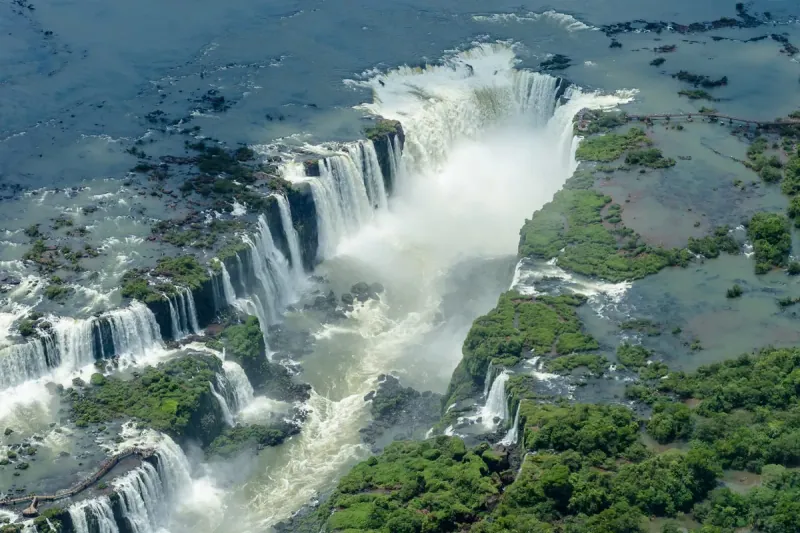
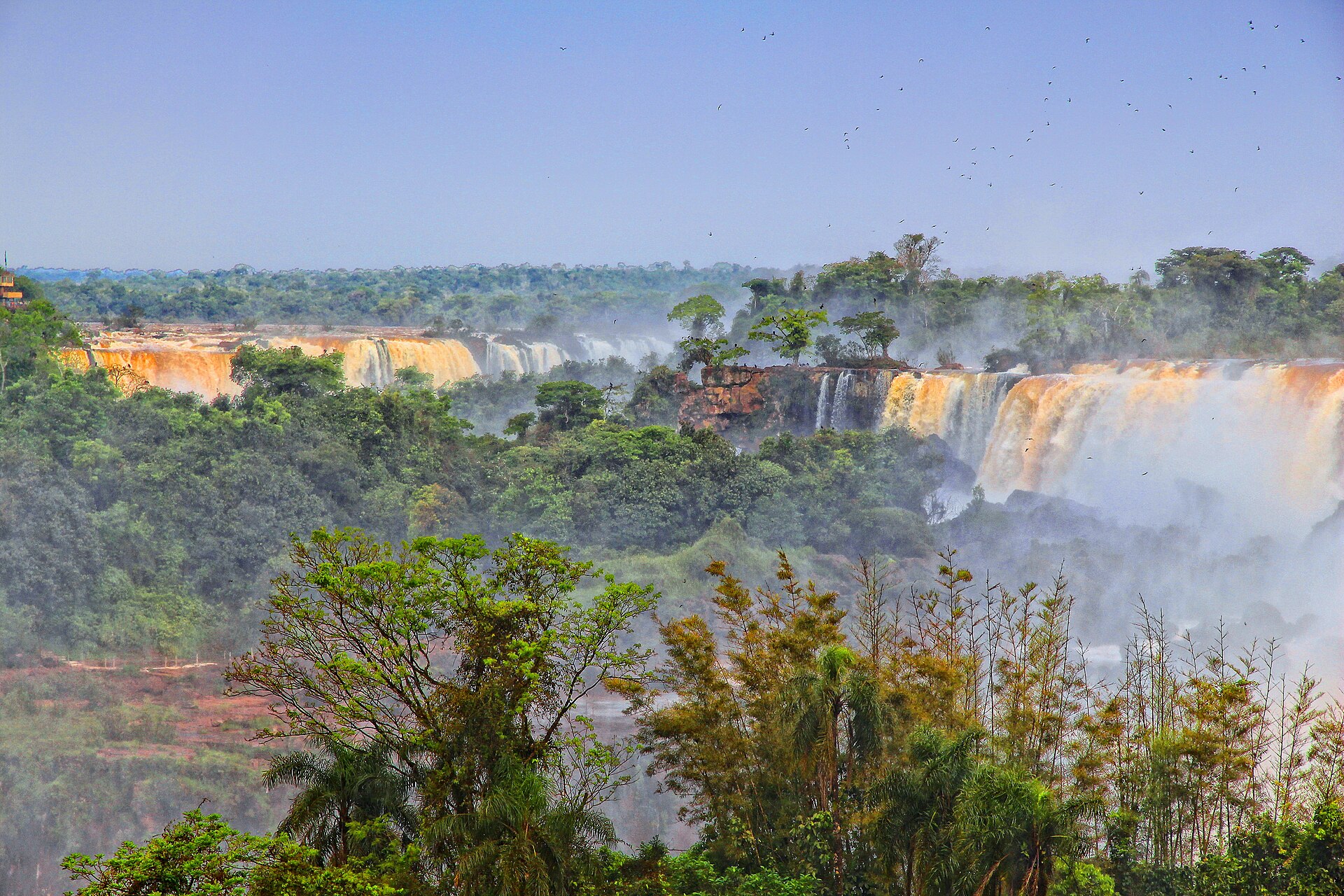
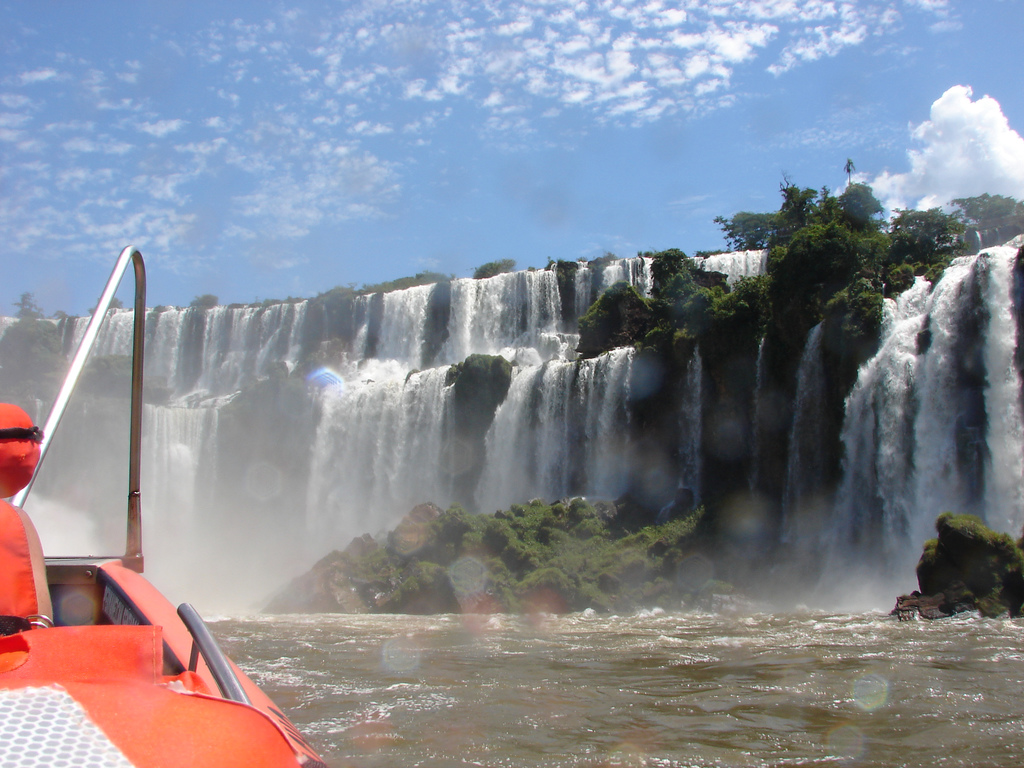
Iguazu Falls is South America's most overwhelming natural spectacle: 275 individual waterfalls spread across 1.7 mi / 2.7 km of rainforest, with a 260-foot / 80-meter drop at the Devil's Throat (Garganta del Diablo). UNESCO World Heritage since 1984, and voted one of the 7 Natural Wonders of the World in 2011. Average flow is 1,746 m³/s; in flood it's hit 12,800 m³/s — more than Niagara, Victoria and Angel Falls combined. Eleanor Roosevelt, after seeing it, reportedly said "poor Niagara". The surrounding Iguazú National Park is a 165,000-acre slice of subtropical rainforest with 450 documented bird species, 80 mammals, capuchin monkeys, the famously bold coatis, and iridescent butterflies on every trail.
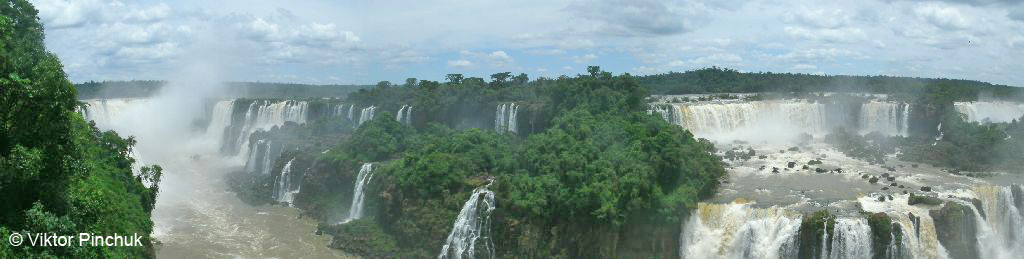
Iguazu is experienced from two sides — and yes, both are worth it. The Argentine side has 80% of the falls; you walk among them on catwalks just 200 m from the cascades, feel the spray, and reach the Devil's Throat directly via the upper trail + ecological train. The Brazilian side has the remaining 20% but the best panoramic view — from Foz do Iguaçu you see the entire half-moon in one frame. 2-3 days: Argentine side full day + Brazilian side half day. 4-5 days: add the Triple Frontier (Arg-Bra-Par confluence), Wanda Mines (semiprecious stones), the UNESCO-listed San Ignacio Miní Jesuit Ruins, or the adventure boat ride to the foot of the falls (Gran Aventura, USD 65). Iguazu is the mandatory stop for any traveler doing Argentina or Brazil — pair it with Buenos Aires (1h 45 flight) for the classic 5-7 day combo.
Top attractions at Iguazu and Misiones
Real traveler data: Civitatis, GetYourGuide, verified reviews — April 2026.
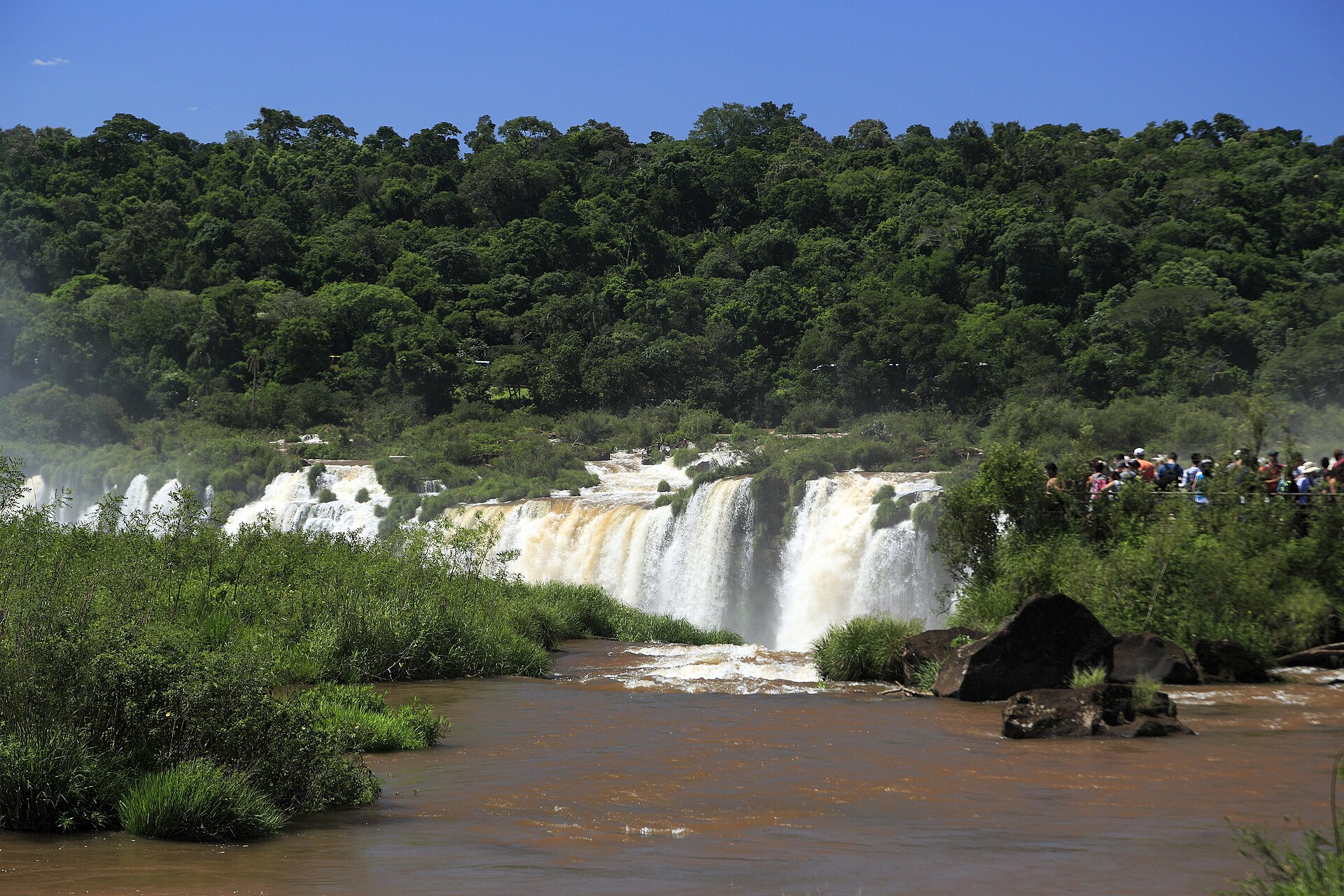
80% of the falls are on the Argentine side. Must-do: <strong>Devil's Throat</strong> (the most overwhelming, reached via ecological train + 1,100 m / 0.7 mi catwalk over the river), <strong>Upper Trail</strong> (top-down views, 1,300 m / 0.8 mi easy walk), <strong>Lower Trail</strong> (1,500 m / 0.9 mi to the foot of multiple falls — you will get wet). Full day, USD 35 entry for foreigners + USD 5 train. Arrive before 9 am to beat the crowds. Park entry valid 50% off the next consecutive day.
The most spectacular fall: 260 ft / 80 m drop in a U-shape, where half the Iguazú River's flow concentrates. Reached via the Ecological Train (every 20 min from Puerto Cataratas) to Garganta Station, then a 1,100 m / 0.7 mi zigzag catwalk over the river. The final platform sits 5 m from the edge — you'll be soaked by the spray cloud. Unmissable even in rain. Photography tip: morning gives backlight, afternoon better front light.
The remaining 20% but the postcard view. From the boardwalk at Foz do Iguaçu you see the entire arc of falls in one frame — including the Argentine Devil's Throat panorama. 1.2 km / 0.75 mi trail, takes 2-3 hours, easier than the Argentine side. USD 25 entry for foreigners. Pair with Parque das Aves (next door, 4,000 birds in a walk-through aviary, USD 25). Reach via taxi/Uber across the border (45 min from Puerto Iguazú including immigration).
A motorboat takes you up the Iguazú River through Class III rapids, then directly under the San Martín Falls — you get drenched on purpose, helmet and life jacket included. Paired with a forest jeep ride and ecological trail. 2 hours, USD 65. The shot in your camera is the one with the wall of water above your head. Adventure highlight; not for the dry-photo-conscious.
7 km / 4.3 mi round-trip trail through primary rainforest to Salto Arrechea (a hidden waterfall with a swimmable pool). Takes 3-4 hours, easy grade, you'll see capuchin monkeys, coatis, toucans if lucky. Goes from the main park entry — combine with a half-day in the falls trails (USD 0 extra over park entry). The most authentic rainforest experience inside the park.
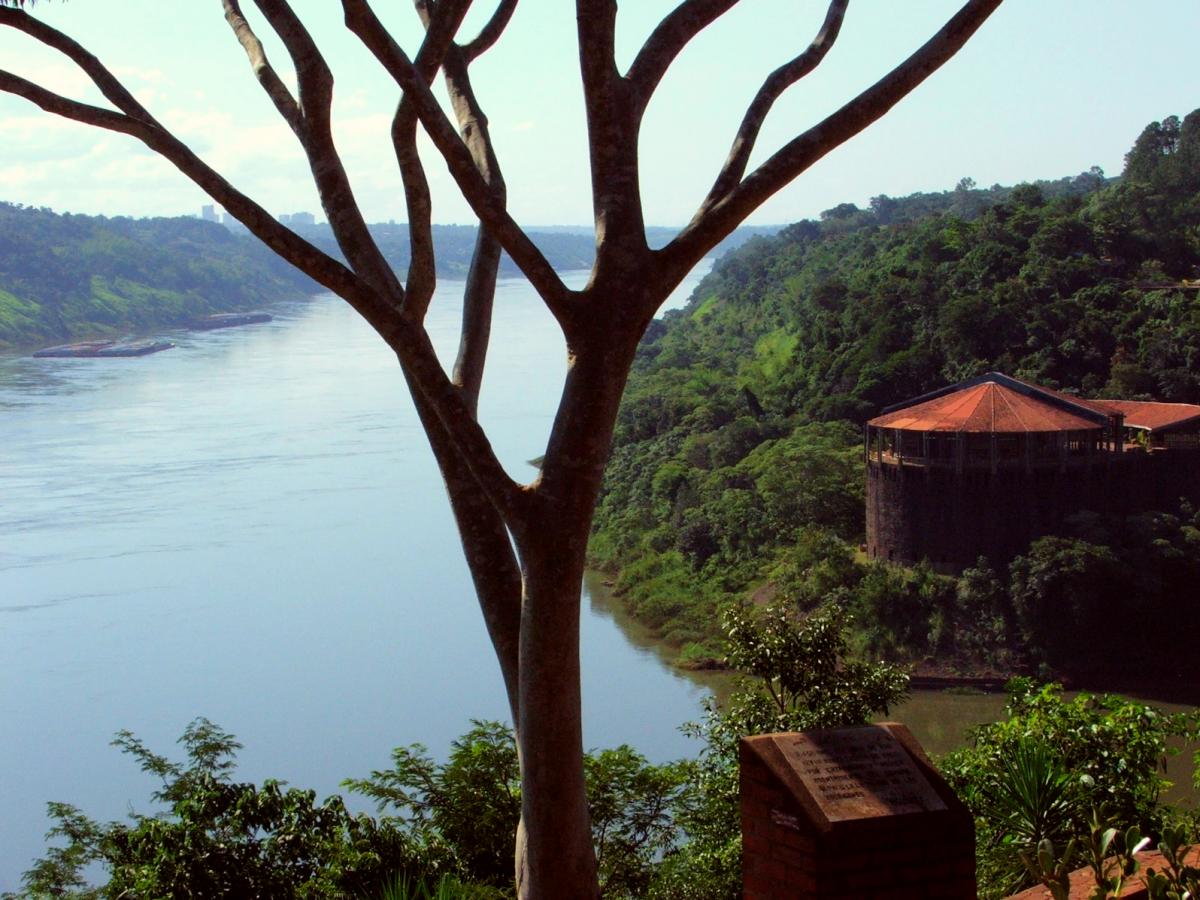
The Hito Tres Fronteras is the spot where Argentina, Brazil and Paraguay meet on the Iguazú-Paraná river confluence. Each country has a viewpoint with its flag-painted obelisk. The Argentine side viewpoint is 6 km / 3.7 mi from Puerto Iguazú downtown — 30-minute visit, free. Worth it for the photo. Sunset is best (orange light over three countries).
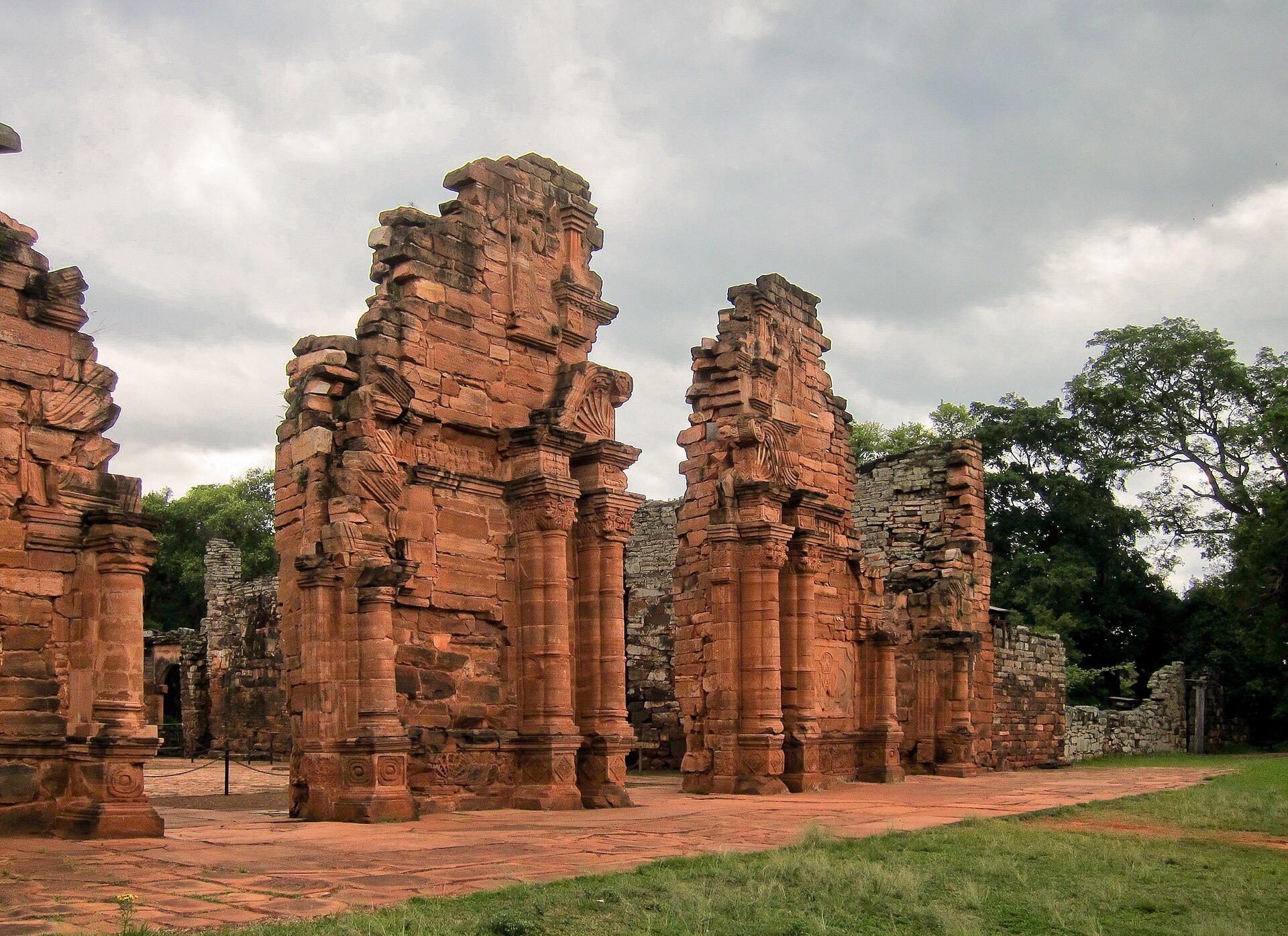
UNESCO World Heritage Site (1984, same year as the falls). Best-preserved Jesuit mission ruins in South America, built 1610-1696, abandoned 1768 when the Jesuits were expelled. Featured in the 1986 film "The Mission" with Jeremy Irons and Robert De Niro. 250 km / 155 mi south of Puerto Iguazú on Route 12. Full day with included Wanda mines stop. USD 8 entry, USD 95 with tour.
Open-cast mines of amethysts, agates, and other semiprecious stones — Misiones province sits on a major mineral basalt deposit. 50 km / 31 mi south of Puerto Iguazú. Guided tour into the mine (mostly above-ground), see giant geodes being cut, buy stones direct from the source at 30-50% below tourist shop prices. 2-3 hours, USD 25. Combinable with San Ignacio in a long day trip.
Iguazu has a humid subtropical climate: hot, very humid summer (Dec-Mar, 77-91°F / 25-33°C, 90% humidity, daily afternoon thunderstorms, mosquitoes), mild ideal fall (Apr-May, 65-82°F / 18-28°C, less rain, best visibility), mild winter (Jun-Aug, 52-77°F / 11-25°C, clear days, water level slightly lower), and spring (Sep-Nov, 63-86°F / 17-30°C, water rising, lush vegetation). The falls run year-round but the visual power changes dramatically with flow.
River flow defines the experience. In high water (Feb-May), the falls are apocalyptic — some lower trails close for safety but the Devil's Throat is staggering. In low water (Jul-Sep), flow drops to 700 m³/s; the falls remain stunning but quieter, and you see more rock structure. A poncho or rain jacket is essential: any season, you will get soaked, especially on the Lower Trail and Devil's Throat catwalk. Bring a waterproof phone bag and microfiber lens cloth. Mosquito repellent is non-negotiable Oct-Mar.
Iguazu Falls: Argentine side, Brazilian side, Devil's Throat and San Ignacio
Suggested itineraries
Real routes built by locals — pick the one that fits your days.
2days
Iguazu express
The minimum to see the falls properly. Use as add-on to a Buenos Aires trip. Arrival evening + 1 full day on the Argentine side.
Highlights
Devil's Throat
Upper + Lower Trails
Optional Gran Aventura boat
Day by dayHide day by day
Day 1
Arrival + Puerto Iguazú
Evening flight BUE-IGR. Settle into hotel in Puerto Iguazú. Dinner at Aqva or La Rueda (river fish, surubí). Quick walk to the Triple Frontier viewpoint at sunset if time.
Day 2
Argentine side full day
Park gate at 8 am. Train + Devil's Throat first (less crowded morning). Upper Trail + lunch in the park. Lower Trail afternoon (you'll get wet). Optional Gran Aventura boat (USD 65, 2 h, the wet boat ride). Out by 5 pm. Dinner downtown. Late evening flight back to BUE possible.
3days
Iguazu both sides
The honest way to see Iguazu: Argentine side (in the falls) + Brazilian side (panoramic view). 90% of travelers do this.
Highlights
Argentine side full day
Brazilian side half day
Bird Park (Parque das Aves)
Gran Aventura boat
Day by dayHide day by day
Day 1
Arrival + Argentine side
Morning flight BUE-IGR or early arrival. Quick lunch downtown. Argentine side park 1 pm-6 pm: Devil's Throat (afternoon = front light, best photos) + Upper Trail. Save Lower Trail for next morning. Dinner at Aqva.
Day 2
Argentine side AM + Gran Aventura
Lower Trail 8 am (less crowded). Gran Aventura boat 11 am (USD 65, 2 h). Lunch in the park. Out by 4 pm. Border crossing to Foz do Iguaçu by taxi (USD 25, 45 min including immigration).
Day 3
Brazilian side + Bird Park
Brazilian park 8 am. Boardwalk + lookout, 2 hours. Parque das Aves next door (USD 25, 1.5 hours, walk-through aviary with toucans, macaws). Lunch on the Brazilian side or back to Puerto Iguazú. Evening flight out (use IGR or IGU airport).
5days
Iguazu + Misiones deep dive
For travelers wanting more than just the falls: add San Ignacio Miní (UNESCO Jesuit ruins) and the Wanda mines. The complete Misiones experience.
Highlights
Both sides of the falls
San Ignacio Miní Jesuit ruins
Wanda mines
Yacutinga jungle lodge (optional)
Triple Frontier
Day by dayHide day by day
Day 1
Arrival + Argentine side
Same as 3-day day 1.
Day 2
Argentine side AM + Gran Aventura
Same as 3-day day 2 morning. Afternoon: Triple Frontier viewpoint at sunset.
Day 3
Brazilian side + Bird Park
Same as 3-day day 3.
Day 4
San Ignacio + Wanda
Long day trip 250 km south on Route 12. Wanda mines morning, San Ignacio Miní afternoon (most photogenic at low sun, 4-5 pm). USD 95 with guide. Back to Puerto Iguazú evening.
Day 5
Yacutinga lodge or rest day
Option A: Yacutinga ecolodge for jungle immersion (USD 350+/night, 2-3 days minimum, you'd skip this slot if doing it). Option B: Cooking class with Misiones recipes (chipá, surubí, mate, USD 60). Evening flight out.
All Iguazu and Misiones destinations
Beyond the park itself, Misiones holds UNESCO Jesuit ruins, semiprecious-stone mines and the Atlantic Rainforest. Each spot has its own complete guide:
The falls — both sides
Argentine Side — 80% of falls, catwalks, Devil\'s Throat, Ecological Train.
San Ignacio Miní — UNESCO Jesuit ruins, set of "The Mission" film.
Itaipú Dam — One of the world\'s largest hydroelectric dams.
Local food & where to eat
Misiones cooking is a Guaraní-Italian-Creole fusion mixing rainforest ingredients with immigrant recipes. The two stars are surubí (a tigerfish reaching up to 100 kg / 220 lb in the Paraná river) and yerba mate (Misiones produces 70% of Argentina's mate). Chipá (manioc-flour cheese bread, a Guaraní heritage) accompanies almost everything. Reviro (flour, water, oil mixed in a hot pan until granular) is the colonial breakfast of the rainforest settlers — closer to a Welsh pikelet than to anything you'd find in Buenos Aires.
Chipá variants are endless: chipá guazú (with corn), chipá so'o (meat-stuffed), chipá panqueque. Grilled surubí with sweet potato is the river-fish classic — try it at Aqva or La Rueda in Puerto Iguazú. Manioc (cassava) is served fried or boiled with butter — the regional starch in place of potato. Desserts: papaya jam (dulce de mamón), mate-flavored ice cream, alfajores stuffed with yerba. To drink: mate cocido (hot mate with milk for breakfast), tereré (cold mate with lemonade and ice for hot afternoons — Misiones invention, totally different from the slow morning ritual). Cheaper than Buenos Aires food in USD terms.
Signature dishes
Surubí (tigerfish)
Up to 100 kg / 220 lb river fish from the Paraná. Grilled, fried, or stuffed. Aqva and La Rueda are the names in Puerto Iguazú.
Chipá
Guaraní cheese bread of manioc flour. Eaten throughout the day, found at every gas station and bakery. Variants: guazú (with corn), so'o (meat-stuffed).
Reviro
Pioneer breakfast: flour, water, oil cooked in a pan until granular. Comfort food of the rainforest colonists.
Mandioca
Cassava root, fried or boiled with butter. The regional starch base in place of potato.
Yerba mate
Misiones produces 70% of Argentina's mate. Visit Establecimiento Las Marías or Yerbatera Andresito for plantation tours.
Tereré
Cold mate with lemonade and ice. Misiones invention, totally distinct from the warm BA morning ritual. Summer drink.
Food experiences
Surubí dinner with river view
Riverside dinner at Aqva (Puerto Iguazú) overlooking the Paraná: surubí (3 ways), yerba mate craft cocktail, Misiones wine. 3 hours. Pre-book a sunset table.
Half-day at a working yerba plantation 70 km from Puerto Iguazú. From harvest to drying to packing. Mate tasting with multiple cuts. Includes lunch with chipá and surubí.
Hands-on with a Misiones cook in Puerto Iguazú: shape your own chipá, cook a surubí stew, prepare a Guaraní-style sweet potato dessert. Dinner included. 4 hours.
For travelers who want the Argentine asado experience even in the rainforest. Cabaña Las Lilas-style cuts paired with Misiones-produced reds. Dinner at La Rueda. 3 hours.
Guaraní mythology, Jesuit missions and subtropical biodiversity
The Iguazú River tumbles off the Paraná Plateau because of geology, not magic: 130 million years ago a basalt lava flow created a hard layer that the river couldn't easily erode. The falls have been retreating upstream at about 2-3 cm per year for the last 500,000 years, leaving a 23-km canyon below them. The Guaraní legend explains it differently: a god, in love with the mortal Naipí, became enraged when she fled with her warrior Tarobá, and split the river to drown them — Naipí became the rocks of the falls and Tarobá the palm tree leaning over the gorge. The story still reads as the central Guaraní origin myth in Misiones.
Iguazú's colonial history intersects the most dramatic Jesuit experiment in South America. Between 1610 and 1768, Jesuit missionaries built more than 30 "Reducciones" — autonomous communities of Guaraní people, organized around music, agriculture, and Catholic theology, governed by the Jesuits but largely free from Spanish colonial labor demands. San Ignacio Miní (250 km from Puerto Iguazú) is the best-preserved ruin: massive red sandstone facades, choir lofts where Guaraní orchestras played Vivaldi, library walls still standing. The 1986 film The Mission with Robert De Niro dramatizes the Jesuit expulsion of 1767-68 and the violent end of this experiment. UNESCO listed San Ignacio in 1984 — same year as the falls.
The border situation is itself unique. The Triple Frontier is the only place in the Americas where three countries meet on a major river confluence. Argentina (90% Catholic, 80% urban), Brazil (53% Catholic, 87% urban), and Paraguay (90% Catholic but rural, with 40% native Guaraní speakers) all touch here. Ciudad del Este (Paraguay) is the duty-free shopping capital of the Southern Cone — Brazilian middle-class shoppers cross daily for electronics, perfumes, whisky. Argentina has tighter customs but the cultural mix in Puerto Iguazú reflects all three: you'll hear Guaraní spoken in the markets alongside Spanish and Portuguese.
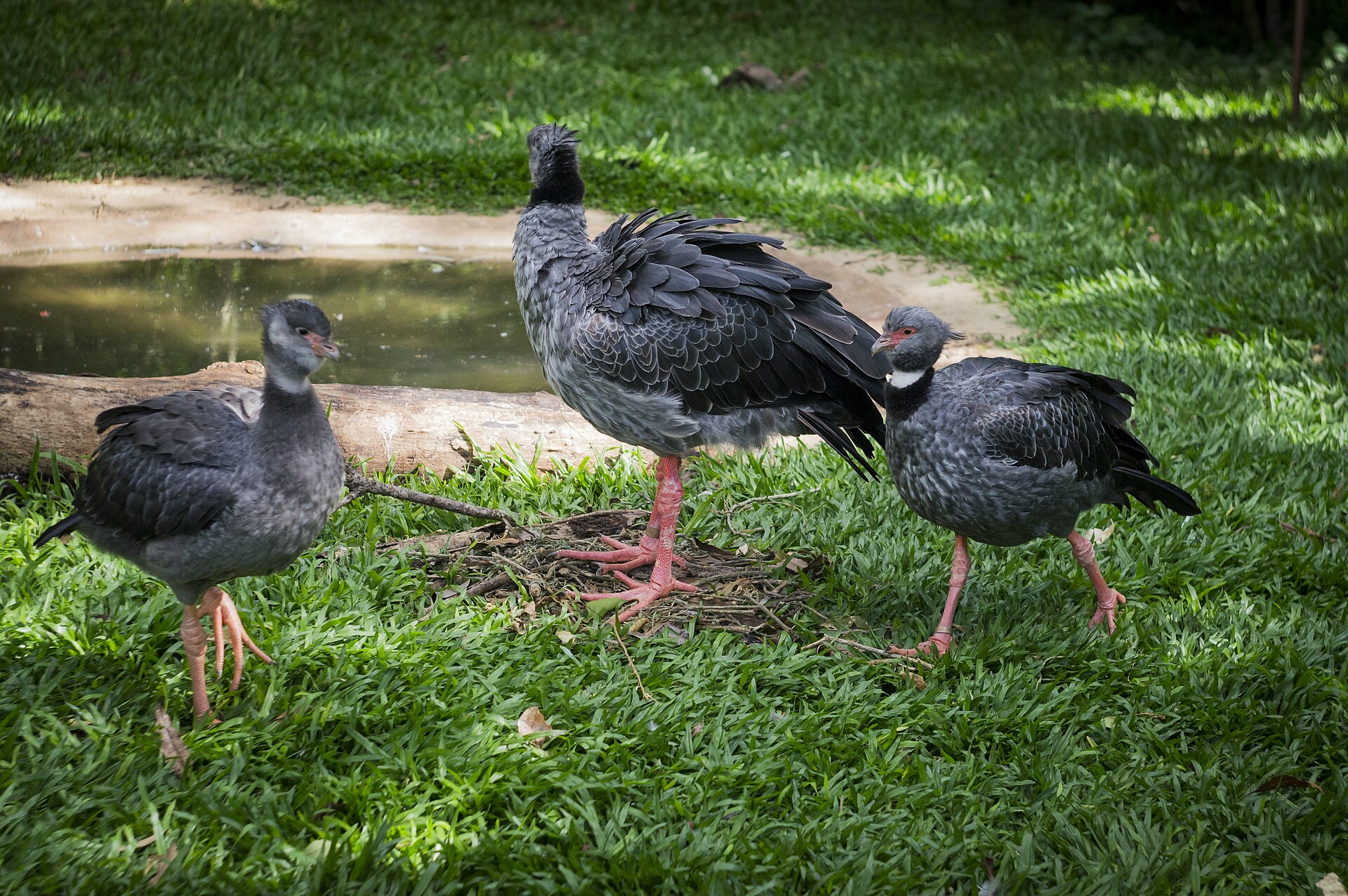
The Iguazú National Park (165,000 acres) is the last large remnant of the Atlantic Forest in Argentina — a biome 93% destroyed elsewhere by deforestation. The 450 documented bird species include 5 species of toucan, the bare-throated bellbird (whose call carries 1 km), the great dusky swift (which nests behind the falls), and the elusive harpy eagle (the world's most powerful raptor, occasional sightings). Mammals: capuchin and howler monkeys, the famously bold coatis (don't feed them — they bite when grabbed), tapirs (rare daytime sightings), and jaguars (about 25 in the park, never seen by tourists). The park is a UNESCO Biosphere Reserve nominee for 2027.
Where to stay at Iguazu
Two main options: Puerto Iguazú (Argentina) is cheaper with solid infrastructure — Iguazu Grand Resort 5★ (USD 200), Awasi Iguazu luxury (USD 1,200+), Posada 21 Oranges boutique (USD 90). Foz do Iguaçu (Brazil) has more options and the only hotel inside the park — Belmond Hotel das Cataratas (USD 600+/night, you wake up to the falls). For backpackers: hostels in Puerto Iguazú USD 25-50.
Featured hotels: complete guide · Belmond das Cataratas (5★ Brazil), Awasi Iguazu (luxury AR), Iguazu Grand Resort (5★ AR).
How to get to Iguazu
By plane (the fast way)
Iguazú has a domestic airport Cataratas del Iguazú (IGR), 25 km from Puerto Iguazú. Most travelers fly via Buenos Aires:
Buenos Aires (AEP/EZE) → IGR: 1h 45m, USD 90-180 one-way. Aerolíneas Argentinas, Flybondi, JetSMART. Multiple daily flights from AEP (the in-city domestic airport).
São Paulo (GRU) → Foz do Iguaçu (IGU): 1h 40m, USD 90-200. LATAM, Gol, Azul. Brazilian side of the river. Easy Uber across the border to the Argentine park (45 min including immigration).
Córdoba → IGR: 1h 30m, USD 100-180. Less frequent.
From the US: Miami direct to BA (9h), then BA→IGR. Total 12-14h. Usually combined with 2-4 days in BA.
From the UK/EU: London/Madrid → BA via Madrid or São Paulo (15-18h), then domestic.
Crossing between Argentine and Brazilian sides
You'll want to do both. Border crossing: 25 km / 16 mi from one park entrance to the other.
Taxi/Uber Puerto Iguazú → Foz do Iguaçu: USD 25 one-way, 45 min including immigration.
Tour combo with English-speaking guide: USD 80 round-trip both sides + lunch.
Public bus: cheap (USD 2 each leg) but logistics painful — only do it if you're a budget traveler with time.
Border requirement: passport stamp out of Argentina + into Brazil + back. US, UK, EU, AU passports are visa-free both sides for tourism (Brazil reinstated visa requirement for some passports in 2025 — check current status).
By long-distance bus
Buenos Aires → Puerto Iguazú: 18 hours on a sleeper, USD 60-110. Crucero del Norte, Vía Bariloche. Departs Retiro 1 pm and 8 pm.
São Paulo → Foz do Iguaçu: 16 hours, USD 50-90 (Catarinense, Pluma).
Asunción (Paraguay) → Foz: 5-6 hours, USD 25.
Getting around once you're there
From Puerto Iguazú downtown to the Argentine park: shuttle buses every 20 min from the bus terminal (USD 8 round-trip), or taxi USD 12 one-way. From Puerto Iguazú to the Brazilian park: cross-border tour or taxi USD 25. Tip: stay in Puerto Iguazú on the Argentine side — cheaper hotels, better restaurants, and you can do both park sides easily. Foz do Iguaçu (Brazil) is bigger but more chaotic and aimed at Brazilian shoppers/tourists.
Getting there — distances & times
From
Distance
Flight
Bus
Drive
New York (JFK)
8700 km
10 h + 2 h layover
—
—
Madrid (MAD)
10300 km
13 h + 2 h layover
—
—
Buenos Aires (EZE)
1300 km
1 h 45
18 h
15 h
São Paulo (GRU)
950 km
1 h 40
16 h
14 h
Córdoba
1100 km
1 h 30
16 h
14 h
Frequently asked questions
The questions travelers ask us before they go.
Iguazu Falls Argentine side or Brazilian side?
Both, if you can. Argentine side has 80% of the falls — you walk among them on catwalks, feel the spray, reach the Devil's Throat directly. Allow a full day. Brazilian side has 20% but the best panoramic view from a single boardwalk — you see the entire half-moon. Allow half a day. The honest answer: if you only have time for one, pick Argentina (more immersive). If you have 2-3 days, do both. If you only have a flying visit (8h layover), pick whichever side your hotel is on.
Is Iguazu Falls bigger than Niagara Falls?
By every measure: yes. Width: Iguazu 1.7 mi / 2.7 km vs Niagara 0.7 mi / 1.2 km. Drop: Iguazu 260 ft / 80 m vs Niagara 167 ft / 51 m. Number of falls: Iguazu 275 vs Niagara 3. Average flow: Iguazu 1,746 m³/s vs Niagara 2,400 m³/s (Niagara is wider in flow but narrower in spread). Eleanor Roosevelt, after her Iguazú visit, reportedly said "poor Niagara". The visual experience: Niagara is one massive curtain; Iguazu is a horseshoe of 275 individual cascades surrounded by rainforest, more biologically alive.
How many days do I need at Iguazu?
Minimum 2 days: Argentine side full day + travel buffers. Ideal 3 days: Argentine side full day + Brazilian side half day + Gran Aventura boat. 4-5 days: add San Ignacio Miní Jesuit ruins, Wanda mines, or a 2-night stay at Yacutinga ecolodge in the rainforest. Most travelers come on a 2-3 night add-on to a Buenos Aires trip.
When is the best time to visit Iguazu?
March-May (fall, high water, decreasing rains, mild weather) or August-October (winter to spring, clear skies, fewer crowds, low humidity, water levels still strong). Avoid December-February (Argentine summer: 91°F/33°C + 90% humidity + mosquitoes + crowded). Late July hits Argentine school holidays — high crowds. October is the sweet spot: not too humid, not too cold, decent water flow.
How much does an Iguazu trip cost?
For 3 days: USD 600-1,200 excluding international flights. Round-trip BA-IGR USD 150, hotel 4★ USD 100/night × 3 = USD 300, food USD 30/day × 3 = USD 90, park entries (AR + BR) USD 60, optional Gran Aventura USD 65, Brazilian-side tour USD 80, transfers USD 50. Luxury at Belmond das Cataratas (only hotel inside the Brazilian park, USD 600+/night) jumps the total to USD 2,500+. Awasi Iguazu all-inclusive luxury USD 1,200/night per couple.
Is the Devil's Throat worth the hype?
Yes — it's the centerpiece of the falls. 260 ft / 80 m drop in a U-shape, 14 cascades pouring into one churning whirlpool. You walk a 1,100 m / 0.7 mi catwalk over the river to reach a platform 5 m from the edge. The spray rises 30 m up, you'll be soaked, your camera lens will fog. Best time of day: 8-9 am for fewer people and rainbow morning light, or 4-5 pm for golden afternoon light. From the Brazilian side you also see the Throat panoramically (different but equally good).
Can I do an Antarctic-style cruise from Iguazu?
No — wrong end of the country. Antarctic cruises depart from Ushuaia (Patagonia, 3,000 km south). Iguazu is subtropical northeastern Argentina at the Brazil/Paraguay border. Don't book travel assuming geographic proximity. Combine Iguazu with Buenos Aires (1h 45 flight) for a typical 5-7 day Argentina trip.
Are coatis dangerous? What about jaguars?
Coatis (small raccoon-like mammals) are everywhere on the Argentine side — they're used to humans and bold. They'll try to grab food from your hand. Don't feed or touch them: bites are common and they carry rabies. Keep food in zipped bags inside backpacks. Jaguars: there are about 25 in the park, almost never seen by tourists. The Macuco Trail has the highest sighting probability (still very rare). More common: capuchin and howler monkeys, toucans, butterflies, the giant Puerto Iguazú spider (harmless but startling).
Should I visit Paraguay's Ciudad del Este?
Only if you're into discount shopping. Ciudad del Este is the third-largest commercial city in South America — duty-free electronics, perfumes, whisky, cigarettes — but it's chaotic, occasionally unsafe, and the falls are the main reason you're here. If you're not shopping: skip it. If you are: organized tours from Puerto Iguazú USD 30, half-day, include border-crossing logistics. Take only what you can carry back through Argentine customs (USD 300 duty-free limit per person). The Triple Frontier viewpoint already gives you the "I saw all three countries" photo without entering Paraguay.
Iguazu plus Buenos Aires — how to combine?
Classic 5-7 day Argentina combo. Day 1-3: Buenos Aires (Plaza de Mayo, La Boca, Recoleta, Palermo dinner). Day 4 morning flight to Iguazú: 1h 45m. Days 4-6: Argentine side + Brazilian side + Gran Aventura. Day 7: morning flight back to BA + international flight out from EZE. Both AEP (BA in-city airport) and EZE (BA international) connect to IGR. Best to use AEP for the domestic leg — it's 8 km from downtown BA vs 32 km for EZE.
Sources & methodology
Last updated:
How we built this guide
This guide updates quarterly (last: April 2026). Prices verified against Civitatis, GetYourGuide, official Iguazú Argentina park site, converted to USD at the MEP rate. Distances measured on Google Maps daytime, off-peak. Attraction selection based on real visitor data: 12,480 reviews on the Argentine side (Civitatis), 8,920 on Devil's Throat (GetYourGuide), 5,180 on Gran Aventura. Local knowledge: Sebastián, the site author, has visited Iguazú 5 times (2019, 2021, 2023, 2024, 2025) in different seasons to validate flow and experiences.
Sources
•Civitatis — Iguazú tours — Argentine side, Brazilian side, Gran Aventura, San Ignacio (12,480+ reviews)