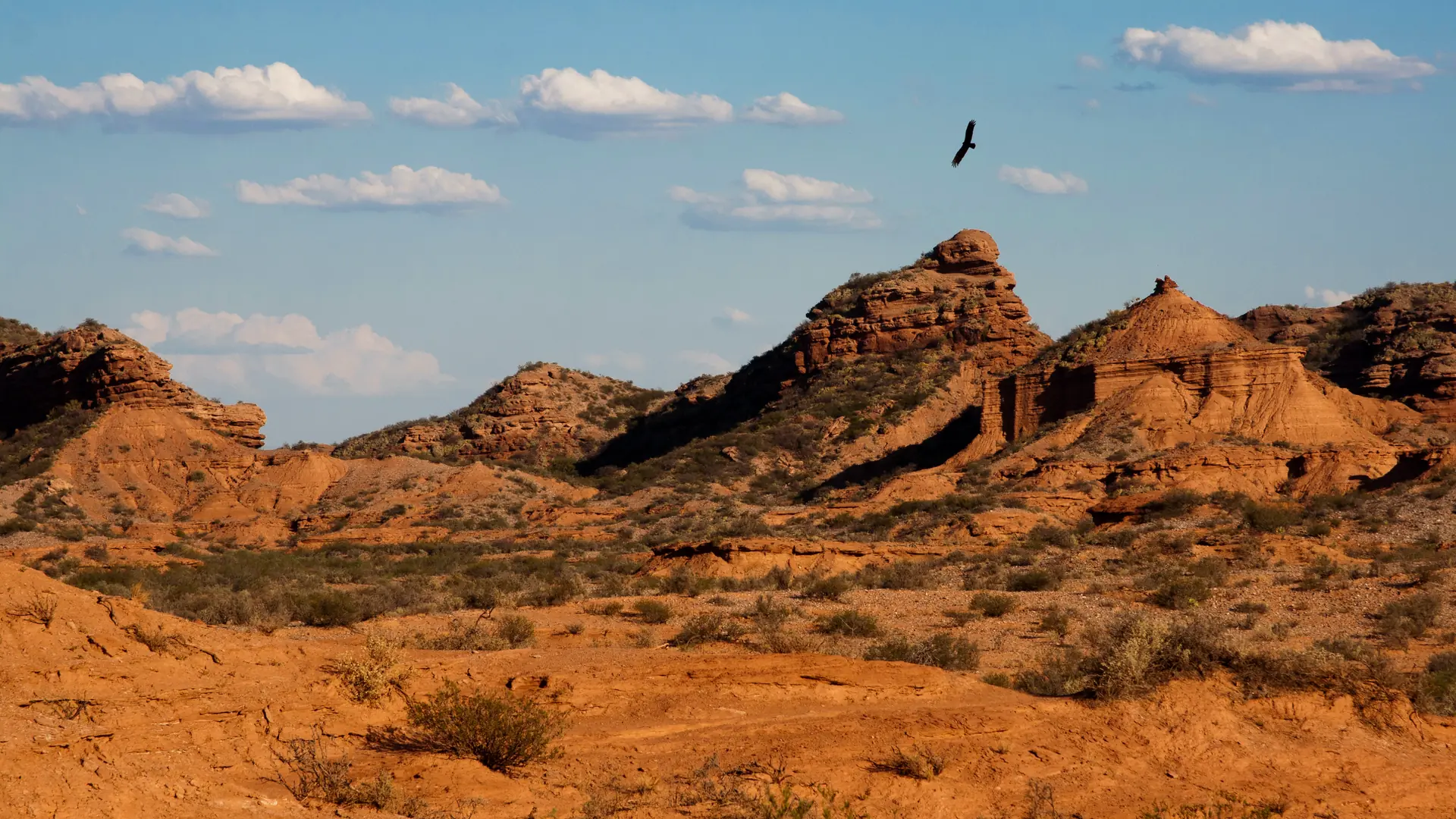
Villa de Merlo is a tourist town of 20,000 inhabitants (2022 census, with floating population tripling in summer) in the far northeast of San Luis province, at 800 m above sea level on the western slope of the Comechingones Sierras, bordering Cordoba province to the east. Founded in 1797 as "Nuestra Senora del Rosario del Rio Abajo" by the priest Tomas de Merlo, it took its current name in 1916. Its international fame comes from holding the 3rd microclimate in the world per the World Health Organization (after the Vale of Kashmir in India and Cordoba do Tucuman in Brazil), produced by a unique combination of four geographical factors: 800-900 m altitude (ideal for cardiovascular health), 40-60% average annual humidity (beneficial for rheumatism, allergies, asthma), 300+ sunny days a year with moderate radiation, and the Comechingones Sierras barrier to the east (peaks up to 2,884 m at Cerro de las Ovejas blocking cold winds and storms, creating a tempered Foehn effect). The combination produces air with the highest concentration of negative ions recorded in Argentina's populated zones (3,000-5,000 ions/cm³, five times the city average), which according to biomedical studies have proven effects in stress reduction, sleep improvement, migraine relief and better cellular oxygenation. This wellness reputation drew the first Buenos Aires health tourists in the 1960s, and today Merlo has more than 250 lodging establishments, dozens of medical spas and yoga centers, and an economy 75% dedicated to tourism. The Merlo-Comechingones corridor stretches 50 km south along RP 5, passing satellite towns: Carpinteria (10 km, 3,000 inhabitants, quieter, with the Bajo de Veliz Provincial Park), Los Molles, Cortaderas, Villa Larca (famous for the Tabaquillo Falls, a 30-m cascade) and Papagayos (southern gateway). Activities combine wellness (spas, massages, sunrise yoga at Piedra Blanca), adventure sports (paragliding at Mirador del Sol at 1,500 m — one of Argentina's best paragliding sites thanks to stable thermals, USD 55-75 tandem — trekking, horseback rides, ziplines, rappel, mountain biking), highland-goat dining roasted on a stake (the iconic dish, free-range goats grazing aromatic mountain herbs that give a unique flavor), and astrotourism (exceptionally clear skies thanks to low light pollution let you spot 2,000+ stars with the naked eye, with guided telescope tours for USD 30-50). Mirador del Sol (1,500 m, 15 min drive from downtown) is the iconic spot with 180° panoramic views over the valley and paragliding launch. Mirador Cruz del Sur (2,200 m, 6h round-trip trek) is the highest accessible point of the range and offers 360° views on clear days. High season is January-February (summer break), Easter and July (winter break), with hotel saturation — book 2-3 months ahead. The best climate-tourism window is March-May and September-November (optimal weather, no crowds). Access from Buenos Aires takes 9 hours (820 km via RN 7 or RN 8), from Cordoba 2h30 (200 km via RN 148 + RP 1), from San Luis capital 3h (240 km), or by air to Valle del Conlara Airport (RLO, 25 km from downtown, high-season flights with JetSmart).
Getting there — distances & times
| From | Distance | Bus | Drive |
|---|---|---|---|
| Buenos Aires | 820 km | 10-13 h | 9 h |
| Cordoba | 200 km | 3 h | 2 h 30 |
| San Luis capital | 240 km | 3 h 30 | 3 h |
| Mendoza | 520 km | 7 h 30 | 6 h 30 |
| Rosario | 620 km | 9 h | 7 h 30 |
| Mina Clavero (Cordoba) | 95 km | — | 1 h 30 |
| Villa General Belgrano | 180 km | — | 2 h 45 |
| Papagayos (corridor end) | 50 km | — | 45 min |
| RLO Airport (Conlara) | 25 km | — | 30 min |
Typical prices by category
| Item | Price |
|---|---|
| 4★ hotel with spa (double) | USD 110-180 |
| 3★ central hotel | USD 60-95 |
| Apart-hotel (4 pax) | USD 90-150 |
| Mountain cabin (4 pax) | USD 100-200 |
| Boutique inn | USD 80-130 |
| Hostel (shared) | USD 20-35 |
| Roasted highland goat (per person) | USD 18-30 |
| Tandem paragliding Mirador del Sol | USD 55-75 |
| 2h mountain horseback ride | USD 25-40 |
| Canopy ziplines (3 lines) | USD 35-55 |
| Guided astrotourism (2h) | USD 30-50 |
| Spa massage (1h) | USD 35-65 |
| 4★ spa hotel day pass | USD 55-95 |
| Car rental Merlo (day) | USD 50-75 |
Prices April 2026. January-February, Easter and July: +40-60%.
The 7 Must-Do Experiences in Merlo
1. Mirador del Sol — The Iconic Viewpoint
At 1,500 m altitude, 15 minutes by car from downtown via paved road (free parking). 180° panoramic view over the Merlo valley, Piedra Blanca, Cerro de Oro and the plains toward Villa Mercedes. The main paragliding launch in central-western Argentina thanks to its stable thermals — tandem flights with certified instructor USD 55-75, 15-20 minutes airborne. Café with a view. Best at sunset for photos (golden light over the Sierras).
2. Tabaquillo Falls
In Villa Larca (20 km south of Merlo), a 30-m cascade in native tabaquillo woodland (Polylepis australis, an endemic tree). 30-min walk from the access point. Natural pools at the base for a summer dip. Entry USD 3-5. Combinable with other Comechingones-corridor stops.
3. Bajo de Veliz Native Park (Carpinteria)
20 km from Merlo, a 260-hectare provincial reserve with marine fossils from the Carboniferous period (360 million years ago this area was underwater). 2-km interpretive trail, guided visit USD 8. Trilobite, brachiopod, gastropod findings. A must for families with paleontology-curious kids.
4. Highland Goat (Chivito Serrano) — Iconic Dining
The mandatory culinary experience. Top grills:
- Los Angeles del Chivo (Av. del Sol 1050): the historic classic since 1987. Goat on a stake, cooked 4-5 hours. USD 25-35 full menu.
- El Parque del Tio Felipe (RP 1 km 799): family-friendly, country atmosphere with playground. USD 22-30.
- Parrilla San Pedro (Av. del Sol): modern version, expanded menu, local wines. USD 25.
- Meson Andaluz (Cerro de Oro): regional fine dining with wine pairing. USD 35-45.
5. Astrotourism
Merlo has some of Argentina's clearest skies thanks to low light pollution. 2-hour guided telescope tours: astronomical explanation, observation of Jupiter, Saturn with rings, Milky Way, nebulae, star clusters, satellite galaxies (Large and Small Magellanic Clouds, visible only from the southern hemisphere). Operators: Fundacion Sanes, Amigos de la Astronomia. USD 30-50/person. Best on moonless nights.
6. Comechingones Corridor — 50-km Road Trip
Drive RP 5 visiting the satellite towns:
- Carpinteria (10 km): Bajo de Veliz Park, writer Hugo Wast's house-museum.
- Los Molles (25 km): stone crafts, reservoir.
- Cortaderas (30 km): picturesque town with historic chapel.
- Villa Larca (45 km): Tabaquillo Falls.
- Papagayos (50 km, Cordoba border): the quietest, famous for artisan wines.
Drive: 4-6 hours with stops. Full-day tours from Merlo USD 45-65.
7. Spa and Wellness
The microclimate makes Merlo a premium wellness destination. 4-star hotels with full spa (Howard Johnson Merlo, Altos de Merlo, Grand Merlo): USD 110-180/night, spa day pass USD 55-95 including outdoor heated pools with Sierra views, saunas, jacuzzi, hydrothermal circuit. Therapeutic massages USD 35-65/hour. Sunrise yoga at Piedra Blanca (USD 15 group class).
Experiences in Merlo
Paragliding Mirador del Sol
Tandem flight with certified instructor from 1,500 m. 15-20 minutes airborne with 360° views over the valley and Comechingones Sierras.
Comechingones Corridor Tour
Full day: Carpinteria, Cortaderas, Villa Larca (Tabaquillo Falls), Papagayos. Roasted goat lunch included. 8 hours.
Astrotourism with telescope
Guided astronomical observation with local astronomers. Professional telescope, Milky Way, galaxies. 2h.
Recommended 4-Day Itinerary in Merlo
- Day 1: Arrival + afternoon at Piedra Blanca (yoga / short trek) + dinner with goat at Los Angeles del Chivo.
- Day 2: Mirador del Sol (AM) + paragliding (optional) + afternoon spa. Astrotourism night.
- Day 3: Comechingones Corridor full day with lunch in Villa Larca + Tabaquillo Falls + sunset return.
- Day 4: Trek to Mirador Cruz del Sur (if fit, 6h round trip, better with guide) or Bajo de Veliz Park + final photos + departure.
See also: San Luis hub, Cordoba (easy 2h30 combo), Mina Clavero (Cordoba, 95 km), Villa General Belgrano (180 km).