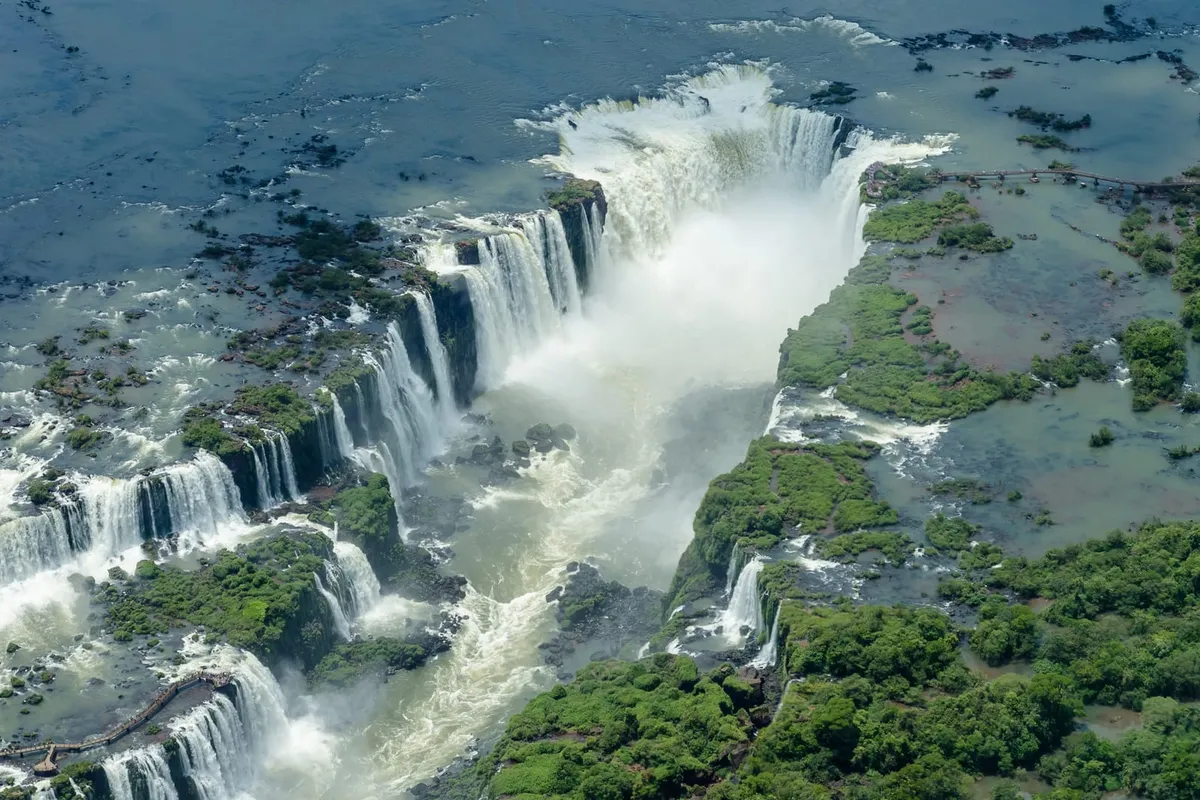
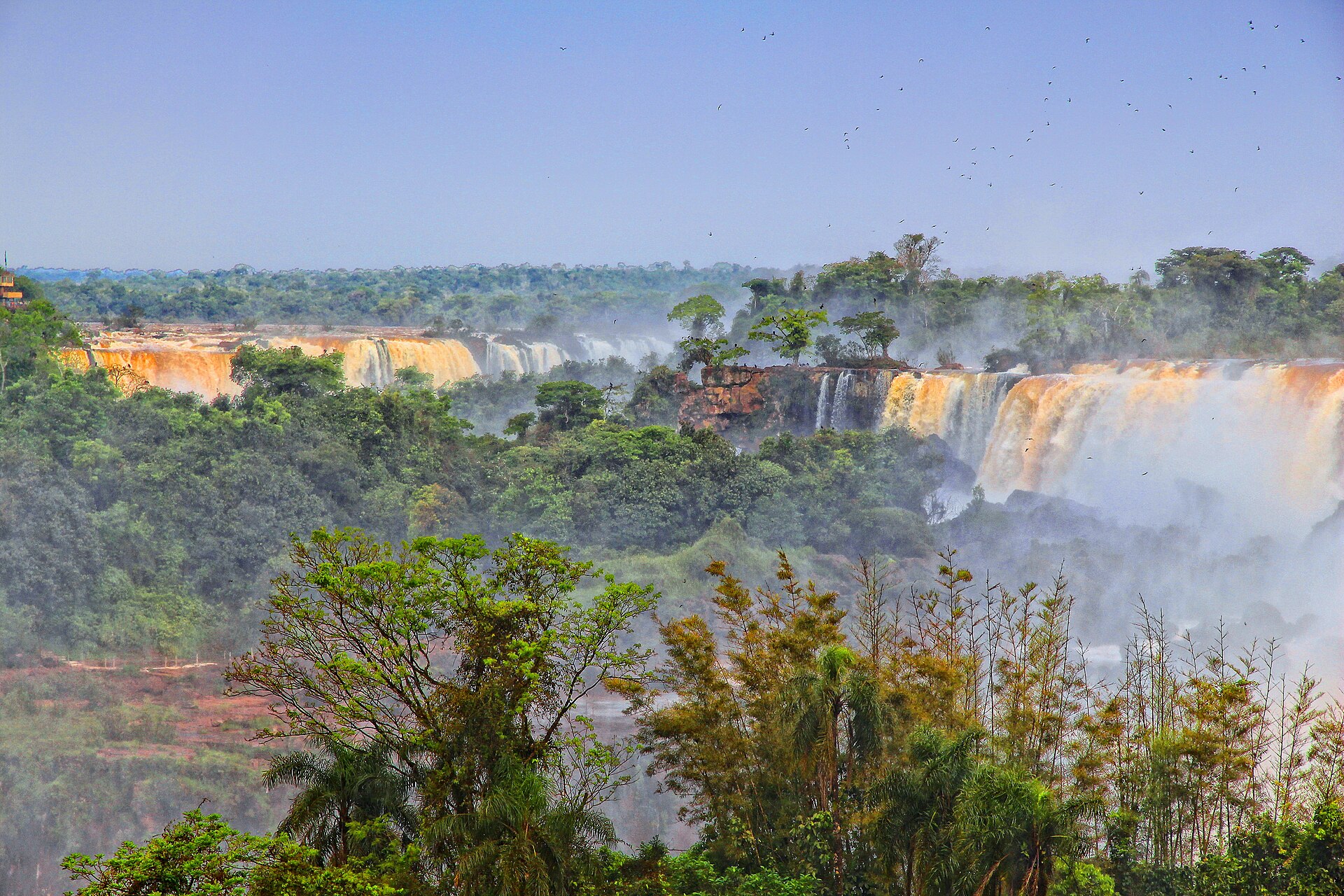
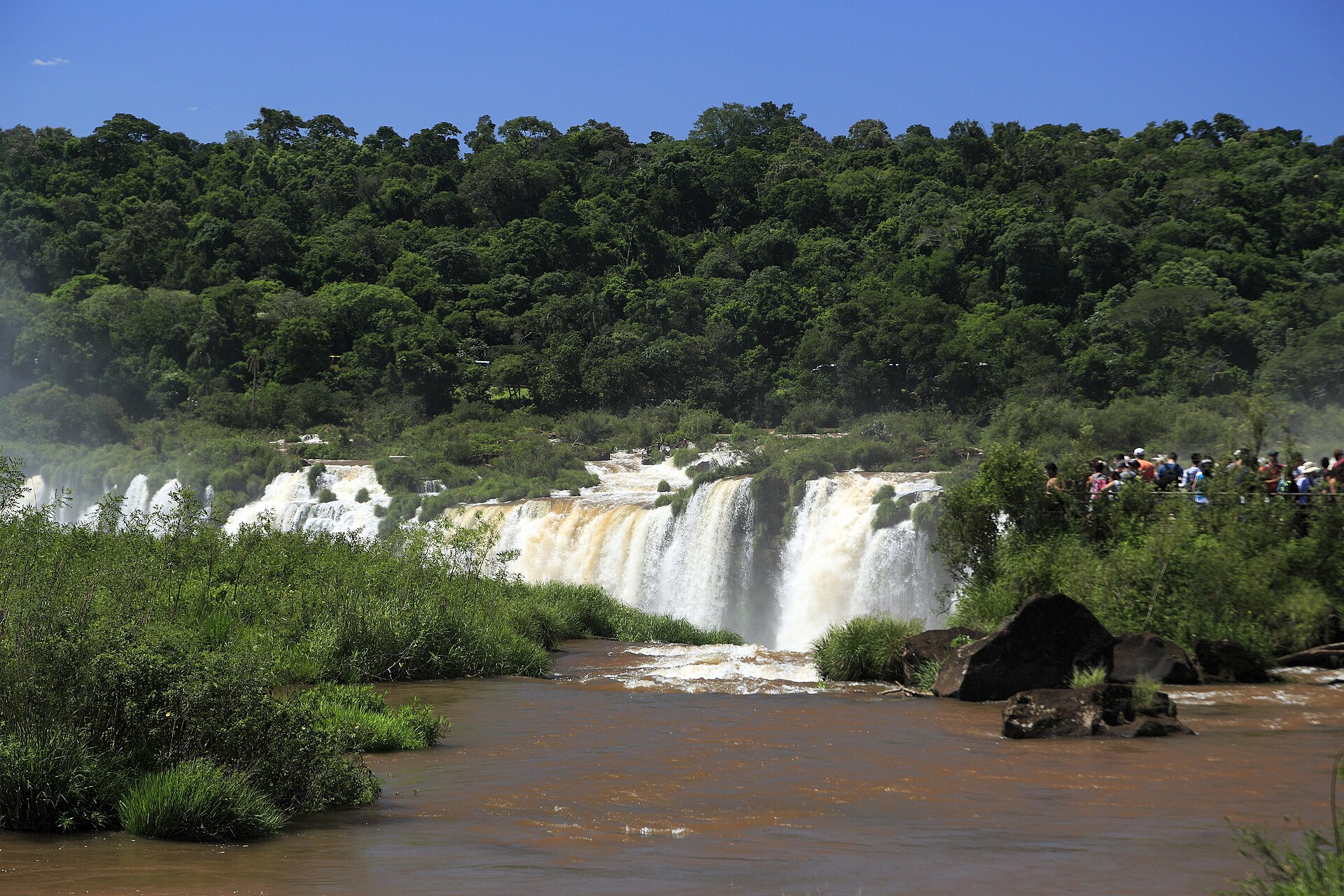
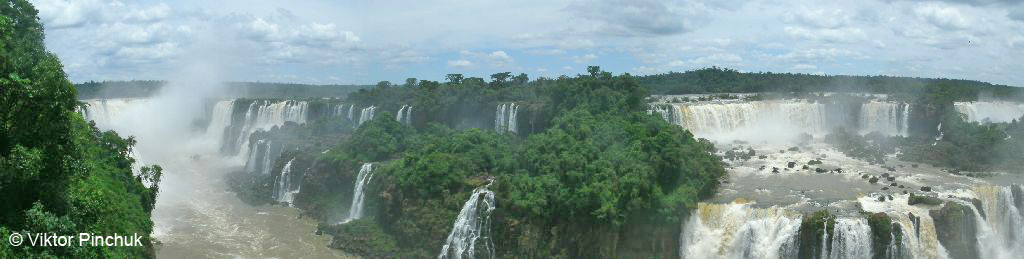
Iguazu Falls are one of the most spectacular photographic subjects on the planet: 275 waterfalls across 2.7 kilometres, permanent rainbows, dramatic mist, subtropical rainforest and wildlife create endless photographic opportunities (lat -25.6953, lng -54.4367). However, photographing Iguazu presents unique challenges: constant mist soaks equipment, light changes drastically between circuits, and rainbows appear at predictable times and locations that few photographers know. This guide reveals the best times for each viewpoint, where rainbows form (morning on the Brazilian side, afternoon on the Argentine side), what equipment to bring and how to protect your camera from water.
Getting there — distances & times
| From | Distance | Flight | Bus | Drive |
|---|---|---|---|---|
| New York (JFK) | 8700 km | 10 h + 2 h layover | — | — |
| Madrid (MAD) | 10300 km | 13 h + 2 h layover | — | — |
| Buenos Aires (EZE) | 1300 km | 1 h 45 | 18 h | 15 h |
| São Paulo (GRU) | 950 km | 1 h 40 | 16 h | 14 h |
| Córdoba | 1100 km | 1 h 30 | 16 h | 14 h |
Month-by-month climate
| Month | Temp. | Rain | Crowds | Note |
|---|---|---|---|---|
| Jan | 22° / 33°C | 170 mm | Humid summer | |
| Feb | 22° / 32°C | 160 mm | ||
| Mar | 21° / 31°C | 155 mm | ||
| Apr | 18° / 28°C | 160 mm | Mild, ideal | |
| May | 14° / 25°C | 125 mm | ||
| Jun | 12° / 22°C | 110 mm | ||
| Jul | 11° / 23°C | 85 mm | Winter break | |
| Aug | 13° / 25°C | 90 mm | ||
| Sep | 14° / 26°C | 130 mm | Clear skies | |
| Oct | 17° / 28°C | 160 mm | ||
| Nov | 19° / 30°C | 155 mm | ||
| Dec | 21° / 32°C | 170 mm |
Ideal Photo Itinerary — Argentine Side
7:30-8:00: Arrive at park opening. First hour is magical: few people, golden sidelight and active fauna. Head to the Lower Circuit first, where morning light illuminates the falls frontally and produces intense rainbows.
9:00-11:00: Move to the Upper Circuit. Overhead light creates spectacular turquoise water transparencies.
14:00-16:30: Devil's Throat. Afternoon sun behind the photographer illuminates the mist frontally, creating spectacular rainbows. This is the golden hour for the Devil's Throat: the best photographic moment in all of Iguazu.
Must-Have Photo Spots
Devil's Throat — The Ultimate Shot
Best at 14:00-16:00 (sun behind photographer). Wide-angle lens (14-24mm). Slow shutter (1/15-1/4s) for silk water effect or fast (1/500+) to freeze drops. Protect lens with sacrificial UV filter.
Dos Hermanas Falls — Lower Circuit
From below, the most dramatic perspective: two parallel cascades falling in front of you with rainbows and vegetation. Best: 8:00-9:30 with sidelight. Easiest spot to capture a complete rainbow with the falls.
San Martin Island — The Secret Viewpoint
Accessible by free boat from the Lower Circuit, with an elevated viewpoint offering a unique perspective. Few tourists visit, so crowd-free photos are possible.
Full Moon Walk
During full moon nights (5 nights per month), the park opens a nocturnal walk to Devil's Throat. It is possible to photograph the "moonbow" (lunar rainbow). Tripod and long exposures needed (15-30 seconds, ISO 3200-6400). Limited capacity, book ahead.
Equipment and Water Protection
Recommended Equipment
Lenses: Wide angle (14-24mm) essential for Devil's Throat. Medium zoom (24-70mm) for circuits. Telephoto (70-200mm+) for wildlife. Filters: Circular polariser (reduces reflections, enhances rainbows), ND filter (for silk water in daylight), sacrificial UV filter. Tripod: Mandatory for full moon. Drone: Prohibited inside the national park.
Water Protection
Mist at Devil's Throat and Lower Circuit is intense like rain. Use: rain cover for camera, Ziploc bags for spare lenses, microfibre towels for constant front lens cleaning, sacrificial UV filter. Carry an extra towel to dry hands before handling camera.