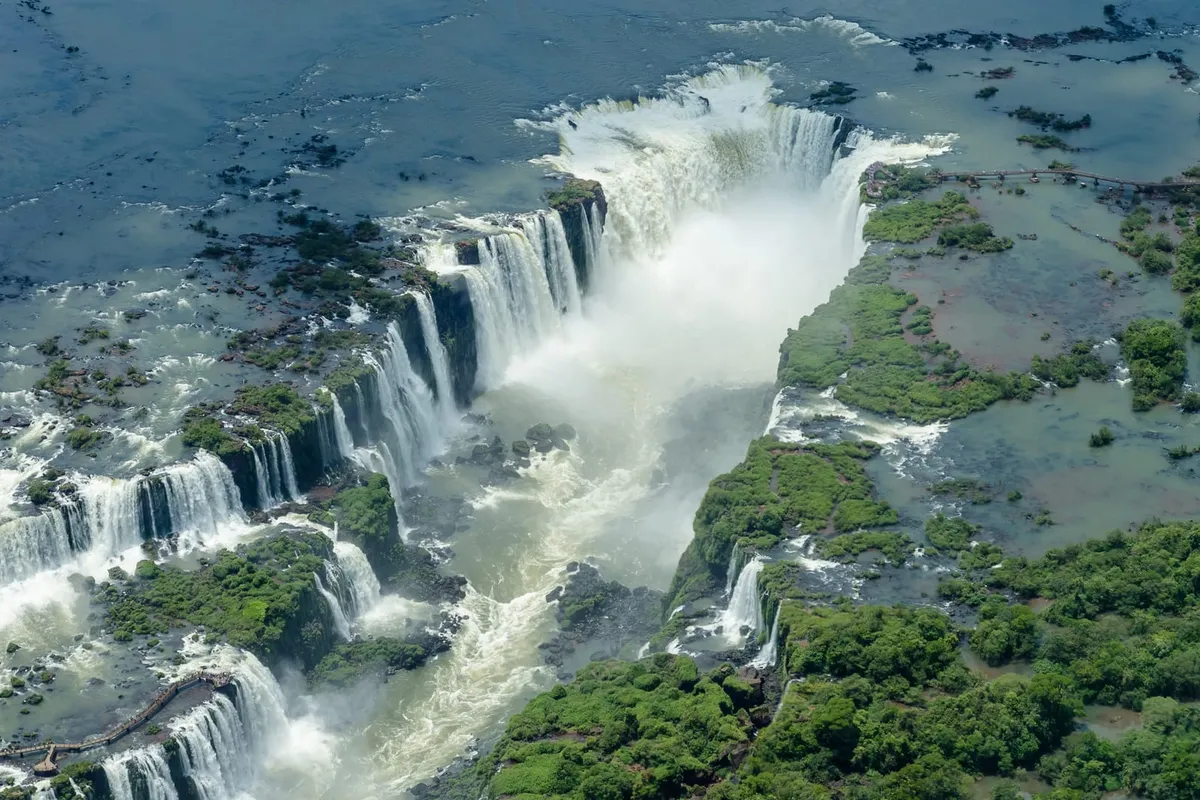
If there is one plant that defines Argentine identity, it is yerba mate (Ilex paraguariensis). The average Argentine drinks 6.4 kg of yerba a year — it is the national beverage, the daily ritual, the single most genuine gesture of friendship in the country. And it is in Misiones, the province of red earth, subtropical jungle, and the world's most famous waterfalls, where more than 90% of Argentine yerba mate is grown. The Yerba Mate Route is a tourism circuit threaded through this yerba country that lets you follow the entire process: from the living plant in the jungle to the gourd of mate poured in every Argentine home.
The route covers working plantations, traditional drying barns, industrial factories, and agro-tourism ventures spread across the province of Misiones and northeastern Corrientes. It is an experience that goes far beyond food and drink — it is a journey into the cultural roots of Argentina, into rural labor and Guaraní tradition, and into a landscape where Misiones jungle, red-tinged streams, and yerba groves form an intense green mosaic on top of the iconic terra rossa soil.
Yerba Mate Route Facts
- Region: Misiones and northeast Corrientes
- Extent: 200+ km of visitable circuits
- Visitable estates: 30+ (plantations, drying facilities, factories)
- Harvest season: April to September
- Visit cost: USD 10-25 per estate
- Excursion from Iguazu: From USD 35-50
- Annual Argentine production: ~800,000 tonnes of green leaf
- The plant: Ilex paraguariensis (Aquifoliaceae family)
History of Yerba Mate: From the Guaraní to the World
Yerba mate was discovered and used by the Guaraní people long before Europeans arrived in South America. The Guaraní called it "ka'a" and either chewed the leaves or brewed them as an infusion, valuing it for its energizing, digestive, and medicinal properties. To them the plant was a gift from the gods, woven into creation myths and stories of transformation.
When the Jesuits reached Misiones in the 17th century and founded their famous reductions (such as San Ignacio Miní), they discovered yerba mate and became the first to cultivate it systematically — until then it had only been gathered wild. The Jesuits developed germination, cultivation, and drying techniques that remain the foundation of the modern industry. Yerba quickly became the leading export of the Jesuit missions and a de facto currency across the region.
After the Jesuits were expelled in 1767, the secret of germinating the seed was lost for more than a century. Only in the early 20th century did European immigrants — Polish, Ukrainian, and German settlers who colonized Misiones — rediscover the technique and relaunch the yerba industry that today produces around 800,000 tonnes of green leaf per year.
The Production Process: From Plant to Mate
Understanding the production process is the essence of the route. Every stage has its own place, timing, and craft:
1. Cultivation and Harvest (zafra)
Yerba mate grows in plantations (called yerbales) as a 2-3 meter shrub when pruned; left wild it can reach 15 meters. It needs red earth, a subtropical climate, abundant rain, and partial shade — exactly what Misiones delivers. The harvest, locally called the tarefa, is done by hand from April through September by tareferos, the rural workers who cut leafy branches with hand shears. It is intense physical work: an experienced tarefero brings in 200-300 kg of green leaf per day. Cuts are selective — specific branches come off while the plant stays healthy enough to regenerate for the next cycle.
2. Sapecado (Flash-heating)
Immediately after harvest, the leaves go through sapecado: direct exposure to fire (800-1,000°C) for 20-30 seconds to halt enzymatic oxidation and lock in the green color. This step is critical — without it, the leaves would darken and lose their signature flavor. Sapecado happens inside rotating cylinders over an open flame. The aroma it releases is intense: smoky, vegetal, unmistakable.
3. Drying
After sapecado, the leaves are dried with hot air (80-100°C) for several hours until moisture drops to about 5%. Drying happens either in a barbacuá (the traditional wood-fired method that delivers a smoky character) or on a conveyor-belt dryer (the industrial method, which produces a cleaner taste). The barbacuá, used by artisanal producers, yields more complex yerba and is the method preferred by connoisseurs.
4. Coarse milling (canchado)
Dried yerba is roughly broken down — the canchado stage — to reduce volume and prepare it for transport and aging. Canchada yerba looks like broken leaves mixed with stem fragments.
5. Aging
The single most important stage for final flavor. The coarsely milled yerba rests in burlap sacks or controlled chambers for 6 to 24 months. During that time natural chemical reactions transform the taste: it shifts from green and aggressive to smoother, rounder, and more balanced. The length of aging defines each brand's signature: "fresh" yerba (6-9 months) is sharper and grassier, while long-aged yerba (18-24 months) is more mellow and complex.
6. Milling and Packaging
Finally, the aged yerba is milled to the desired coarseness and blended according to each brand's recipe: ratio of leaves to stems (palos) to powder to whole leaves. Every brand keeps its blend a secret. The result is vacuum-sealed or packaged in 500g-1kg bags and shipped across the country.
Featured Estates You Can Visit
Establecimiento Las Marías (Taragüí / Playadito / Unión)
Las Marías is the largest yerba company in Argentina, producer of Taragüí (the country's best-selling brand), Playadito, Unión, and La Merced. Their main estate is in Gobernador Virasoro, in the province of Corrientes (about 300 km from Puerto Iguazú). The visit covers the plantations, the drying and milling plant, and a tasting of different varieties. It is an industrial operation at impressive scale. Visits are scheduled and require advance booking.
Establecimiento Don Lucas
Located in Oberá, Misiones, Don Lucas is a family-run operation producing organic yerba with artisanal methods. Drying happens in a traditional wood-fired barbacuá, which gives the final product a distinctly smoky character. The visit is intimate and personal: the producer himself walks you through every stage and offers a comparative tasting between industrial and artisanal yerba. The flavor difference is genuinely revealing.
La Cachuera (Rosamonte)
Rosamonte, one of the most popular brands in Argentina, makes its yerba in Apóstoles, Misiones (the national capital of yerba mate). The La Cachuera estate offers guided tours of the processing plant plus a yerba mate museum with historic machinery and detailed documentation of the production chain. Apóstoles is roughly 300 km from Iguazú.
Cooperativa Montecarlo
In the town of Montecarlo (about 120 km from Iguazú), this growers' cooperative offers tours of the yerbales, the drying barn, and the packaging plant. It is one of the most accessible options for a half-day visit out of Iguazú. The cooperative produces several yerba mate and tea brands.
Yerba Mate Theme Park (Oberá)
In Oberá, this educational and interactive space is dedicated entirely to yerba mate: history, botany, the production process, mate culture, and tasting. Ideal for families and for travelers who want a complete introduction to the world of yerba in a single stop. Entry runs USD 5-10.
Yerba Mate Tasting: Learning to Drink Like a Pro
Just as wine has its tastings, so does yerba mate — and structured yerba tastings are growing across the route. In a tasting, a yerba sommelier walks the group through 4-6 different varieties, analyzing aroma (dry and wet), color of the infusion, flavor profile (sweet, bitter, smoky, herbal, floral), body, intensity, and finish.
Differences between yerbas can be subtle or dramatic: a barbacuá yerba shows obvious smoke notes, an organic yerba can have floral nuances, and an herbal blend (with boldo, mint, or cedrón) drinks completely differently. The tasting teaches you how to appreciate the complexity of a beverage that millions of Argentines drink daily without ever stopping to analyze it.
Agro-Tourism: Beyond Yerba
The Yerba Mate Route plugs into a wider agro-tourism network across Misiones:
- Tea plantations: Misiones also produces black and green tea. Some estates combine yerba visits with tea plantation tours.
- Citrus farms: Organic oranges, mandarins, and grapefruit in the Montecarlo and Eldorado areas.
- Apiculture: Wild jungle honey, propolis, and other byproducts of the Misiones rainforest.
- Native flora and orchids: Specialist nurseries focused on Misiones orchids and Paraná-jungle plants.
- Regional food: Chipá (cheese-and-cassava bread), reviro (fried dough), mbejú (cassava starch flatbread), grilled meat with cassava, and tropical fruit preserves.
How to Explore the Route
The Yerba Mate Route is not a single fixed itinerary — it is a network of dozens of estates spread across Misiones and northeast Corrientes. The main ways to experience it:
- Half-day excursion from Iguazú: Visit a nearby estate (Montecarlo or northern Misiones). From USD 35-50 with transport and guide.
- 2-3 day circuit: Iguazú → Montecarlo → Oberá → Apóstoles → Gobernador Virasoro. Requires a rental car or a multi-day organized tour.
- Own vehicle: The best option for flexibility. Roads are in good condition (RN 12 and RN 14 are paved). Estates require advance booking.
Frequently Asked Questions
What is the Yerba Mate Route?
The Yerba Mate Route is a tourism circuit in Misiones province (and part of Corrientes) that visits yerba mate plantations, drying facilities and production plants. It allows you to learn the full process from plant to mate cup, including tastings, regional gastronomy and contact with the yerba mate culture.
Can you visit from Puerto Iguazu?
Yes. There are half-day and full-day excursions from Puerto Iguazu visiting plantations and yerba mate estates in the area. The closest estates are 40-80 km from Iguazu. The Las Marias estates (Taragui/Playadito) are in Corrientes, further away, requiring a full day or overnight stay.
How much does a plantation visit cost?
Visits to yerba mate estates cost USD 10-25 per person, depending on the establishment and whether tastings are included. Organised excursions from Iguazu cost from USD 35-50 with transport and guide. Some small estates offer free visits if you buy products in their shop.
When is the best time to visit the plantations?
The yerba mate harvest season runs April to September. During this period you can see the tareferos (harvesters) working and the full process in action. Outside harvest season, the plantations are green and you can see the drying and production, but not the harvest itself.
This article contains affiliate links. If you book through them, we receive a small commission at no extra cost to you.