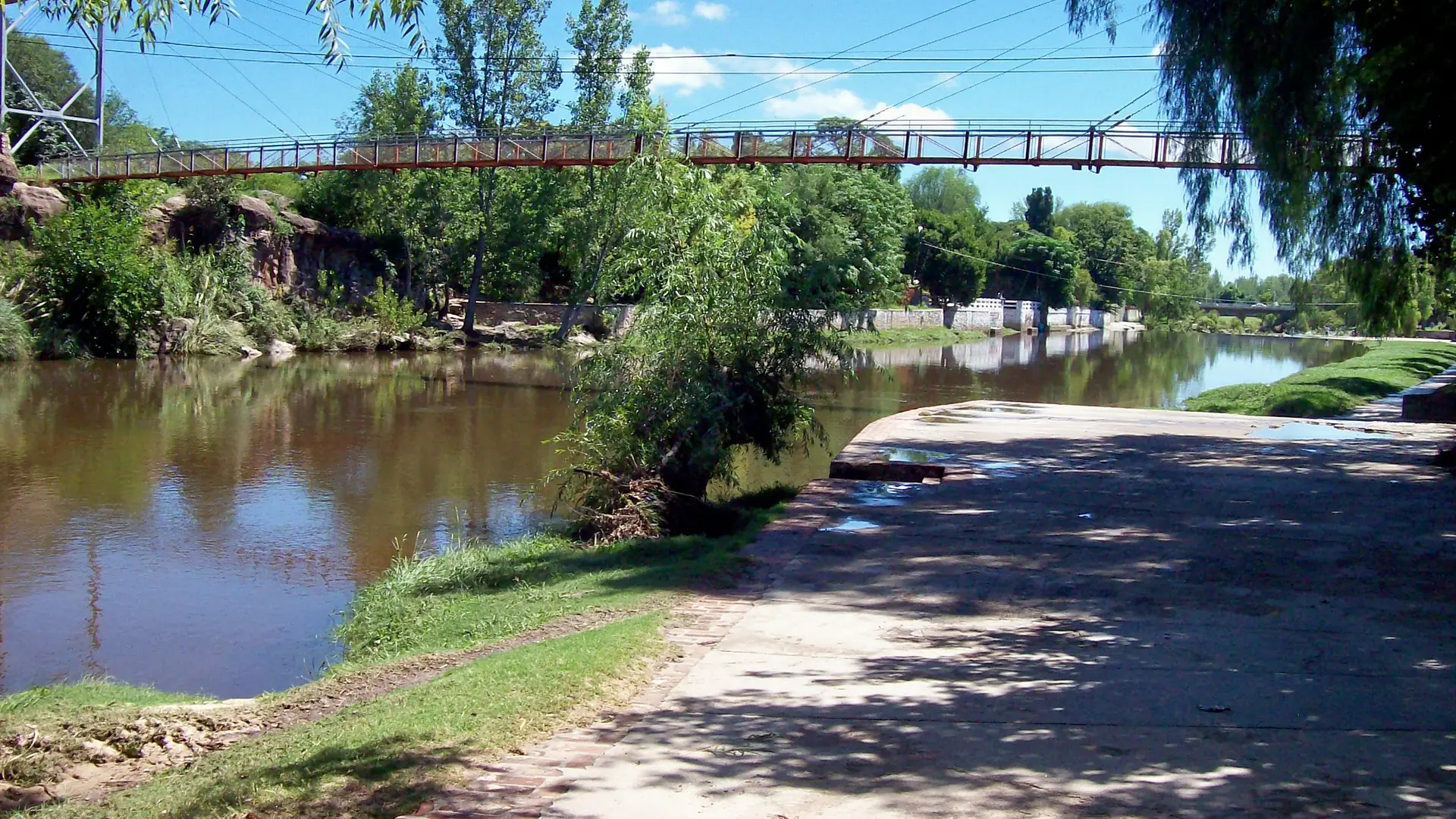
Cayastá (3,000 inhabitants, on the San Javier River, Garay department, 80 km north of Santa Fe capital) is the Argentine town that preserves the most significant archaeological site of the country's colonial founding period: the ruins of Santa Fe la Vieja, the first founding of the city of Santa Fe established by Juan de Garay on November 15, 1573 — seven years before the same conquistador founded Buenos Aires (1580). The city operated for 87 years until recurrent San Javier River floods forced complete relocation in 1660 to the current Santa Fe capital site. Settlers took their belongings and important construction materials, leaving foundations and immovable elements. The site became uninhabited and overgrown until systematic archaeological excavations (since 1949) revealed urban remains: visible foundations of the Jesuit church (16th-17th century, one of the oldest in present-day Argentine territory), the traced central plaza, foundations of the Cabildo House, elite private homes. Today the Provincial Archaeological Park Santa Fe la Vieja (National Historic Monument 1957) preserves these foundations in the open air, alongside the Juan de Garay Ethnographic and Colonial Museum exhibiting the findings: colonial pottery, ironware, jewelry, and the exhumed bone remains presumably identified as Hernando Arias de Saavedra "Hernandarias" (1561-1634, first criollo to occupy the Río de la Plata governorship) and his wife Jerónima de Contreras — one of the few accessible historic Argentine tombs in museum display. Typical visit 2-3 hours. Combinable with Santa Fe capital (80 km, 1h15 by car on RP 1) on a 2-day circuit. A destination for those seeking connection with Argentine founding history more than recreational tourism. Park and museum entry USD 3-5, open Tuesday-Sunday 8-18 hours.
Distances to Cayastá
| From | Distance | Flight | Bus | Drive |
|---|---|---|---|---|
| Santa Fe capital | 80 km | — | 1 h 30 | 1 h 15 |
| Buenos Aires (AEP) | 555 km | — | 8-9 h | 7-8 h |
| Rosario | 250 km | — | 4 h | 3 h 30 |
| Paraná (Entre Ríos) | 110 km | — | 2 h | 1 h 30 |
| Helvecia | 30 km | — | 40 min | 30 min |
Typical Prices in Cayastá (USD)
| Category | Budget | Mid-range | Luxury |
|---|---|---|---|
| Archaeological Park + Museum entry | USD 3-5 | — | — |
| Specialized local guide (2 h) | USD 20-40 | USD 50-80 | — |
| Cayastá rural inn (double) | USD 50-80 | USD 90-130 | — |
| Small-town lunch | USD 8-15 | USD 20-30 | — |
| Day van tour from Santa Fe | USD 60-110 | USD 140-220 | — |
| Santa Fe car rental (day) | USD 40-70 | USD 85-120 | — |
Prices April 2026. Best to visit as a day excursion from Santa Fe capital. Overnight in Cayastá only if you want a slow village rhythm.
The Archaeological Park — What You'll See
1. Foundations of the Jesuit Church
The site's central element. Visible foundations of the city's first Jesuit temple (1574-1607, later expanded), with basilical layout and crypt where principal residents were buried. Walls were made of adobe and hardwood — stone and masonry foundations survived the abandonment. Interpretive signage in Spanish and English. Hernandarias's and other notables' remains were exhumed from this church's crypt.
2. Central Plaza and Cabildo House
Original urban layout of the colonial city, with the central plaza (square, per Garay's founding model) surrounded by foundations of the Cabildo House, Governor's House and church. Lets you mentally reconstruct the urban fabric of a 16th-17th-century colonial Argentine city. Signage with comparative plans.
3. Juan de Garay Ethnographic and Colonial Museum
Modern building (1980s) inside the park, holds: Bone Remains Hall with display cases of the exhumed skeletons — most significant the one presumably identified as Hernandarias (1561-1634) and his wife Jerónima de Contreras. Colonial Pottery Hall with utilitarian and decorative pieces (bowls, majolica, candelabras). Ironware and Jewelry Hall (forged nails, buckles, rings, coins). Ethnographic Hall with objects from the Litoral indigenous communities prior to conquest. Reconstructive models of Santa Fe la Vieja in its peak (1620-1640).
4. Park Trails
1-2 km trails inside the park connecting different archaeological points, with interpretive signage every 50 m. Allow comfortable self-guided visit. Gallery-forest vegetation along the San Javier River (algarrobo, lapacho, pindó palms). San Javier River viewpoint at the end of the main trail.
Who Was Hernandarias and Why He's Here
Hernando Arias de Saavedra "Hernandarias" (1561-1634) was the first criollo (born in America to Spanish parents, in Asunción, Paraguay) to occupy the post of Governor of Río de la Plata — a political milestone of his era, since governors had been exclusively peninsular (born in Spain). He governed Río de la Plata three times (1597-1599, 1602-1609, 1614-1618), prohibited indigenous slavery in the territory, fostered Litoral colonization, founded towns and missions, and consolidated Santa Fe la Vieja as a regionally relevant city. He expressly requested burial in the Jesuit church of Santa Fe la Vieja (where he had lived his last years) instead of returning to Spain. He died in 1634 and was buried there. When settlers moved Santa Fe in 1660, they did not move the remains — left them in the crypt. The 1949-1960 excavations led by archaeologist Agustín Zapata Gollán presumably identified the bones via morphological analysis (height, age), crypt position (place reserved for principal figures) and historical markers. Identification is probable but not 100% confirmed by modern DNA analysis. Remains are displayed in a special case at the Museum, with explanatory information.
Book Cayastá

Day tour from Santa Fe
Tourist van + guide + Archaeological Park + Museum. USD 60-110.
Frequently Asked Questions about Cayastá
What was Santa Fe la Vieja?
Santa Fe la Vieja was the first founding of the city of Santa Fe — established by Juan de Garay on November 15, 1573 on the San Javier River (a Paraná tributary), at the site that is today the Garay department (Cayastá), 80 km north of present-day Santa Fe capital. Garay later also founded Buenos Aires (1580). The city operated for 87 years until recurrent San Javier floods forced complete relocation in 1660 to the current Santa Fe site. Settlers took their belongings and important construction materials, leaving foundations and immovable elements. The site became uninhabited and overgrown until modern archaeological excavations (systematic since 1949) revealed urban remains: foundations of the Jesuit church, central plaza, private homes and bone remains of historic figures.
What can you see in Cayastá today?
The Provincial Archaeological Park Santa Fe la Vieja (created 1949) is an open-air archaeological site with: visible foundations of the original Jesuit church (16th-17th century), traced central plaza, foundations of the Cabildo House, elite private homes. Juan de Garay Ethnographic and Colonial Museum within the park (entry included): exhibits the exhumed bone remains — including those presumably identified as Hernando Arias de Saavedra (Hernandarias), the first criollo governor of the Río de la Plata, and his wife Jerónima de Contreras. Colonial pottery, ironware, jewelry, anatomical tables, reconstructive models. The park is National Historic Monument (1957) and Provincial Historic Site. Open Tuesday-Sunday 8-18 hours. Entry USD 3-5.
How do I get to Cayastá?
Cayastá is 80 km north of Santa Fe capital, on RP 1, Garay department (Argentina, not to be confused with Cayastá Bolivia). No regular direct public transport — best to rent a car in Santa Fe (USD 40-70/day) or take a tourist van tour from Santa Fe capital (USD 60-110 per person, full day, 4-person minimum). By car: 1h15 on RP 1 (paved). Combinable with Helvecia and San Javier (neighboring river towns) on a 1-day circuit. From Buenos Aires: 555 km via Santa Fe capital (7-8 h by car, full day).
How long does the visit take?
Typical visit 2-3 hours: 1 hour walking the Archaeological Park (foundations, plaza, interpretive descriptions), 1 hour in the Ethnographic Museum (bone remains, models, historical context), 30-60 min for lunch at a town restaurant (such as Comedor La Vieja Santa Fe, with criollo menu). For depth, hire a specialized local guide (USD 20-40, 2-person minimum) explaining archaeological findings and theories about the identification of Hernandarias's bone remains.
Who was Hernandarias and why are his remains in Cayastá?
Hernando Arias de Saavedra (1561-1634), known as Hernandarias, was the first criollo (born in America to Spanish father, in Asunción, Paraguay) to occupy the post of Governor of Río de la Plata. He expressly requested burial in Santa Fe la Vieja — the city he helped consolidate as governor — instead of returning to Spain as was customary among the colonial elite. He died in 1634 and was buried in the city's Jesuit church. When settlers moved Santa Fe in 1660, they did not move the remains. The 1949-1960 excavations presumably identified the bones via morphological analysis, position in the crypt and historical markers — identification is probable but not 100% confirmed. Remains are at the Juan de Garay Ethnographic Museum, displayed in a special case. One of the few accessible historic Argentine tombs.
Is it worth going if I don't love archaeology?
Yes, worth it for those seeking connection with Argentine colonial history and a break from urban landscape. Cayastá is a small quiet town (3,000 residents) on the San Javier River — the archaeological-park area is a natural wooded space where you walk among visible foundations of a 450-year-old city, without crowds. The experience is contemplative more than spectacular. To complement: walk along the San Javier River bank (tararira and catfish fishing zone), small-town gastronomy (river asado, homemade sweets). Not a destination for those seeking modern tourist attractions — but essential to understand the foundation of present-day Argentine territory.
Are there other colonial archaeological sites in Argentina?
Yes, several. Santa Fe la Vieja (Cayastá) is the most preserved and best-studied. Esteco (Salta province, founded 1567 and abandoned by 1692 flood) is another colonial ghost city with excavations — less touristically accessible. Concepción del Bermejo (Chaco, 1585-1632) — site under study. Talavera de Madrid (Catamarca, 1565) — rural-area remains. The Guaraní Jesuit missions (San Ignacio Miní, Santa Ana, Loreto in Misiones) are a different category — well-preserved 17th-18th-century colonial sites, UNESCO 1983. For an Argentine "colonial route": Cayastá + Jesuit missions + Mendoza old historic core + Córdoba Jesuit Block (UNESCO).