The Carlos Gardel House Museum is the museum dedicated to the most famous tango singer in history, located at Jean Jaurés 735, in the Abasto neighborhood of Buenos Aires — the house where Gardel lived with his mother Berta Gardés from 1927 to 1933, the most productive years of his career, when he was already the national idol and was launching his international career with Paramount Pictures in Hollywood. Opened as a museum in 2003, the property preserves the original early-20th-century building (a PH — Propiedad Horizontal, a classic Buenos Aires townhouse with two patios and a restored upper floor) and exhibits scores, costumes, instruments, photographs, original recordings and letters documenting his entire life: from his origins in Toulouse, France and his arrival with Berta in Buenos Aires in 1893, his childhood around the Abasto produce market, his duo with José Razzano (1911-1925), his solo career (1925-1935), his 11 Paramount films in the United States, the South American tours, up to the tragic plane crash of June 24, 1935 in Medellín, Colombia, where he died at 44 alongside his lyricist Alfredo Le Pera. Carlos Gardel (likely Toulouse 1890 - Medellín 1935), known as "El Mago" (The Magician), "El Mudo" and "El Zorzal Criollo" (the Creole Thrush), defined modern sung tango as a global popular genre with classics such as "Mi Buenos Aires Querido", "Volver", "El día que me quieras", "Cuesta abajo", "Por una cabeza" and "Caminito" — the popular phrase "he sings better every day" sums up his musical relevance 90 years after his death. He is buried at Chacarita Cemetery (Section 6, plot 33, niches 13-14), the most-visited tomb in Argentina, with a 1937 mausoleum crowned by a full-body bronze statue that always carries a lit cigarette in its hand (fans constantly replace it). Museum hours: Monday-Friday 11 AM - 6 PM, Saturday-Sunday 10 AM - 7 PM, closed Tuesdays. Standard entry USD 5-8; Spanish-language guided visits are included on Saturdays and Sundays at 11 AM and 4 PM (English available with prior booking, USD 3 extra). The visit covers 8 themed rooms: origins and youth, the Gardel-Razzano duo, the solo singer with original costumes and scores, the Hollywood films, the 1933-1935 South American tour, the Medellín plane crash with rescued objects, legacy and Gardel in popular culture, and the restored historic patio where Gardel received friends. Recommended visit time for the museum alone: 1-1.5 hours; combined with an Abasto neighborhood walk: 3-4 hours. Easy access: Subway line B "Carlos Gardel" station (the station is named after him because of its proximity to the house) — 200 m / 3 minutes walk north; alternatives: city buses 19/24/26/28/41/42/50/71/86/99/105/106/109/124/132/146/150/151/168/180; Ecobici station 200 m away; Uber USD 4-8 from downtown. The Abasto neighborhood is one of the city's historic tango districts, with a strong Gardel identity that complements the museum: the Mercado de Abasto Shopping (the former 1934 central market, now a mall with food court — 4 blocks), the Carlos Gardel Pedestrian Passage (a tango-themed pedestrian street with murals), the Gardel statue at Pasaje Zelaya, the historic Café de los Angelitos (Rivadavia 2100, an 1890 café with tango shows — 8 blocks), and Esquina Carlos Gardel (Carlos Gardel & Anchorena, a tango dinner-show venue). The neighborhood also borders Once, home to Buenos Aires' largest Jewish community, with synagogues and kosher restaurants. The "complete tango route" for fans covers a full day: morning at Chacarita Cemetery (Gardel's tomb, free guided visit at 11 AM Saturday/Sunday) + lunch in the Abasto + afternoon at the Gardel House Museum + evening tango show at Café de los Angelitos or Esquina Carlos Gardel — the full experience runs USD 100-200 per person and combines historical-cultural context with entertainment. The area is safe during the day (8 AM-7 PM), an active residential-commercial zone with constant foot traffic; quieter and less touristy at night, when an Uber/taxi ride home from the show is recommended.
Typical prices by category
| Item | Price |
|---|---|
| Standard entry | USD 5-8 |
| Students and seniors | USD 3-5 |
| Children under 12 | Free |
| Spanish guided visit (Sat-Sun) | Included |
| English guided visit | +USD 3 (booking required) |
| Themed tango tour with private guide | USD 35-65 |
| Lunch at an Abasto restaurant | USD 18-35 |
| Café de los Angelitos (café visit) | USD 8-15 |
| Tango show with dinner (Café Angelitos) | USD 95-180 |
| Tango show without dinner | USD 55-95 |
| Combo Gardel House + Chacarita Cemetery | USD 65-95 (with guide) |
2026 USD prices (approximate). Tickets at the museum or at casacarlosgardel.gob.ar.
The Museum's 8 Rooms
Room 1 — Origins (1890-1893)
Toulouse, France. Berta Gardés' arrival in Buenos Aires in March 1893 with the infant Charles, fleeing the stigma of being a single mother. Documents and harbor photos.
Room 2 — Childhood and youth (1893-1911)
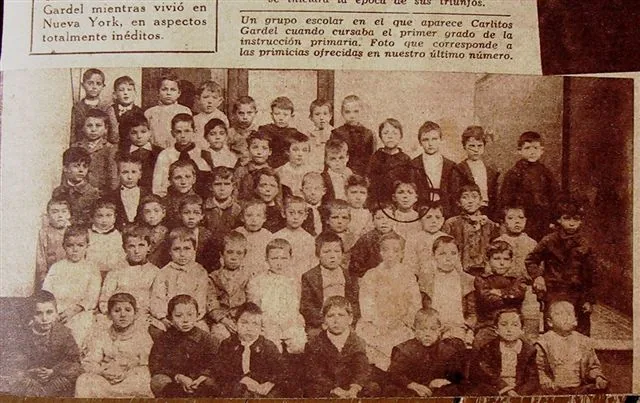
Life around the Abasto produce market, his first jobs singing in cafés. Photos of Gardel as a boy. The young singer performing for market vendors.
Room 3 — Gardel-Razzano duo (1911-1925)
Partnership with José Razzano. Earliest recordings (1917 "Mi Noche Triste" — the first sung tango in history). Original records.
Room 4 — Solo Gardel (1925-1935)
The peak career years. Original costumes (tuxedo, Panama hat), handwritten scores, instruments. Listening stations for "Mi Buenos Aires Querido", "Volver" and "El día que me quieras".
Room 5 — Hollywood and Paramount (1934-1935)
The 11 films for Paramount. Original posters, on-set photos, film costumes. "El día que me quieras" and "Tango Bar" as the highlights.
Room 6 — South American tour (1933-1935)
Tour stops in Argentina, Uruguay, Brazil, Venezuela, Colombia and Puerto Rico. Letters to Berta. Theater programs.
Room 7 — The Medellín crash (June 24, 1935)
The most emotional room. Objects rescued from the wrecked plane, letters, international press of the period. Reconstruction of his last day.
Room 8 — Legacy and historic patio
Gardel in popular culture: tributes from later singers (Goyeneche, Rivero, Sandro), Gardel in cinema. Restored historic patio where Gardel received friends — featuring the original bench, plants and photographs of those gatherings.
Book your tango route
Complete Gardel route tour
Gardel House Museum + Chacarita Cemetery (Gardel's tomb) + Abasto neighborhood + Café de los Angelitos. Bilingual guide, full day.
Tango show with dinner — Café Angelitos
Gourmet dinner + professional tango show in the historic 1890 café (Rivadavia 2100). Award-winning dancers, live orchestra. 3 hours.
Combined BA city + tango tour
Plaza de Mayo, San Telmo + Gardel House + Abasto + tango show. Full bilingual day with a local guide. 9 hours.
What to Visit in the Abasto Neighborhood
- Mercado de Abasto Shopping — Av. Corrientes 3247. The former 1934 central produce market, now a mall with food court, cinemas and a themed toy store. 4 blocks from the museum.
- Carlos Gardel Pedestrian Passage — pedestrian street with tango murals and themed shops. 1 block from the museum.
- Gardel statue — Pasaje Zelaya & Anchorena. Bronze statue inaugurated in 2010.
- Café de los Angelitos — Rivadavia 2100. Historic 1890 café frequented by Gardel. Tango dinner-show. 8 blocks away.
- Esquina Carlos Gardel — Carlos Gardel & Anchorena. Themed tango dinner-show venue.
- Once Jewish quarter — adjacent neighborhood with historic synagogues and kosher restaurants.
The Complete Tango Route
Recommended one-day itinerary for tango fans:
- 9:00 AM: Subway line B to Federico Lacroze. Chacarita Cemetery with the free 11 AM guided visit. Tombs of Gardel + Troilo + Pugliese.
- 1:00 PM: Subway line B to Abasto. Lunch at a typical Abasto parrilla (USD 18-35).
- 3:00 PM: Carlos Gardel House Museum (1.5 hours including the guided visit).
- 5:00 PM: Walk along Pasaje Gardel + Mercado del Abasto (shopping, café break).
- 8:00 PM: Tango dinner-show at Café de los Angelitos or Esquina Carlos Gardel (3 hours).
- 11:00 PM: Back to the hotel (Uber recommended).
Total cost: USD 100-200 per person including entries + lunch + dinner-show. More resources: Buenos Aires guide, suggested itineraries.