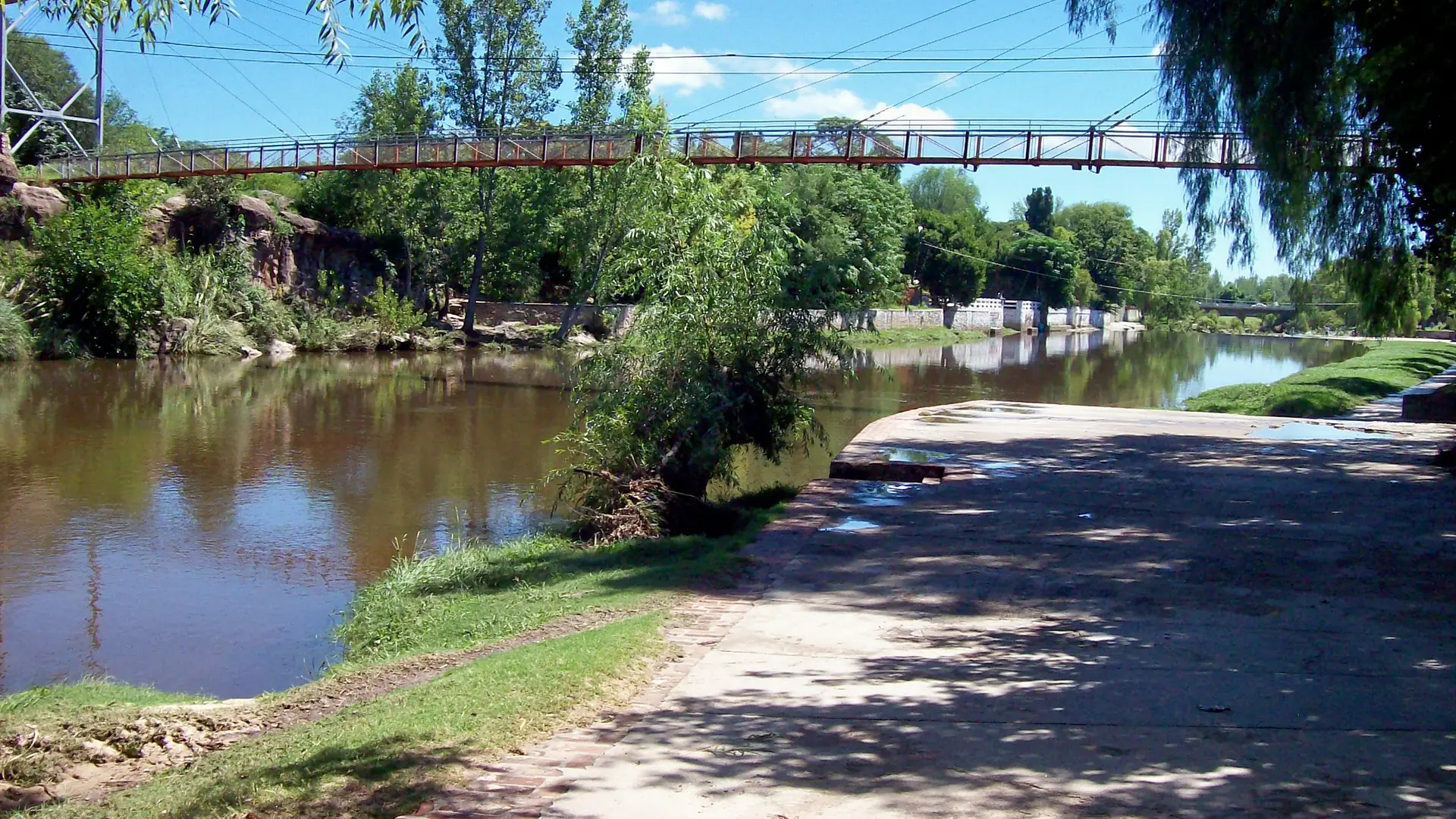
Cordoba city is far more than the gateway to the sierras. With over 1.5 million inhabitants in its metropolitan area, it is Argentina's second-largest city and a fascinating destination in its own right. Founded in 1573 by Jeronimo Luis de Cabrera on the banks of the Suquia River, the city served during the colonial era as the most important intellectual and religious center of the Viceroyalty of the Rio de la Plata, thanks to the presence of the Society of Jesus, which founded the country's first university in 1613. Today, Cordoba combines that extraordinary historical legacy with a young, cultural, university-driven energy that makes it one of the most dynamic cities in South America.
Getting there — distances & times
| From | Distance | Flight | Bus | Drive |
|---|---|---|---|---|
| New York (JFK) | 8500 km | 11 h via Buenos Aires | — | — |
| Miami (MIA) | 7100 km | 9 h via Buenos Aires | — | — |
| Madrid (MAD) | 10000 km | 13 h via Madrid + AR domestic | — | — |
| Buenos Aires (EZE) | 700 km | 1 h 15 | 10 h | 8 h |
| Mendoza | 670 km | 1 h 10 | 9 h | 7 h |
| Iguazu (IGR) | 1100 km | 1 h 30 | — | — |
Month-by-month climate
| Month | Temp. | Rain | Crowds | Note |
|---|---|---|---|---|
| Jan | 19° / 31°C | 120 mm | Summer, peak season | |
| Feb | 18° / 30°C | 105 mm | ||
| Mar | 16° / 28°C | 90 mm | ||
| Apr | 12° / 25°C | 50 mm | ||
| May | 8° / 21°C | 20 mm | ||
| Jun | 5° / 18°C | 12 mm | ||
| Jul | 4° / 18°C | 10 mm | Winter break | |
| Aug | 6° / 21°C | 12 mm | ||
| Sep | 9° / 23°C | 30 mm | ||
| Oct | 13° / 26°C | 70 mm | ||
| Nov | 15° / 28°C | 95 mm | ||
| Dec | 18° / 30°C | 125 mm |
Cordoba City at a Glance
- Founded: July 6, 1573
- Metropolitan population: 1,535,000 inhabitants
- University: UNC, founded 1613 (Argentina's oldest)
- UNESCO Heritage: Manzana Jesuitica (2000)
- Elevation: 390 meters above sea level
- Climate: Temperate with hot summers (82-95F/28-35C) and dry winters (41-64F/5-18C)
- Airport: Ingeniero Ambrosio Taravella (COR), 11 km from downtown
- Daily budget: USD 50-100 per person
The Manzana Jesuitica: UNESCO World Heritage
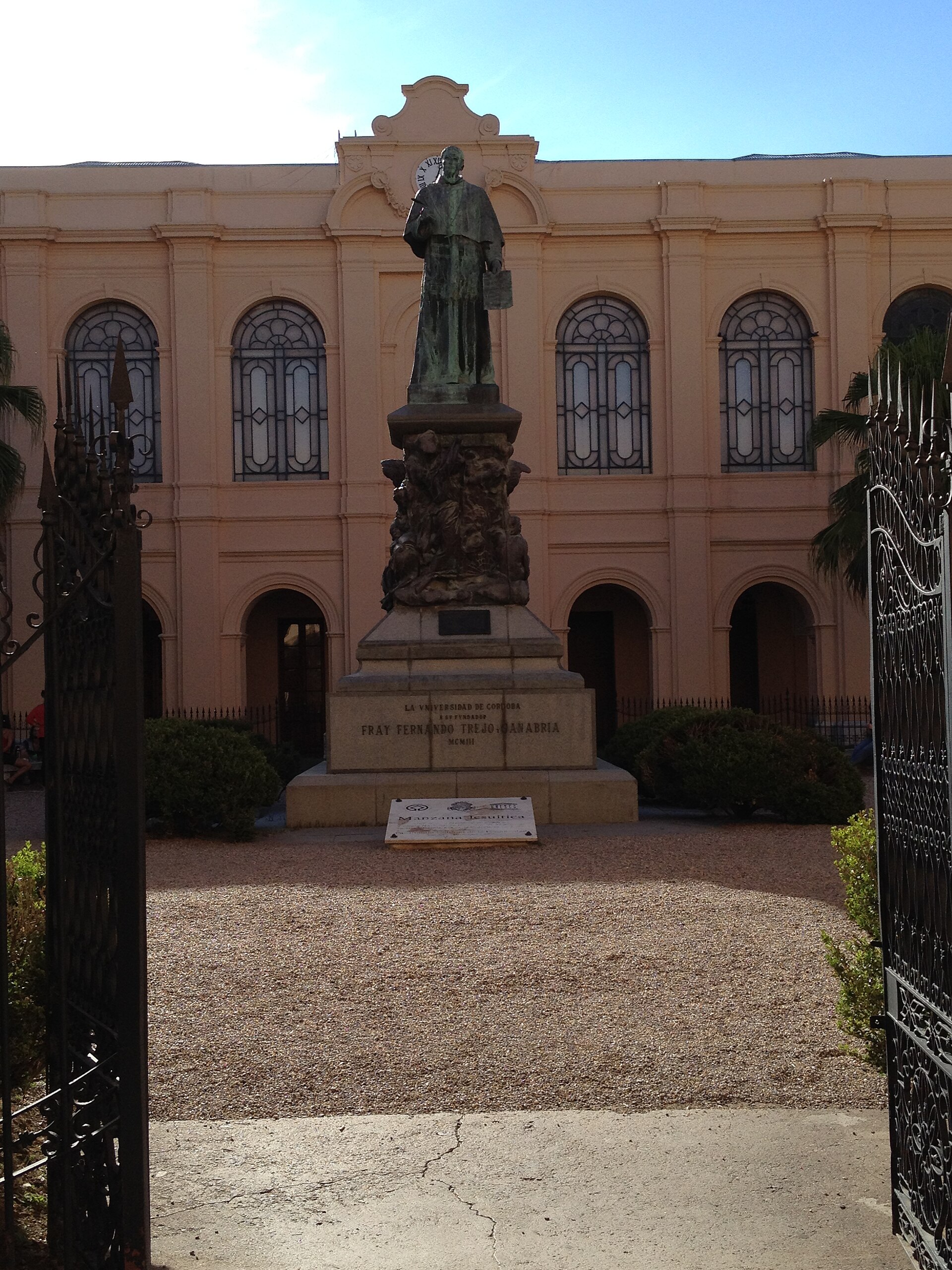
The Manzana Jesuitica (Jesuit Block) is the historic heart of Cordoba and the main reason UNESCO declared this complex a World Heritage Site in 2000. Occupying an entire city block in the center (bounded by Obispo Trejo, Caseros, Duarte Quiros streets and Velez Sarsfield avenue), this unique architectural ensemble includes four fundamental buildings that tell more than four centuries of educational, religious and cultural history.
The Church of the Company of Jesus, built between 1640 and 1671, is the masterpiece of the complex. Its most notable feature is the wooden vault shaped like an inverted ship hull, a unique architectural solution in South America designed by the Flemish brother Philippe Lemayre, who drew on his experience in naval construction to create a structure without internal columns that supports the weight of the roof. The interior preserves gilded Baroque altarpieces, colonial paintings and a carved wooden pulpit of extraordinary quality. Guided tours reveal details such as confessionals embedded in the wall, secret passages and the underground crypt.
The National University of Cordoba (UNC), founded in 1613 by the Jesuits as the Collegium Maximum, is the oldest university in Argentina and one of the oldest in the Americas. Its historical library preserves over 100,000 volumes, including 15th-century incunabula and first editions of foundational works. The Monserrat National College, founded in 1687, complements the educational complex with its colonial arched courtyard and domestic chapel. The Jesuit Residence completes the block with its silent cloisters and internal gardens that offer a haven of peace amid the modern city.
Nueva Cordoba: The Young Neighborhood
Nueva Cordoba is the most dynamic neighborhood in the city, located south of the historic center between Parque Sarmiento and the Americas plaza. With a predominantly university population (UNC has over 130,000 students), this neighborhood has become the epicenter of Cordoba's social, gastronomic and nightlife scene. Avenida Hipolito Yrigoyen and its side streets concentrate dozens of bars, restaurants, specialty coffee shops and international food outlets.
The nightlife of Nueva Cordoba is legendary in Argentina. University Thursdays are an institution: from 10 PM, bars fill with students and music spills from every corner. Fridays and Saturdays, the scene shifts to nightclubs like Complejo Forja, bars along Rondeau street and the craft breweries that have proliferated in recent years. The dining scene ranges from traditional grill houses to contemporary cuisine restaurants, sushi, Mexican food and food trucks at the Mercado Norte, the municipal market where historic empanada and locro stalls coexist with contemporary gourmet offerings.
Parque Sarmiento, designed by landscape architect Carlos Thays (the same creator of the Buenos Aires Botanical Garden), is the city's green lung with 60 hectares of gardens, artificial lakes, and circuits for running and cycling. Nearby you find the Emilio Caraffa Provincial Fine Arts Museum and the Cordoba Cultural Center, two spaces that complement the neighborhood's cultural offerings.
Barrio Guemes: Artisans, Antiques and Craft Beer
Barrio Guemes (also known as Pueblo Nuevo) is Cordoba's most bohemian and alternative neighborhood. Located south of the center, its heart beats around Belgrano street and its surroundings, where every weekend the city's most important Artisan and Antiques Fair sets up. Over 200 stalls offer handicrafts, antiques, independent designer clothing, secondhand books, vinyl records and vintage objects in a relaxed and colorful atmosphere that attracts both locals and tourists.
The transformation of Guemes in recent years has been remarkable. Old warehouses and historic houses have been converted into craft breweries, art galleries, design shops and specialty bars. Establishments like Penon del Aguila, Mandragora and El Almacen de Guemes combine gastronomy, live music and an aesthetic that fuses vintage with contemporary. The neighborhood's walls are covered in murals and street art that give it a distinctive visual character. Internal commercial passages like the Galeria Guemes and the Paseo de las Artes hide artist workshops and shops that do not appear in conventional guides.
Paseo del Buen Pastor: Repurposed Heritage
The Paseo del Buen Pastor is one of the most successful heritage conversion projects in Argentina. Opened in 2007, this cultural and commercial space occupies the former Buen Pastor Convent, a nuns' convent built in 1892 in neo-Gothic style. The restoration preserved the historic facades and original chapel while transforming the interior spaces into art galleries, exhibition halls, design shops and restaurants with terraces.
The main attraction of Paseo del Buen Pastor is its dancing water fountain, a show of lights, water and music performed every evening (Friday to Sunday, schedules vary by season) that has become one of the most iconic images of modern Cordoba. The esplanade in front of the fountain is a gathering place where families, couples and friend groups assemble to enjoy the free spectacle. The restaurants overlooking the fountain offer everything from Argentine cuisine to international options, and the chapel converted into an exhibition hall hosts contemporary art shows by local and international artists.
A few blocks from Buen Pastor you find the Canada de Cordoba, a channeled stream with a tree-lined pedestrian promenade that connects several points of the city. The stretch between Buen Pastor and the historic center is especially pleasant for walking, with pedestrian bridges, benches and shade from the tree canopy on hot summer days. The Canada was declared a National Historic Monument and its wrought-iron railings and bridges give it a charm reminiscent of European promenades.
Cuarteto Music: Born in Cordoba
Cuarteto is a lively dance music genre born in Cordoba in the 1940s, and it exists nowhere else in the world. Danced in pairs with quick steps and spins, it has become an integral part of cordobes identity. Carlos "La Mona" Jimenez is the most iconic cuarteto artist, with a career spanning over five decades and still performing weekly at packed dance halls. His Saturday night shows at Sargento Cabral are a cultural experience like no other -- raw, electric and utterly local.
Attending a cuarteto dance is one of the most authentic things you can do in Cordoba. The atmosphere is welcoming, the music is infectious, and the energy of the crowd is unforgettable. For a more accessible introduction, bars in Guemes and Nueva Cordoba host cuarteto nights. The genre has experienced a revival among younger generations, with new artists blending traditional cuarteto rhythms with electronic, reggaeton and cumbia influences.
Fernet con Coca: The Unofficial Religion
No guide to Cordoba is complete without mentioning fernet con Coca-Cola, the city's unofficial national drink. This bitter Italian herbal liqueur mixed with Coca-Cola (always in that order, always shared in rounds from a single glass) is far more than a cocktail in Cordoba -- it is a ritual, a social bond and a cultural statement. Cordoba consumes over 40% of all fernet sold in Argentina. You will find it at every bar, every party and every asado. The proper ratio is one-third fernet to two-thirds Coca, always with plenty of ice. Try it at least once -- it is an acquired taste that many travelers end up loving.
More City Attractions
The Cordoba Cathedral, facing Plaza San Martin, is Argentina's oldest cathedral (construction began in 1577, completed in 1784). Its facade combines Neoclassical and Baroque styles in a unique mix, and its dome once dominated the colonial skyline. The interior houses paintings from the Cusco school and a gilded main altar. Facing the cathedral, the Cabildo of Cordoba (18th century) serves as a cultural center with temporary exhibitions and offers a panoramic view of the plaza from its upper balcony.
The Evita Fine Arts Museum -- Palacio Ferreyra is an essential visit for art lovers. This French academic-style palace, built in 1914, houses one of the most important collections of Argentine art in the country, with works by Antonio Berni, Emilio Pettoruti, Lino Enea Spilimbergo and other masters. The architecture of the palace itself, with its gardens and restored original rooms, is a work of art. Another notable space is the Centro Cultural Espana Cordoba (CCEC), a benchmark for contemporary culture with year-round programming of music, film, theater and visual arts.