Yerba mate (Ilex paraguariensis) is much more than a drink in Argentina: it is a social ritual, a cultural identity and a national industry. It is the official national drink declared by law since 2013, with consumption of about 6.5 kg per inhabitant per year — the second highest per-capita consumption in the world, after Uruguay only. Any traveller spending 24 hours in Argentina will notice the ubiquitous presence of mate: people walking with thermos under arm in Buenos Aires parks, office workers with gourd on desk, drivers with their mate on the dashboard, Sunday family barbecues where the first "mate" is brewed before lighting the fire. The plant is a perennial shrub native to the Guaraní heartland (Paraná-Misiones-Paraguay-southern Brazil), whose leaves are harvested, dried, aged and ground to prepare the infusion drunk in a gourd with bombilla. Its origin is pre-Hispanic — the Guaraní consumed it for thousands of years before the conquest — and its evolution includes the important phase of the Guaraní Jesuit Missions (1609-1767, today UNESCO Heritage) that industrialised cultivation. In this guide we explain what yerba mate is, its Guaraní and Jesuit origin, how to prepare and share it (with the key cultural rules of the ritual), the types of yerba that exist, the benefits documented by science, the best Argentine brands to try, and where to buy yerba as a cultural souvenir from your Argentina trip. If you\'ll be in Argentina for more than 3 days, learning mate is essential — Argentines deeply appreciate when a foreigner takes interest in the ritual.
The Mate Ritual — Social Rules
Mate is social ritual as much as drink. The unwritten rules are as important as the preparation:
- One person serves (cebador): one member of the group serves for everyone. They\'re not a "vending machine" — they\'re the round\'s host. Polite to offer to swap roles after some time.
- The first mate goes to the cebador: called the "fool\'s mate" because it can be bitter, cold, or have yerba in the bombilla. The cebador filters it out for the others.
- Don\'t move the bombilla: never, ever. Moving it "clogs" the filter and ruins the mate. Serious cultural offence.
- "Gracias" means "no more for me": when you receive a mate and want to keep drinking, simply drink it and return it silently. Saying "gracias" means leaving the round. Confuses foreigners — don\'t thank until you\'re finished.
- Drink the whole mate at once: until it makes the final "noise" (the "little hole" runs out of water). Don\'t leave a half sip.
- Mate doesn\'t pass between two people: always returns to the cebador, who refills and passes to the next person. Keeps the ritual\'s rhythm.
- Sharing mate is a sign of friendship: offering mate to a visitor or new acquaintance is a strong cultural signal. Accepting is prestige.
- Bitter vs sweet mate: traditionally bitter (no sugar). Some drink it sweet with sugar or honey. Each cebador sets the style.
Origin — From the Guaraní to the World
The yerba mate story begins thousands of years before European arrival. The Guaraní people, indigenous to the Paraná region (today Argentine Misiones, Paraguay, southern Brazil and southern Bolivia), consumed the leaves of Ilex paraguariensis as caá (Guaraní word for "herb"). They prepared an infusion with hot water, chewed fresh leaves to combat fatigue and hunger, and offered it ritually to the goddess Caá-Yarí in religious ceremonies.
With the Spanish conquest (16th century), the colonisers initially viewed mate with distrust — even called it "the devil\'s herb" (some friars suspected it of witchcraft). But the Spanish Jesuits, arriving in the 17th century to evangelise the Guaraní, learnt the cultivation and preparation directly from the indigenous peoples and embraced its consumption — both for its nutritional and stimulant properties and as a tool to "civilise" Indians who would otherwise drink alcohol. They industrialised production at the Jesuit Missions (Reducciones) — La Cruz, San Ignacio, Loreto, San Carlos, Santa María, Apóstoles — which became the world\'s first commercial yerba mate centres.
The Jesuit phase (1609-1767) was so successful that the entire Río de la Plata economy depended in part on yerba mate. After the expulsion of the Jesuits (Charles III decree, 1767), the missions were abandoned and the controlled cultivation collapsed for over a century. It wasn\'t until 1900-1930 that Ukrainian and Polish immigrants arrived in Argentine Misiones (programs of agricultural colonisation by the National Government) and revived the modern industry. Today Argentine Misiones produces around 70% of the country\'s yerba, with iconic brands like Rosamonte, Taragüí, Amanda, Playadito.
The Top Argentine Brands
- Rosamonte (Misiones) — best-selling. Balanced bitter, medium-bodied. Try-it-first standard. USD 4-7/kg.
- Taragüí (Corrientes) — intense bitter, full body. The "litoral" choice. USD 5-9/kg.
- CBSé (varieties with herbs) — premium compound mates with peperina, mint, ginger. USD 6-12/kg.
- La Merced (Misiones) — premium aged, smoother. For mate elegance. USD 8-15/kg.
- Playadito (Corrientes cooperative) — artisanal premium. USD 10-18/kg.
- Amanda (Misiones) — premium with character. USD 8-14/kg.
- Cruz de Malta (Misiones) — traditional blue pack, classic. USD 5-9/kg.
Mate for Travellers — How to Take One Home
If you want to try mate authentically and bring some home:
- The starter kit (USD 25-50): one ceramic gourd or basic calabash + stainless steel bombilla + 1 kg pack of Rosamonte traditional. Perfect for first-timers, no curing required.
- The cultural kit (USD 60-120): traditional Bottle Gourd calabash (cured) + alpaca bombilla + 1 kg yerba premium (La Merced or CBSé) + thermos Stanley 1L. Authentic experience.
- For wholesale: 5 kg in supermarket = USD 25-60. Fits in checked luggage. Most countries allow it as agricultural product (declare on customs forms).
- Skip airport stores: yerba is 50-100% more expensive at Ezeiza. Buy in town the day before.
The Yerba Mate Route — Visiting Misiones
For deep enthusiasts, Misiones province has the official "Yerba Mate Route" with productive estancias open to visitors. Tours include: the cultivation field (visit to plantations of Ilex paraguariensis trees of 8-10 m), the harvest process (the "tarefa" — manual cutting of branches), the drying barbecue (sapecado in low fire 24h, then secadero in dryer for 12h), the mill where leaves are ground, and tastings of different blends. Day tour from Puerto Iguazú or Posadas. USD 65-110 per person with lunch and 1 kg of yerba included as souvenir.
Visit Misiones, the yerba homeland
Yerba Mate Route Misiones
Day tour from Puerto Iguazú or Posadas: estancia visit + cultivation field + production process + tasting + 1kg yerba take-home.
San Ignacio Miní (UNESCO)
Best-preserved Jesuit Mission in Argentina. Day trip from Puerto Iguazú (1h45 by car). Tickets and bilingual guide.
Iguazú + Yerba Mate combo
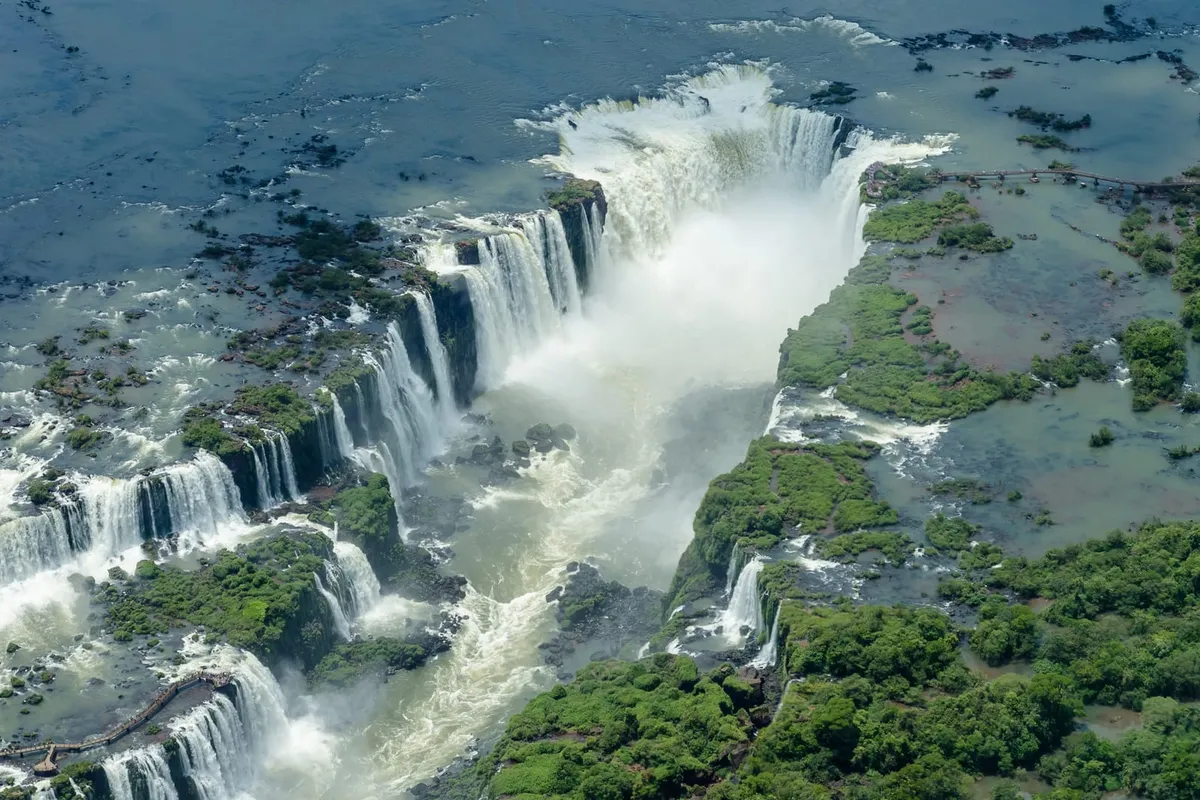
3 days Puerto Iguazú: 1 day waterfalls + 1 day Yerba Mate Route + 1 day San Ignacio Miní.
Related pages
- Iguazú and Misiones hub
- What is Patagonia — the other defining Argentine region.