Patagonia is one of the most vast, wild and mythologized regions on the planet: 1,043,076 km² of austral territory shared between Argentina (~73%) and Chile (~27%), extending from parallel 36° South (Colorado-Barrancas rivers in Argentina, Biobío river in Chile) to Cape Horn at 56° South, the southernmost point of South America. It is a region defined as much by its dramatic geography — glacial Andes to the west, arid steppe to the east, fjords to the south, Fuegian forests at the extreme — as by its unique culture: indigenous Tehuelche and Mapuche peoples resisting conquest until the 19th century, Welsh immigrants founding colonies in Chubut (Trevelin, Trelew, Gaiman), European pioneers opening sheep ranches in virgin territories. It is also one of the least densely populated regions in the world (~2 inhab/km² on average, vs 16 inhab/km² for Argentina overall and 49 for the USA), giving it its character of "last frontier". For the traveller, Argentine Patagonia offers iconic destinations: El Calafate (Perito Moreno Glacier), Bariloche (alpine Patagonia, lakes and chocolate), Ushuaia ("end of the world" and Antarctica gateway), El Chaltén (Fitz Roy, Argentina\'s trekking capital), Península Valdés (whale watching), Punta Tombo (the world\'s largest continental colony of Magellanic penguins). In this guide we explain what Patagonia is, its geological and etymological origin, climate and geography, must-see destinations, how to combine a trip, costs, best season, and how to avoid typical first-time-traveller mistakes. Essential information for those planning a first Argentina trip and for anyone wanting to understand why Patagonia generates literary obsession (Bruce Chatwin "In Patagonia", Saint-Exupéry "Vol de Nuit") and cinematic fascination.
The Origin of the Name — Pigafetta and the Patagones
The name "Patagonia" has a colourful history. In 1520 the expedition of Hernando de Magellan (5 ships, 250 men leaving Spain in search of a Pacific passage) reached the coast of present-day Chubut/Santa Cruz. The chronicler Antonio Pigafetta described encounters with the native Tehuelches (also known as Aonikenk in their own tongue) and called them "Patagones". There are three theories about the origin of the name:
- "Big feet": the Tehuelches wore guanaco-leather boots stuffed with straw to walk in snow and Patagonian mud, leaving enormous footprints that impressed the Spaniards. The average Tehuelche height (~1.80 m) was considerable compared with the Spanish of the time (~1.55 m), reinforcing the "giants" image in the chronicles.
- Literary character "Patagón": in the chivalric novel "Primaleón" (Spain, 1512) a savage giant was called "Patagón". Magellan would have applied the name to the Tehuelches by similarity with the character, according to linguist María Rosa Lida de Malkiel.
- Mapuche origin: the term "Pata-gun" in Mapudungun means "big feet". Other etymologists suggest "Pa-thakuna" ("people from the south").
The name was fixed in 1525 with the publication of Pigafetta\'s diary. The region became "Land of the Patagones" then "Patagonia" on Portuguese and Spanish 16th-century maps. By the 18th century, "Patagonia" was the standard name.
Geography — The 4 Patagonian Sub-Regions
- Northern Patagonia (Neuquén, Río Negro): alpine landscape with deep blue lakes (Nahuel Huapi, Lácar), coihue and arrayán forests, peaks with cable cars (Catedral, Otto, Tronador). Bariloche and San Martín de los Andes are the main bases. Climate temperate with hot summer (18-25°C) and cold winter (0-10°C).
- Coastal Patagonia (Atlantic Chubut, Santa Cruz): arid steppe with extreme winds, where the marine fauna is the highlight. Península Valdés (whales), Punta Tombo (penguins), Puerto Deseado (Magellanic fjord). Climate semi-arid temperate.
- Southern Patagonia (Santa Cruz): glacial Andes and steppe, climate cold-temperate. Calafate (Perito Moreno), El Chaltén (Fitz Roy), Argentine Lake — the destination of greatest "wow factor" for the foreigner.
- Tierra del Fuego: archipelago at the southern extreme. Ushuaia is the world\'s southernmost city (54° S), Tierra del Fuego National Park, Beagle Channel, Antarctica gateway. Climate sub-Antarctic.
The 5 Must-See Argentine Patagonia Destinations
1. Bariloche (Northern Patagonia)
Bariloche is the most "comfortable" Patagonia: alpine architecture, deep blue Lake Nahuel Huapi, chocolate capital, base for the Seven Lakes Route. Skiing at Cerro Catedral June-October. Family-friendly. 4-5 day minimum.
2. El Calafate (Southern Patagonia)
El Calafate is the kingdom of glaciers. Perito Moreno is one of the world\'s most striking natural attractions, accessible by boardwalks year-round. Estancia Cristina + Upsala is the exclusive premium experience. 3-4 days.
3. Ushuaia (Tierra del Fuego)
Ushuaia is the "end of the world". Beagle Channel, Tierra del Fuego National Park, Estancia Harberton with the only Magellanic penguin walk in Argentina, Antarctica cruise gateway. 3-4 days.
4. El Chaltén (Trekking Capital)
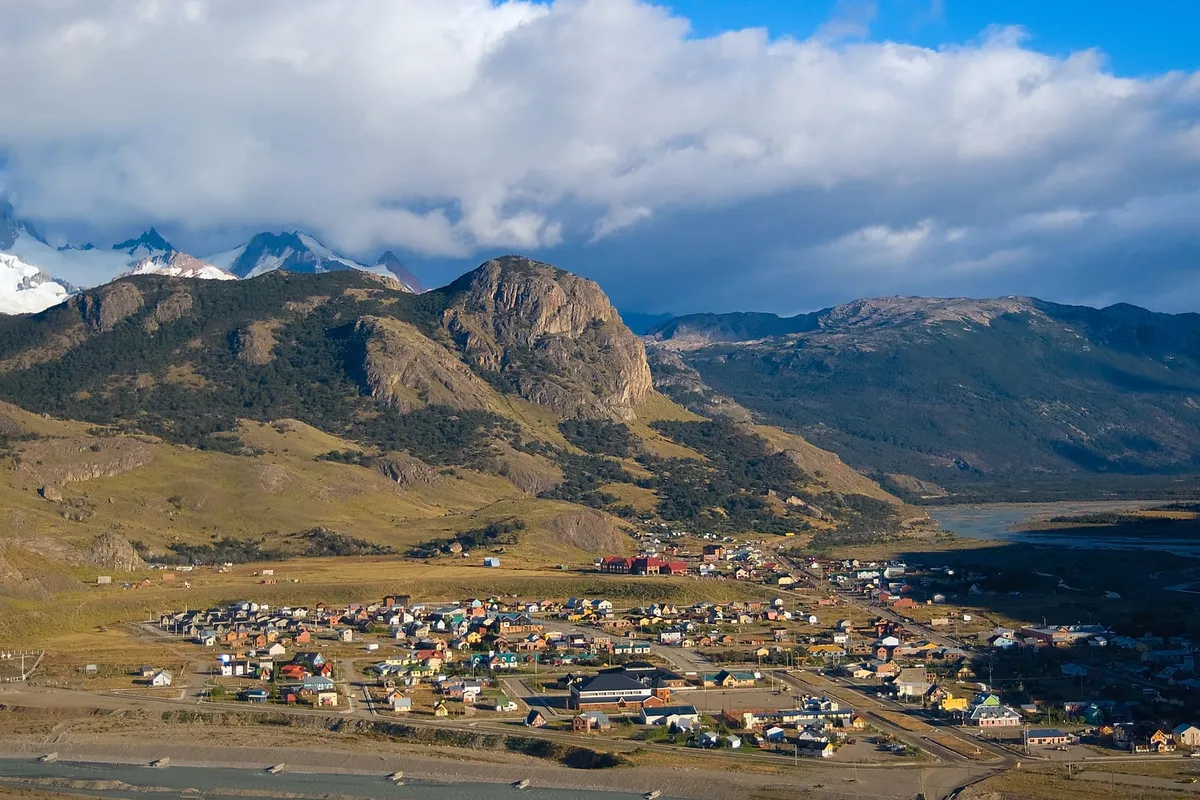
Small mountain village (5,000 inhab) at the foot of Fitz Roy and Cerro Torre, world icons of climbing. Most spectacular trails: Laguna de los Tres (Fitz Roy view, 21 km return), Laguna Torre. Ideal extension from Calafate (220 km north, 3 hours by bus). 2-3 days.
5. Península Valdés (Marine Fauna)
UNESCO Heritage Site (1999) on the Atlantic. Southern right whales June-December (peak September-October), sea lions, sea elephants, orcas hunting on the beach (rare phenomenon, viewable Mar-Apr). Base in Puerto Madryn (3,500 km from Buenos Aires).
Travel Tips — Avoiding Typical First-Time Mistakes
- Don\'t underestimate distances: Patagonia is enormous. Bariloche-Calafate is 1,500 km in straight line — fly. Don\'t plan land routes unless you have 14+ days.
- Don\'t go all year: many things close in winter (Calafate excursions, El Chaltén in deep snow). Best universal time: November-March.
- Bring proper gear: windproof jacket, hat, gloves, sunscreen SPF 50+, even in summer. The Patagonian wind is constant.
- Don\'t skimp on food: Patagonia eats well (Patagonian lamb, Beagle king crab, smoked trout, craft beers). Allow USD 30-60/day for good meals.
- Book in advance: in high season (Dec-Feb) hotels and excursions sell out 60+ days ahead.
Book your Patagonia trip
Perito Moreno Glacier Tour
Full day El Calafate: boardwalks + optional 1h navigation + lunch with ice view.
Bariloche Circuito Chico
Llao Llao + Bahía López + Cerro Campanario. Half day with English-speaking guide.
12-day Patagonia Combo
Bariloche + Calafate + El Chaltén + Ushuaia. Flights, hotels, tours included.