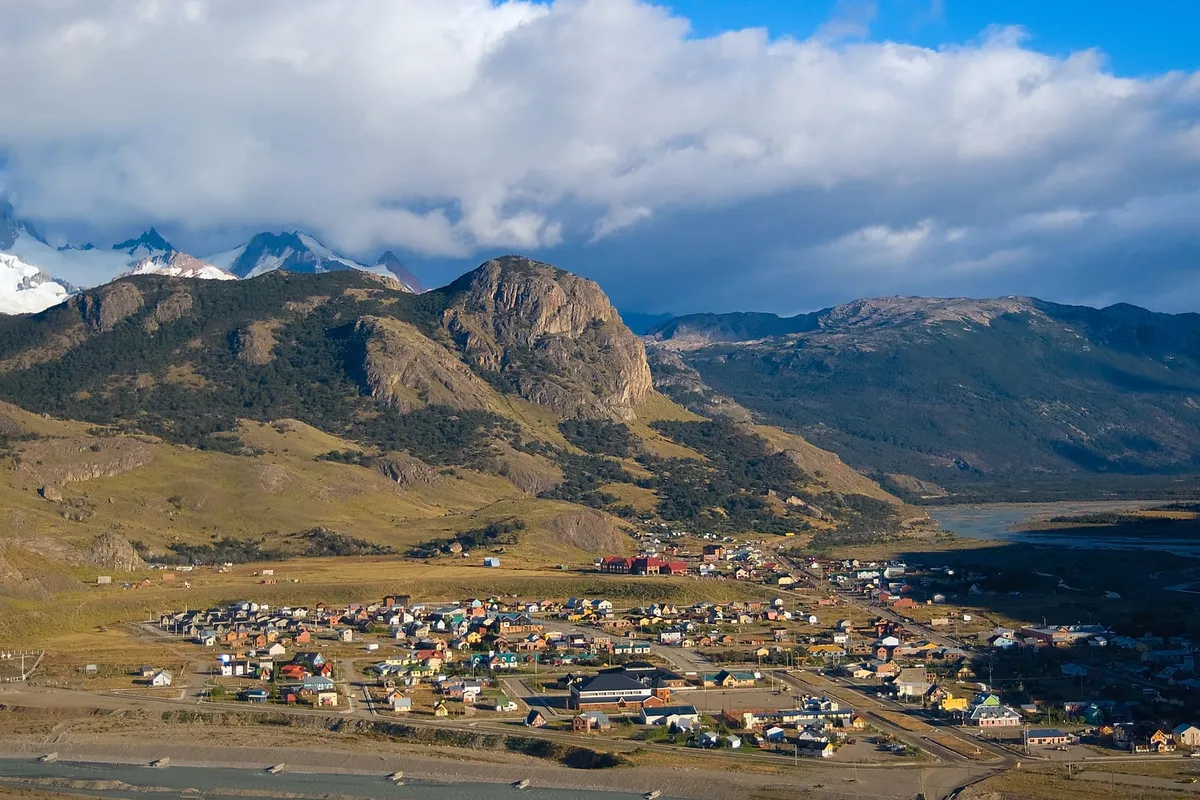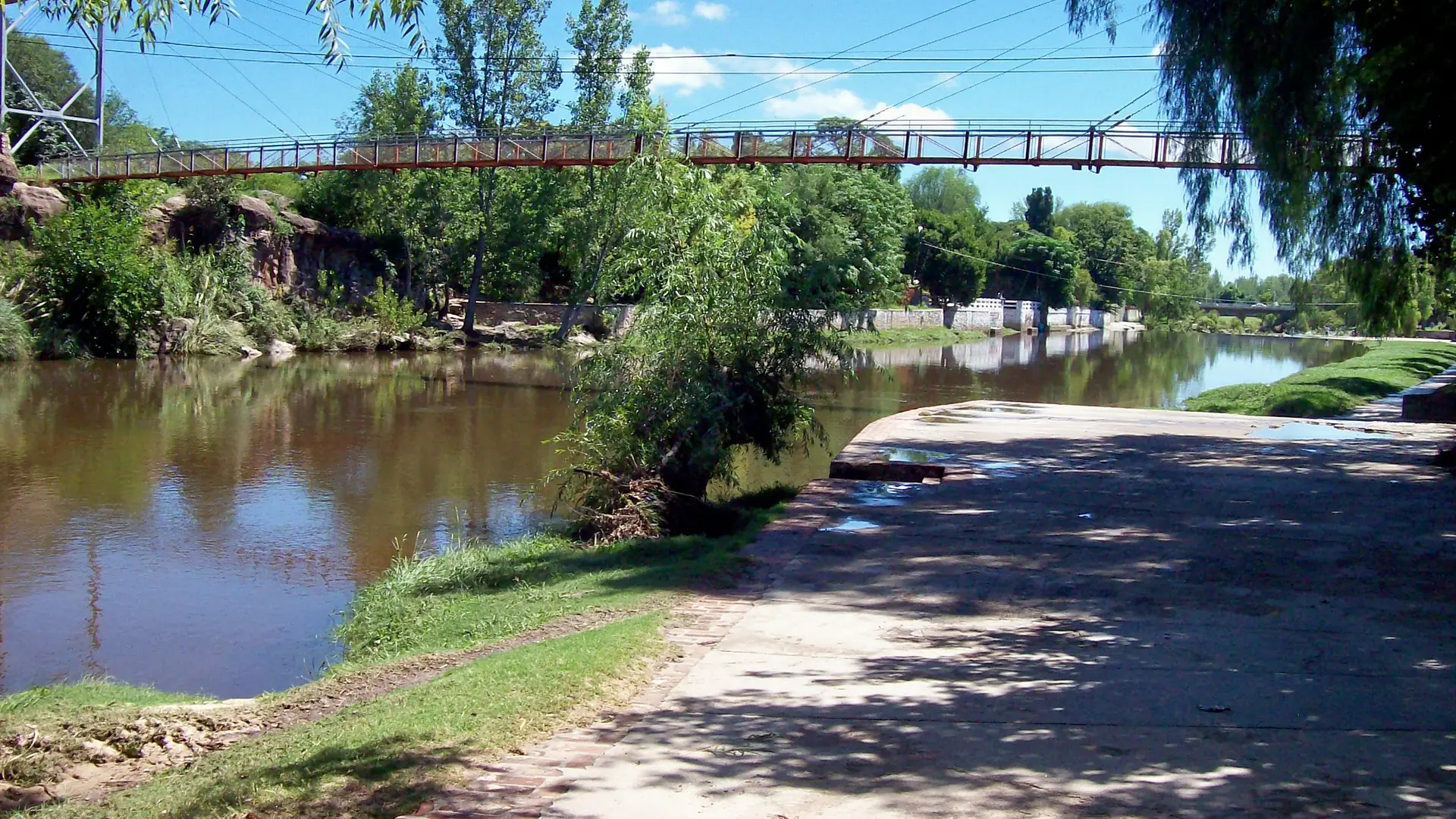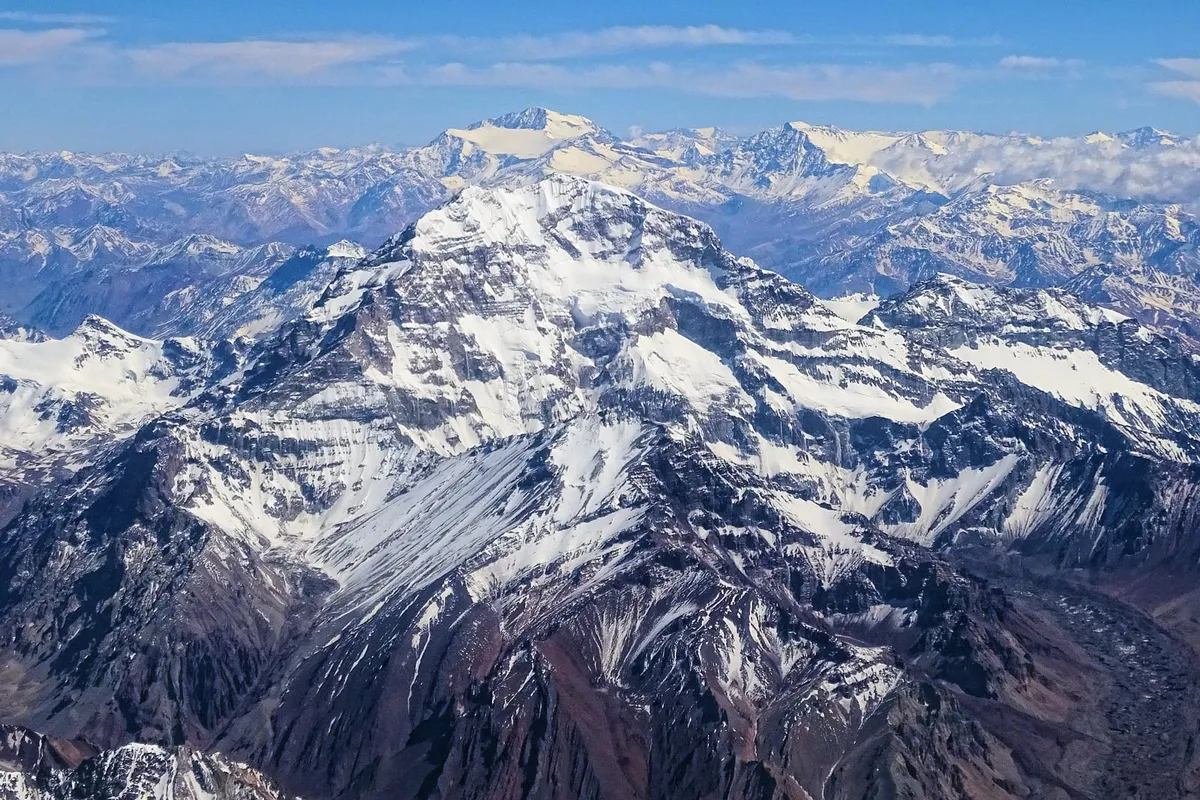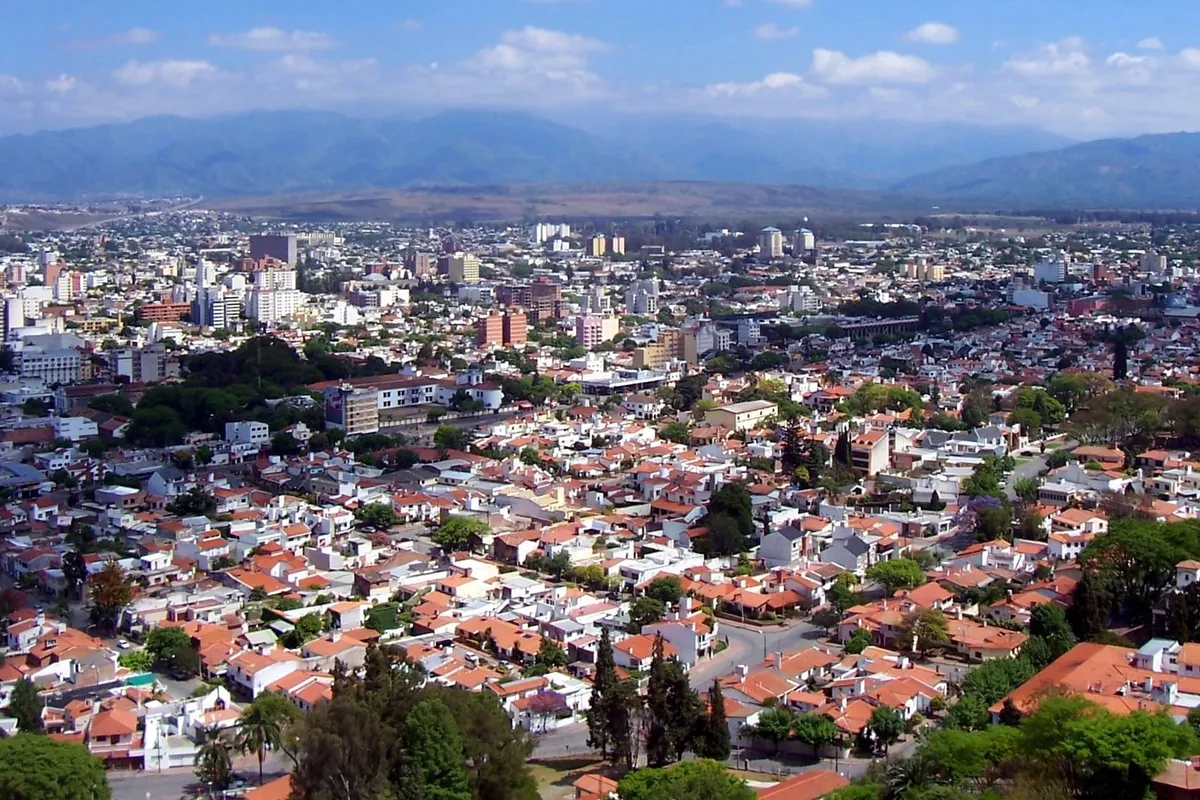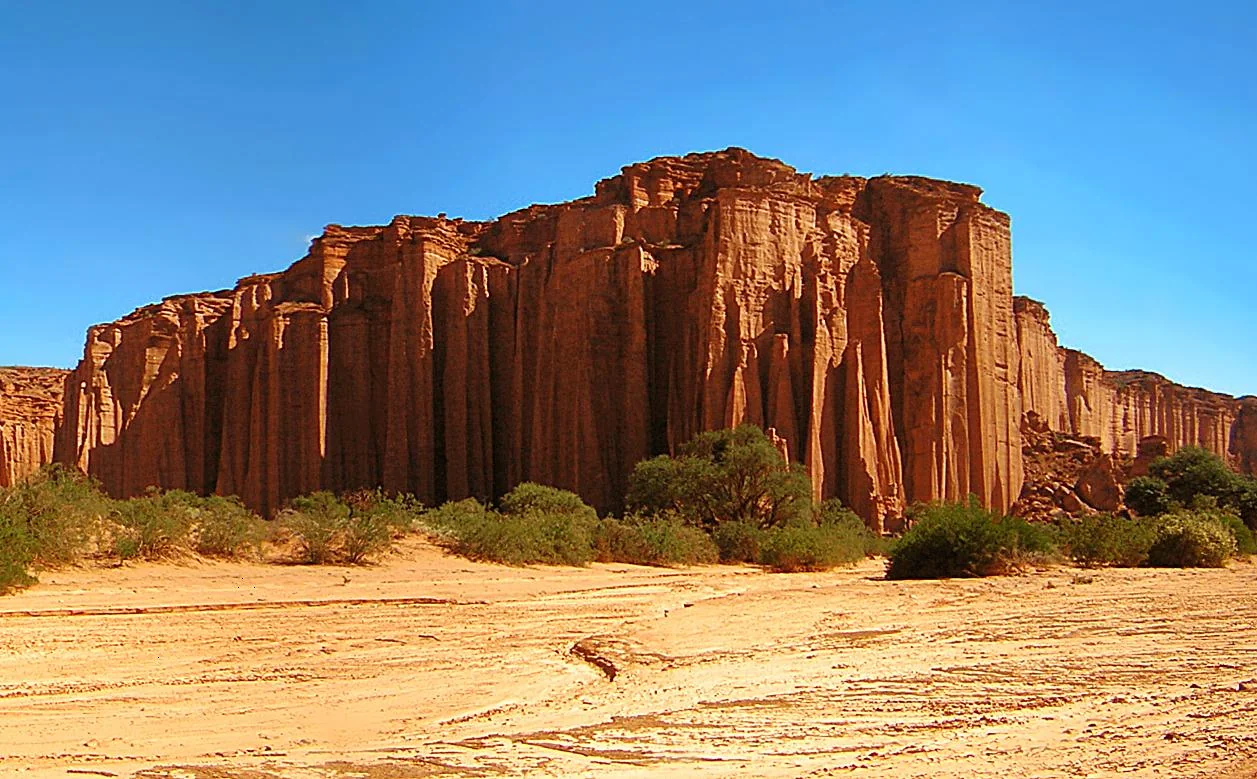
Chilecito is the second-largest city of the province of La Rioja with 51,000 inhabitants (2022 census), located at 1,074 meters above sea level in the Antinaco Valley, at the eastern foot of the Famatina range. Founded as Villa Argentina in 1715 by camp master Domingo de Castro y Bazan to exploit the area's silver mines, it adopted its current name Chilecito ("little Chile") in 1872 due to the large number of Chilean miners who emigrated to work the gold and silver mine La Mejicana, discovered in the 17th century and intensively worked by British capital between 1900 and 1926. Chilecito's heritage gem is the Chilecito-La Mejicana Cablecarril, a historic 34.6-kilometer industrial cableway built between 1903 and 1926 by La Mejicana Mining Company (German-British capital) to transport ore from the mine at 4,700 meters down to the rail station in Chilecito at 1,074m, with 9 intermediate stations and a cumulative drop of 3,629 m. It was the longest industrial cableway in the world at its time and a feat of European engineering in the Argentine Puna. Operations ceased in 1926 after 23 years; today it is a National Historic Monument (since 1982), with Stations 1 (open-air museum in central Chilecito, with the original Siemens electric locomotive, buckets, counters, blueprints) and 2 (El Parron) open to visitors. Cerro Famatina (6,097m) dominates the landscape with its snow-capped silhouette visible from the entire city: it's the second-highest summit of the Pampean Sierras and a target for experienced mountaineers (3-4 day guided ascent). The Chilecito area is also a high-altitude wine pole: Torrontes Riojano (designation of origin since 2015) is a uniquely aromatic white grown in vineyards between 1,200-1,800 meters in the Famatina, Chañarmuyo and Aminga valleys. Notable wineries like Chañarmuyo Estate (award-winning contemporary architecture), La Riojana (Argentina's largest cooperative with 500 partner growers) and San Huberto offer guided tastings (USD 25-40). Chilecito is also the natural gateway to the spectacular Cuesta de Miranda (RN 40, 17 km with 800 curves and 300m red walls, one of Argentina's 10 most scenic routes) connecting the Antinaco Valley with the Bermejo Valley (Villa Union, southern gateway to Talampaya). Access from La Rioja capital (200 km, 2h30), from Villa Union (175 km via Cuesta de Miranda, 3h), or from San Juan (350 km, 5h). Downtown Chilecito is compact and walkable: Plaza Sarmiento, Santo Domingo Church (1780), Molino San Francisco Museum, Cablecarril Museum. Local cuisine combines Andean and criollo roots: riojana empanadas, asado-roasted goat, humita en chala, locro, lard-baked country bread.
Getting there — distances & times
| From | Distance | Flight | Bus | Drive |
|---|---|---|---|---|
| La Rioja capital | 200 km | — | 3 h | 2h 30 |
| Villa Union | 175 km | — | 3h 30 | 3 h |
| Talampaya NP | 175 km | — | — | 2h 30 |
| San Juan capital | 350 km | — | 5h 30 | 5 h |
| Mendoza | 660 km | — | 9 h | 8 h |
| Catamarca (capital) | 220 km | — | 3h 30 | 3 h |
| Cordoba | 500 km | — | 7 h | 6 h |
| Buenos Aires | 1250 km | 1h 55 via IRJ + 2h 30 car | — | — |
Typical prices by category
| Item | Price |
|---|---|
| 3★ hotel Chilecito (double) | USD 55-85 |
| Downtown inn | USD 40-65 |
| Hostel shared | USD 18-28 |
| Cablecarril Museum entry (Sta. 1) | USD 3 |
| 4x4 to La Mejicana excursion | USD 95-130 |
| Cerro Famatina ascent (3 days, guided) | USD 450-650 |
| Winery with tasting (Chañarmuyo) | USD 25-40 |
| La Riojana winery (visit) | USD 15 |
| Regional lunch | USD 12-20 |
| Cuesta de Miranda from Chilecito | Day trip (fuel USD 15-20) |
| Harvest tour (February) | USD 65-95 |
April 2026 prices. February (harvest) and July: +30%.
The 5 Must-Do Experiences in Chilecito
1. Cablecarril — Station 1 and Museum
Station 1 is in the heart of Chilecito (Avenida Castro y Bazan). It's an open-air museum that preserves the original Siemens electric locomotive (1903), the metal ore buckets, mechanical counters, original blueprints and historical photographs. Entry USD 3. Hours: 9:00-13:00 and 16:00-20:00. Station 2 (El Parron, 7 km from downtown) has an elevated walkway with views of the cable and the Famatina range. Station 9 (La Mejicana, 4,700m) requires a full-day 4x4 excursion.
2. Cerro Famatina and La Mejicana (4x4 + trek)
Full-day guided excursion to the La Mejicana refuge at 4,700m. 4x4 ascent from Chilecito along the historic mining road (3 hours), arrival at the refuge, short walk to the colonial mine ruins, views of the Famatina range, vicuñas and guanacos. Return to Chilecito. USD 95-130 with local operators (Mundo Nuevo, Famatina Expediciones, Patagonia Sin Limites). Season April-October. Bring serious mountain layering (max temperature 10°C up there).
3. Wineries and Torrontes Riojano
Wine route with three key stops:
- Chañarmuyo Estate (50 km north of Chilecito): contemporary stone architecture, premium wine tourism, restaurant overlooking vineyards, USD 35-45 tasting + lunch.
- La Riojana (Aminga, 35 km): Argentina's largest cooperative, 500 partner growers, USD 15 visit + 4-wine tasting.
- San Huberto (Aminga): family winery since 1902, traditional wines.
4. Cuesta de Miranda — One of the Most Scenic Routes
17 km of RN 40 between Chilecito (Antinaco Valley) and Villa Union (Bermejo Valley), with 800 hairpin curves, maximum altitude 2,040m, red-clay walls up to 300 m. Cross it in 45 min by car. Condor Viewpoint midway: 12 curves visible simultaneously. Best light in the morning (eastern sun). Drivable year-round in a regular car. Ideal to combine with a Talampaya excursion (175 km from Chilecito).
5. Chilecito Historic Center
Plaza Sarmiento, Santo Domingo Church (1780, colonial altarpieces), Molino San Francisco Museum (17th century, colonial flour production, original machinery), Samuel Lafone Quevedo House (the naturalist who studied Famatina), municipal market with crafts. Walkable in 3-4 hours. Don't miss sunset at Cristo Lookout (Cerro Durazno, 10 min by car).
Experiences in Chilecito
4x4 Famatina — La Mejicana
Full-day excursion to 4,700m following the historic cableway. Colonial mine, vicuñas, view of Famatina. 8 hours. Mountain guide.
Chilecito Torrontes Wine Route
3 wineries visited with 6 tastings, paired lunch at Chañarmuyo Estate. Half day, hotel pickup.
Cuesta de Miranda + Talampaya 2 days
Chilecito → Cuesta de Miranda → Villa Union (overnight) → Talampaya → return. Transport, guide, entries included.
What to Combine with Chilecito
- La Rioja capital (200 km): provincial base.
- Villa Union (175 km): gateway to Talampaya via Cuesta de Miranda.
- Talampaya National Park (175 km).
- San Juan capital (350 km).
- Mendoza (660 km, scenic RN 40).