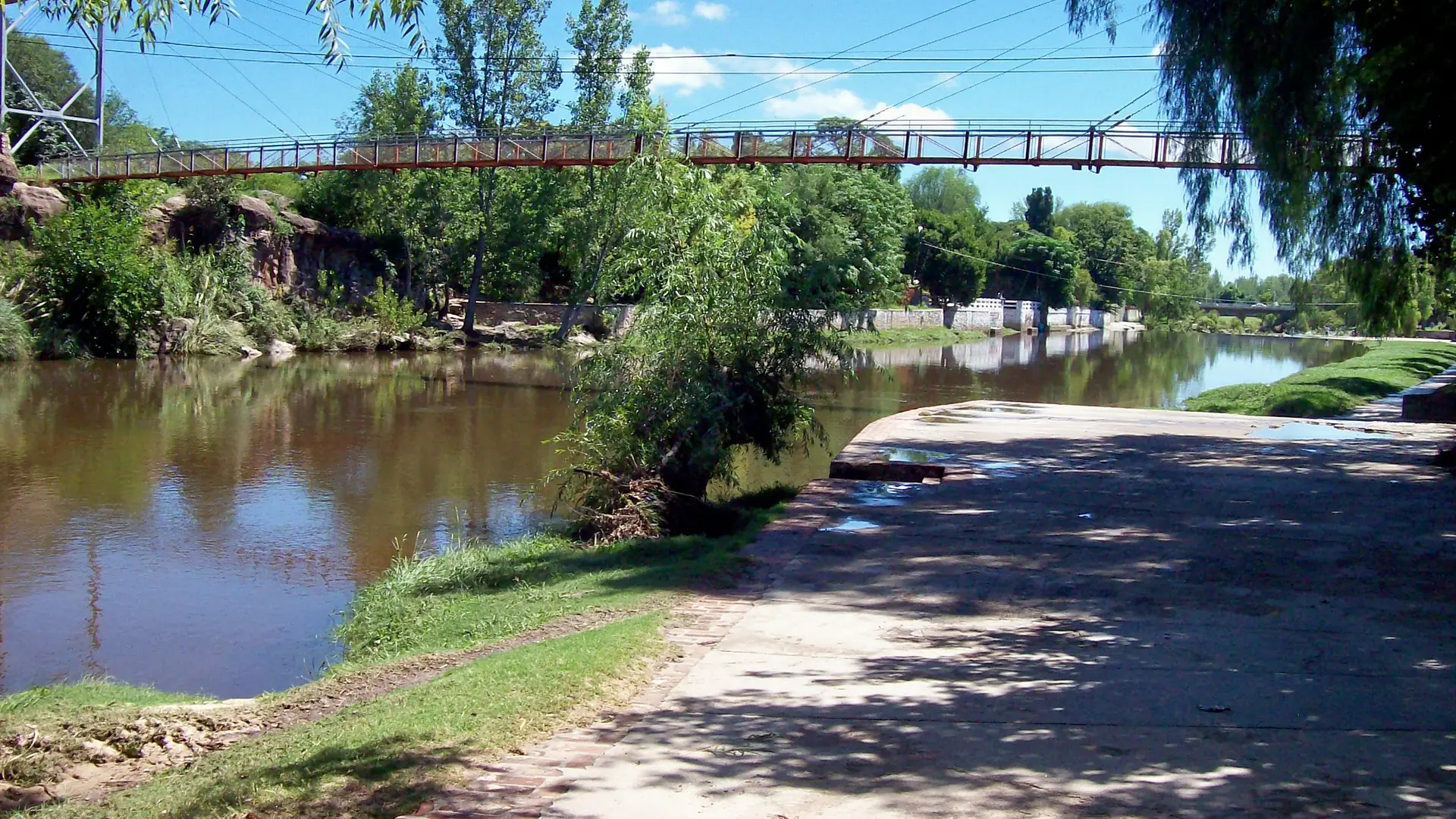
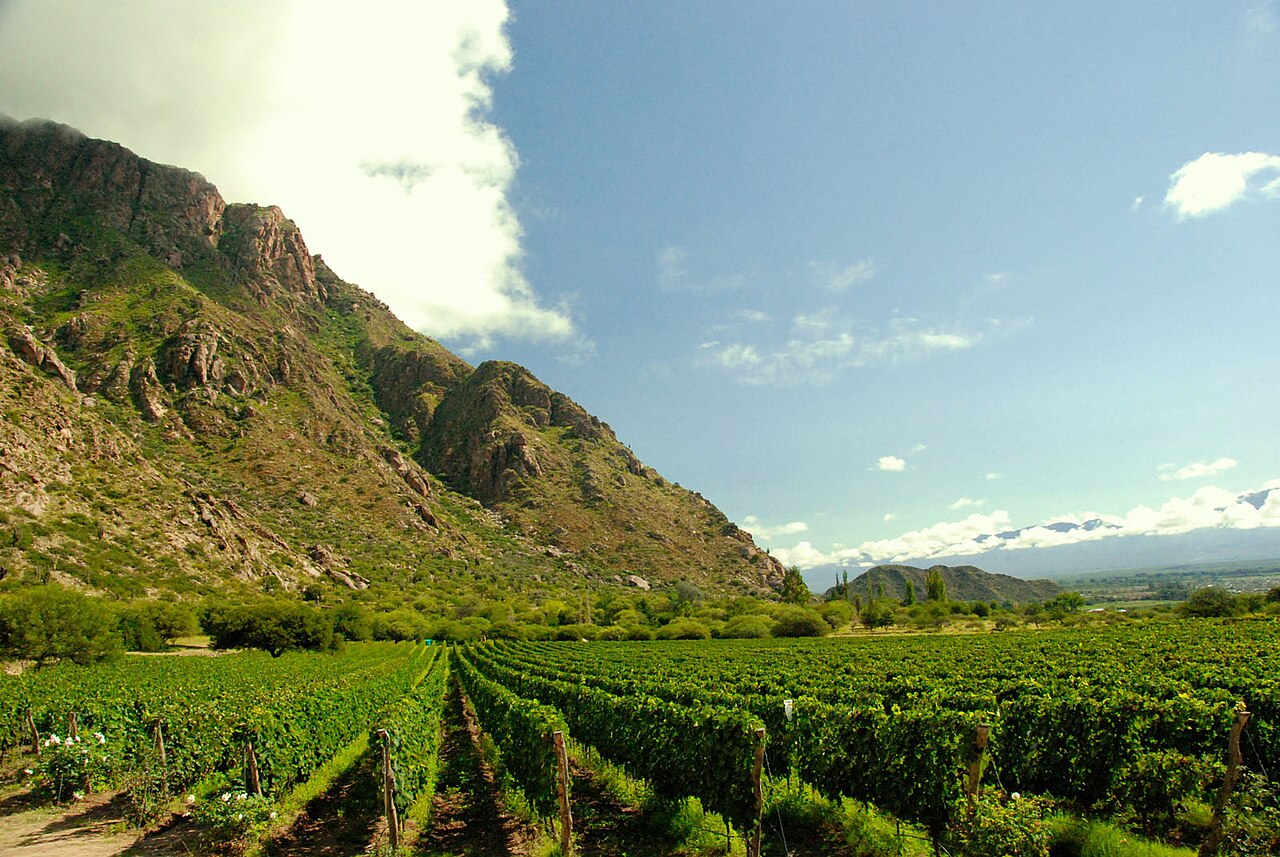
San Carlos is the oldest town in the Calchaqui Valleys, Salta province, Argentina (lat -25.8833, lng -65.9833), founded in 1551 and refounded 11 times due to indigenous resistance. Located 25 km north of Cafayate on RN 40, at 1,660 meters altitude, it is a quiet agricultural town of 3,000 inhabitants known for artisanal wineries, the grape harvest festival and a colonial church. San Carlos offers an authentic alternative to busier Cafayate, with genuine rural atmosphere and contact with local winemakers.
Getting there — distances & times
| From | Distance | Flight | Bus | Drive |
|---|---|---|---|---|
| Buenos Aires (EZE) | 1500 km | 2 h 20 | 20–22 h | 15–17 h |
| New York (JFK) | 9400 km | 12 h + 2 h 20 layover | — | — |
| Madrid (MAD) | 11300 km | 14 h + 2 h 20 layover | — | — |
| São Paulo (GRU) | 2800 km | 4 h 30 | — | — |
| Córdoba | 890 km | 1 h 30 | 11–13 h | 9–10 h |
| Mendoza | 1200 km | 2 h | 17–19 h | 13–15 h |
Month-by-month climate
| Month | Temp. | Rain | Crowds | Note |
|---|---|---|---|---|
| Jan | 16° / 28°C | 180 mm | Rainy summer | |
| Feb | 15° / 27°C | 155 mm | ||
| Mar | 14° / 26°C | 110 mm | ||
| Apr | 11° / 24°C | 30 mm | Dry season starts | |
| May | 8° / 22°C | 8 mm | ||
| Jun | 5° / 20°C | 3 mm | ||
| Jul | 4° / 20°C | 3 mm | Winter break | |
| Aug | 6° / 22°C | 5 mm | ||
| Sep | 9° / 25°C | 10 mm | Clear skies | |
| Oct | 12° / 27°C | 25 mm | ||
| Nov | 14° / 28°C | 60 mm | ||
| Dec | 16° / 28°C | 140 mm | Holidays |
Typical prices by category
| Category | Budget | Mid-range | Luxury |
|---|---|---|---|
| Hotel/night | USD 15–25 | USD 50–90 | USD 150–350 |
| Food/day | USD 12–18 | USD 25–40 | USD 60–120 |
| Day tour | USD 40–55 | USD 60–90 | USD 120–200 |
| Car rental/day | USD 30–45 | USD 50–70 | USD 90–150 |
Approximate ranges in USD as of April 2026. May vary with Argentine peso exchange rate.
How to Get There
25 km north of Cafayate on RN 40 (paved, 30 minutes). 214 km from Salta via RN 68 and RN 40.
What to See and Do
Visit artisanal family wineries, the 18th-century church, annual grape harvest festival, peaceful plaza. Starting point for Route 40 northbound toward Angastaco and Cachi.
When to Visit
- Best: March (grape harvest festival), April-November (dry, pleasant).
- Year-round: Accessible all year.
Practical Information
Basic services: a few restaurants, small shops. Stay in Cafayate (25 km) for wider options. Budget-friendly destination.