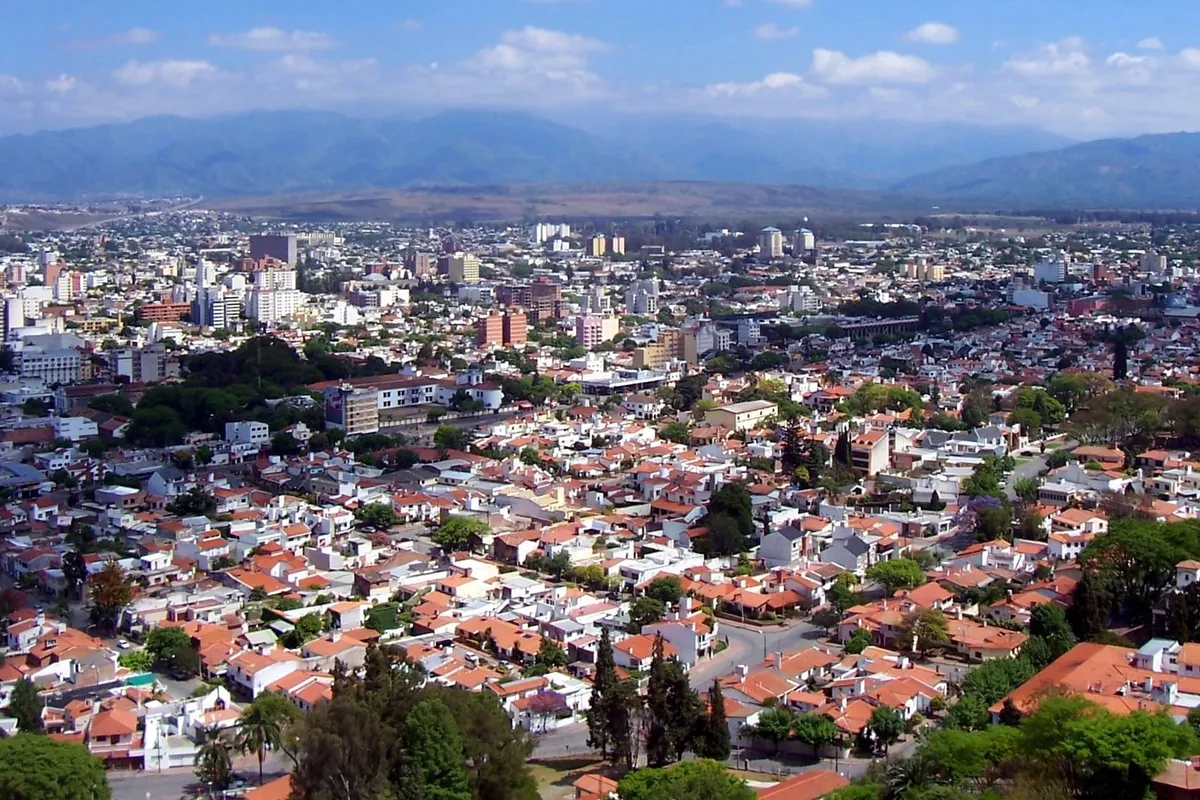
Salta sits at 1,187 meters elevation in Argentina's northwest and serves as the gateway to some of South America's most dramatic landscapes. The city drew over 3 million visitors in 2025, making it Argentina's fastest-growing tourist destination outside Buenos Aires and Patagonia. Within a 300-kilometer radius of Salta you'll find the Quebrada de Humahuaca (a UNESCO World Heritage Site since 2003), the highest-altitude commercial vineyards on Earth in Cafayate (1,660m), the Salinas Grandes salt flats at 3,450 meters, and the Train to the Clouds railway reaching 4,220 meters. Salta's colonial center is the best-preserved in northern Argentina, anchored by the 1692 Cathedral and the San Francisco Church with South America's tallest bell tower at 54 meters. The MAAM museum houses the "Children of Llullaillaco" -- three 500-year-old Inca mummies found at 6,739 meters, the world's highest archaeological site. Direct international flights arrive from Panama City (Copa hub connecting 85 cities in 32 countries), Sao Paulo, Lima, and Asuncion. For North American and European travelers, Salta offers Patagonia-level scenery at a fraction of the cost, with hotel rates averaging $40--80 USD per night and full-day guided tours running $35--55 USD.
Why Salta Over Patagonia? The Case for Argentina's Northwest
Patagonia gets the headlines, but Salta delivers an experience that many seasoned South America travelers consider richer and more varied. Here's how the two regions compare:
Cost: Salta is roughly 40--60% cheaper than Patagonia. A mid-range hotel in El Calafate runs $120--180 USD/night; in Salta, equivalent quality costs $40--80 USD. A day trip to Perito Moreno Glacier costs $80--120 USD; a comparable full-day Quebrada de Humahuaca excursion from Salta runs $45--55 USD. Daily food and transport costs in the NOA region average $25--40 USD compared to $50--80 USD in Patagonia's tourist hubs.
Diversity: Patagonia offers glaciers, mountains, and steppe. Salta adds colonial architecture, living indigenous cultures, high-altitude wine country, pre-Columbian archaeological sites, a 500-year-old Inca mummy museum, vast salt flats, and one of the world's highest railways. You move through multiple ecosystems: subtropical cloud forest in San Lorenzo (20 minutes from the city), high-altitude Puna desert above 3,500m, colorful geological canyons in the Quebrada de las Conchas, and fertile wine valleys in Cafayate.
Accessibility: Copa Airlines' Panama hub connects Salta to 85 cities in 32 countries with a single stop, making it easier to reach from North America than El Calafate or Ushuaia. From Buenos Aires, the 2-hour flight to Salta has multiple daily departures on three airlines (Aerolineas Argentinas, JetSmart, Flybondi).
Season: Salta's prime season (March--November) is the inverse of Patagonia's (November--March), making it an ideal complement. You can visit Salta in the Northern Hemisphere's fall or winter when Patagonia is largely shut down.
Salta vs Other South American Destinations
Compared to Peru's Cusco-Machu Picchu circuit, Salta offers similar Andean altitude landscapes and indigenous heritage with significantly fewer crowds and lower prices. Machu Picchu entrance fees alone exceed $50 USD and require advance booking months ahead; most attractions in the Salta region cost under $10 USD or are free. Compared to Bolivia's Uyuni Salt Flat, Argentina's Salinas Grandes are smaller but far more accessible -- reachable as a day trip from Salta without the multi-day 4x4 expeditions required for Uyuni. Compared to Chile's Atacama Desert, Salta offers comparable high-altitude desert scenery plus wine country, colonial heritage, and substantially lower prices (San Pedro de Atacama hotels average $100--200 USD/night vs Salta's $40--80 USD).
1. Plaza 9 de Julio and the Historic Center
Salta's historic center is the best-preserved colonial ensemble in northern Argentina and one of the finest in all of South America. The main square, Plaza 9 de Julio, is framed by buildings dating from the 17th to 19th centuries, shaded by towering palm trees and jacarandas. On the north side stands the Cathedral Basilica of Salta, consecrated in 1882, housing the Cristo del Milagro and the Virgen del Milagro, patron saints of the city since a devastating earthquake in 1692. The original figures, carved in the 16th century, are among the most venerated religious artifacts in Argentina.
On the south side of the plaza, the Cabildo (colonial town hall) dates to 1783 and now houses the Museo Historico del Norte, with exhibits spanning pre-Columbian, colonial, and independence-era history. The collection includes artifacts from the Guemes campaigns and the wars of independence that shaped the region. Admission is under $2 USD.
Two blocks east, the Iglesia San Francisco is unmissable: its red-terracotta facade, elaborately decorated in Italian-influenced baroque style, is Salta's most photographed building. The bell tower rises 54 meters, making it the tallest in South America. Inside, the wooden altarpiece is covered in gold leaf. The church was begun in 1625 and rebuilt after the 1844 earthquake.
The surrounding streets -- Caseros, Espana, Buenos Aires -- are lined with colonial mansions converted into boutique hotels, restaurants, and craft shops. The Mercado Central, two blocks from the plaza, is where locals buy empanadas salteñas (Salta-style empanadas are widely considered the best in Argentina) and regional produce.
Tip: Visit the plaza at sunset when golden light illuminates the colonial facades. Thursday and Sunday evenings bring artisan fairs to the square. Allow 2--3 hours for a walking tour of the historic center.
2. MAAM -- High Mountain Archaeology Museum
The Museo de Arqueologia de Alta Montana (MAAM) is one of the most important archaeological museums in South America. It houses the "Children of Llullaillaco" -- three Inca children sacrificed approximately 500 years ago in a capacocha ceremony and discovered in 1999 at 6,739 meters on the summit of Llullaillaco volcano, the world's highest archaeological site. The preservation is extraordinary: the extreme cold and dry conditions at altitude essentially freeze-dried the bodies, preserving skin, hair, clothing, and even stomach contents.
One of the three mummies is displayed at a time in a specially designed, climate-controlled capsule. The museum rotates which mummy is shown. The exhibition walks visitors through the capacocha ritual, Inca cosmology and religion, and the remarkable mountaineering expedition that recovered the finds. More than 150 artifacts found alongside the children -- textiles, ceramics, gold and silver figurines, feathered headdresses -- are displayed throughout the museum.
The building sits right on Plaza 9 de Julio. English audio guides are available. Allow 1.5 to 2 hours for a thorough visit. The museum is open Tuesday through Sunday, 10:00 AM to 7:00 PM. Admission is very affordable (under $5 USD). Photography inside the mummy room is prohibited.
Why it matters: The Llullaillaco mummies are considered the best-preserved human remains ever found. National Geographic, the Smithsonian, and BBC have featured them extensively. For anyone interested in archaeology, anthropology, or pre-Columbian history, the MAAM alone justifies a trip to Salta.
3. San Bernardo Hill Cable Car (Teleferico)
The Teleferico San Bernardo carries over 400,000 passengers per year from Parque San Martin at the base of the hill to the 1,454-meter summit in just 8 minutes. From the top, the panoramic view encompasses the entire city of Salta, the green expanse of the Lerma Valley, and the surrounding Andean foothills. On clear days, you can see more than 50 kilometers in every direction. Terraced gardens at the summit include native plants, an artificial waterfall, and a cafe with outdoor seating overlooking the city.
The cable car runs daily and tickets cost approximately $5--8 USD for adults. The base station in Parque San Martin is an easy 15-minute walk from the city center or a short taxi ride.
Alternative: Fitness enthusiasts can climb the 1,070 stone steps carved into the hillside (30--45 minutes up, depending on pace). The stairway is popular with local joggers in the early morning. A third option is driving to the summit via the road that starts from the San Lorenzo traffic circle. Many visitors take the cable car up and walk down via the steps for the best of both worlds.
Best time: Late afternoon for sunset views over the city, or early morning for the clearest skies and coolest temperatures. Avoid midday when heat haze can obscure the views.
4. Train to the Clouds (Tren a las Nubes)
The Tren a las Nubes is one of the world's most extraordinary railway journeys. The route runs from San Antonio de los Cobres (3,775m), a small Puna town three hours by road from Salta, to the La Polvorilla Viaduct at 4,220 meters above sea level. The viaduct itself is an engineering marvel: a curved steel bridge spanning 224 meters across a desert gorge with no central supports, built between 1921 and 1932 as part of a project to connect Argentina's northwest with Chile by rail.
The full experience, as sold to tourists, includes a bus transfer from Salta to San Antonio de los Cobres (departing around 6:00 AM), then the train ride out to the viaduct and back. The landscape is high-altitude Puna desert: vast, arid, punctuated by mountains exceeding 5,000 meters and scattered with llama herds. The train carries over 150,000 passengers per year, making it one of the most popular tourist railways in South America.
The train operates from April through November (the dry season). Tickets sell out weeks in advance during peak months (July school holidays, Easter week, September-October). Book as early as possible. Ticket prices range from $80--120 USD for the full excursion including bus transfers.
Altitude warning: The viaduct is at 4,220 meters. Altitude sickness (soroche) is a real concern, especially for visitors arriving directly from sea level. Common symptoms include headache, nausea, and shortness of breath. Pack sunscreen (UV exposure at altitude is intense), warm layers (temperatures can drop below freezing even in sunny weather), and coca leaves or altitude sickness tablets (available at pharmacies in Salta). Drink plenty of water the day before. The bus ride from Salta provides a gradual ascent that helps with acclimatization.
5. Quebrada de Humahuaca (UNESCO World Heritage Site)
The Quebrada de Humahuaca is a 155-kilometer mountain valley running north along National Route 9 from San Salvador de Jujuy to the town of Humahuaca. UNESCO inscribed it as a World Heritage Site in 2003, recognizing both its dramatic geology -- millions of years of sedimentary layers exposed in multicolored cliff faces -- and its cultural significance as a 10,000-year-old route connecting Andean highlands with lowland plains. The Inca Empire used this corridor, as did the Spanish, and independence-era armies under General Guemes.
The key stops along the Quebrada, from south to north:
Purmamarca (2,324 m): A tiny village at the foot of the Cerro de los Siete Colores (Hill of Seven Colors), one of the most photographed landscapes in Argentina. The hill's stripes of red, green, purple, yellow, white, pink, and brown result from mineral deposits spanning 600 million years. The village hosts a permanent artisan market selling woven textiles, llama wool goods, and carved stone. From Purmamarca, the road to Salinas Grandes departs via the Cuesta del Lipan.
Tilcara (2,461m): The Quebrada's cultural capital. The Pucara de Tilcara is a pre-Columbian fortified settlement (pucara) covering several hectares on a strategic hilltop. Partially reconstructed, it gives an excellent sense of how indigenous communities lived and defended this corridor. Below the Pucara, the Garganta del Diablo (Devil's Throat) is a narrow canyon with a waterfall reached via a 45-minute hike. Tilcara has the best restaurant scene in the Quebrada, with several places serving modern Andean cuisine.
Humahuaca (2,939m): The northernmost town on the standard tourist circuit. The Monumento a los Heroes de la Independencia is a massive stone monument on a hilltop above town, commemorating the battles fought here during the Argentine War of Independence. The town's Cabildo has a mechanical clock featuring a life-sized figure of San Francisco Solano that emerges at noon. The town retains a strong indigenous Quechua identity, visible in its festivals, food, and daily life.
Most visitors experience the Quebrada as a full-day trip from Salta (about 2.5 hours to Purmamarca, then north from there). For a deeper experience, spend one or two nights in Purmamarca or Tilcara. Self-driving is straightforward; the entire route is paved and in good condition.
6. Cafayate and Route 68 -- Wine and Rock Formations
The drive from Salta to Cafayate along National Route 68 is one of Argentina's most scenic road trips: 180 kilometers through the Quebrada de las Conchas (Canyon of Shells), where millions of years of erosion have sculpted sandstone into fantastical formations. Named landmarks along the route include the Garganta del Diablo (a narrow red-rock canyon), the Anfiteatro (a natural amphitheater with remarkable acoustics -- clap inside and hear the echo multiply), the Obelisco (a towering rock spire), El Fraile (the Friar), and Los Castillos (the Castles). Every few kilometers brings a new pull-off with a named formation and a short walking trail.
Cafayate itself sits at 1,660 meters elevation in the Calchaqui Valley and is the epicenter of Argentina's Torrontes grape, a floral, aromatic white wine that thrives at altitude. More than 30 wineries are open for visits and tastings, ranging from small family operations to large estates. Notable wineries include Bodega El Esteco (historic estate, excellent Torrontes and Malbec), Piattelli Vineyards (modern, stunning architecture and mountain views), Bodega Nanni (organic, family-run), and Finca Las Nubes (José Luis Mounier's artisanal wines at altitude). Tasting fees are nominal, typically $5--10 USD for a flight of 3--4 wines.
The town's central plaza is charming and walkable, with craft shops, restaurants, and the Museo de la Vid y el Vino (Museum of Vine and Wine), which traces the history of viticulture in the region. Don't miss the helado de vino (wine-flavored ice cream) at Heladeria Miranda, a local institution facing the plaza.
Tip: Spend at least one night in Cafayate if possible. The light over the vineyards at sunset is spectacular, and many wineries offer lunch service with wine pairings. If you're driving, the Route 68 formations are best photographed in the morning (eastward-facing light illuminates the red rock). Guided day trips from Salta typically include 2 winery stops and run $35--45 USD.
7. Salinas Grandes -- Salt Flats at 3,450 Meters
The Salinas Grandes is a vast salt flat covering 212 square kilometers at 3,450 meters elevation, making it the third-largest salt flat in South America after Bolivia's Salar de Uyuni and Chile's Salar de Atacama. Reaching the Salinas involves driving the Cuesta del Lipan from Purmamarca, a mountain switchback road that climbs to 4,170 meters before descending to the flat. The road is fully paved and in excellent condition, but the altitude and twisting curves require careful driving.
On the salt flat, the blinding white surface stretches to the horizon in every direction. After rains (most common in January-February), a thin layer of water creates a perfect mirror effect reflecting the sky -- one of the most photographed natural phenomena in Argentina. In the dry season, geometric patterns of salt crystals extend in every direction. Local artisans from the Salinas communities carve figures and containers directly from blocks of salt. Small pools of brine show the salt extraction process that has sustained communities here for centuries.
Perspective photography on the flat is a highlight -- the uniform white surface and vast scale allow creative forced-perspective shots that are social-media gold. Guides and other visitors are usually happy to help with photos.
Practical info: Most visitors reach Salinas Grandes as a full-day trip from Salta or Purmamarca. Guided tours from Salta run $45--55 USD and typically include the Cuesta del Lipan drive and a stop in Purmamarca on the way back. Bring sunscreen (the UV at 3,450m on a reflective white surface is extreme), sunglasses, water, warm layers, and snacks. There is basic food service at the salt flat but options are limited.
8. Cachi and the Cuesta del Obispo
Cachi is a small Andean village (2,280m) in the Calchaqui Valley, reached from Salta via Provincial Route 33 over the Cuesta del Obispo, a dramatic mountain pass through the Enchanted Valley (Valle Encantado) and Los Cardones National Park. The drive is about 3.5 hours from Salta and passes through landscapes that shift from subtropical vegetation to high-altitude cardones (giant cacti) to arid Puna in less than 100 kilometers.
Los Cardones National Park protects one of the densest concentrations of cardones cacti in Argentina. These slow-growing cacti can reach 5 meters tall and live for 300 years. The Recta Tin Tin, a perfectly straight 18-kilometer stretch of road through the park, is iconic -- a ribbon of asphalt cutting through a sea of cacti with mountains on every side.
Cachi itself is a village of whitewashed adobe buildings with a beautiful central plaza, a colonial church (Iglesia San Jose, 17th century), and an excellent archaeological museum (Museo Arqueologico Pio Pablo Diaz) with artifacts from the Diaguita culture. The village moves at a pace that feels detached from the modern world. Several artisan workshops produce ponchos, weavings, and ceramics using traditional techniques.
Getting there: The road from Salta to Cachi is fully paved. Day trips from Salta run $40--55 USD. For a loop, some travelers continue from Cachi south through the Quebrada de las Flechas to Cafayate (unpaved, requires a full day, recommended only with a sturdy vehicle).
9. San Lorenzo -- Cloud Forest and Birdwatching
Just 11 kilometers from Salta's main plaza, the village of San Lorenzo sits in a microclimate of subtropical cloud forest. The Quebrada de San Lorenzo is a short, shaded hike along a creek through dense vegetation with ferns, mosses, and towering trees draped in epiphytes. The temperature is noticeably cooler than the city, making it a refreshing escape. San Lorenzo is also one of the best birdwatching spots in the region, with toucans, tanagers, and the red-faced guan visible from the trails.
The village itself has a distinctly upscale feel compared to Salta, with art galleries, tea houses, and boutique hotels set among leafy streets. It's a popular half-day trip or a quieter alternative base for exploring the region.
10. Calle Balcarce -- Penas Folkloricas and Nightlife
Calle Balcarce is Salta's entertainment strip, a pedestrianized street lined with penas folkloricas -- traditional folk music venues where live bands play zambas, chacareras, and carnavalitos while diners feast on regional dishes. A typical pena evening includes a set menu of empanadas, locro (Andean corn and meat stew), tamales, and humita, accompanied by pitchers of Torrontes wine and live music that builds to audience participation -- singing, clapping, and dancing. Pena evenings typically begin around 9:00 PM and run past midnight.
The most established penas include La Vieja Estacion, Balderrama (immortalized in the famous zamba song), and La Casona del Molino (technically in San Lorenzo but culturally essential). Expect to pay $15--25 USD per person for food and drinks at a pena, which represents exceptional value for an evening of authentic live entertainment and generous food.
Tip for visitors: Penas are a genuinely local tradition, not a tourist show. Argentines from across the country come to Salta specifically for this experience. Thursday through Saturday nights are liveliest. Arrive by 9:30 PM to get a good table.
11. Mercado Central -- Empanadas and Local Flavors
Salta's Mercado Central, located two blocks from Plaza 9 de Julio, is the place to eat empanadas salteñas as the locals do. Salta-style empanadas are widely regarded as the best in Argentina: baked (not fried), with a hand-pinched repulgue (crimped edge), filled with seasoned beef, potato, hard-boiled egg, and olive. They cost roughly $0.50--1 USD each, and the proper technique is to bite a small hole in the top, sip the juices, then eat. The market also sells regional specialties: humitas (corn tamales in husk), tamales, quesillo con miel de cana (fresh cheese with cane syrup), and alfajores salteños.
Beyond the food stalls, the market sells coca leaves (perfectly legal in Argentina's northwest and useful for altitude), dried peppers, regional spices, and handmade sweets. It's a working market, not a tourist attraction, and prices reflect that.
12. Guemes Monument and the Gaucho Parade
Martin Miguel de Guemes is Salta's great historical hero -- the caudillo (military leader) whose gaucho cavalry defended Argentina's northwest frontier during the wars of independence (1814--1821), preventing Spanish reconquest from Bolivia. His equestrian statue at the base of San Bernardo Hill is one of the largest in Argentina. Every June 17 (the anniversary of his death), a massive gaucho parade fills the city, with thousands of horsemen in traditional dress riding through the streets. If your visit coincides, it's an unforgettable spectacle and one of Argentina's most important regional festivals.
13. Iruya -- The Hidden Village
For travelers with more time and a taste for adventure, Iruya is a remote village of 1,300 people perched at 2,780 meters on a mountainside above a deep gorge, accessible only via a single unpaved road (50 km from the paved highway, about 2.5 hours of careful driving). The village's isolation has preserved traditional Andean ways of life. Stone and adobe houses cling to the steep hillside, connected by narrow paths. The surrounding landscape is dramatic beyond description -- terraced farmland, deep canyons, and distant snow-capped peaks.
Iruya's Fiesta de Nuestra Senora del Rosario (first weekend of October) blends Catholic and indigenous Pachamama traditions in a celebration involving music, dance, and processions that feels unchanged for centuries. The hike from Iruya to the even smaller village of San Isidro (3 hours one way) passes through stunning mountain terrain.
Access: The turnoff from RN 9 is between Humahuaca and the Bolivian border. 4WD recommended, especially in the rainy season. Some travelers reach Iruya by public minibus from Humahuaca. Plan to spend at least one night. Accommodations are basic but adequate -- small hostels and family guesthouses.
14. Tren a las Nubes Alternative: The Full Quebrada del Toro Drive
Even if you skip the Train to the Clouds, the drive from Salta to San Antonio de los Cobres through the Quebrada del Toro is one of the most spectacular road journeys in the Argentine Andes. National Route 51 climbs from Salta at 1,187m to San Antonio de los Cobres at 3,775m over 165 kilometers, passing through the Quebrada del Toro gorge, the ruined railway stations of the old Huaytiquina line, and the multicolored hills of the Puna. The road is paved the entire way. At San Antonio de los Cobres, a small Puna town with a frontier atmosphere, you can see the Train to the Clouds pass on its way to the viaduct, visit local artisan cooperatives, and eat llama stew at simple roadside comedores.
Continuing beyond San Antonio de los Cobres, Route 40 heads north to the Salinas Grandes (accessible from the Puna side), creating the possibility of a spectacular loop: Salta to San Antonio to Salinas Grandes to Purmamarca and back to Salta. This circuit covers roughly 500 kilometers and can be done in a very long day or, preferably, with an overnight stop in Purmamarca.