Cosquin is one of those towns that punches far above its geographic weight thanks to the sheer force of its cultural identity. With just 25,000 permanent residents, this small town in the Punilla Valley turns into Argentina's cultural capital every January when it hosts the National Folklore Festival, the country's oldest and most prestigious folk music event. But Cosquin is much more than nine moonlit January nights: it is a sierra destination with its own river, a cerro served by a chairlift, authentic mountain cuisine and a strategic location that makes it an ideal base for exploring the entire Punilla Valley. Sitting just 65 kilometers from Cordoba city and 20 kilometers from Villa Carlos Paz, Cosquin combines the easy access of the big towns with the laid-back rhythm of a sierra village that lives to the beat of guitar strings and river water.
Getting there — distances & times
| From | Distance | Flight | Bus | Drive |
|---|---|---|---|---|
| New York (JFK) | 8500 km | 11 h via Buenos Aires | — | — |
| Miami (MIA) | 7100 km | 9 h via Buenos Aires | — | — |
| Madrid (MAD) | 10000 km | 13 h via Madrid + AR domestic | — | — |
| Buenos Aires (EZE) | 700 km | 1 h 15 | 10 h | 8 h |
| Mendoza | 670 km | 1 h 10 | 9 h | 7 h |
| Iguazu (IGR) | 1100 km | 1 h 30 | — | — |
Month-by-month climate
| Month | Temp. | Rain | Crowds | Note |
|---|---|---|---|---|
| Jan | 19° / 31°C | 120 mm | Summer, peak season | |
| Feb | 18° / 30°C | 105 mm | ||
| Mar | 16° / 28°C | 90 mm | ||
| Apr | 12° / 25°C | 50 mm | ||
| May | 8° / 21°C | 20 mm | ||
| Jun | 5° / 18°C | 12 mm | ||
| Jul | 4° / 18°C | 10 mm | Winter break | |
| Aug | 6° / 21°C | 12 mm | ||
| Sep | 9° / 23°C | 30 mm | ||
| Oct | 13° / 26°C | 70 mm | ||
| Nov | 15° / 28°C | 95 mm | ||
| Dec | 18° / 30°C | 125 mm |
Cosquin Essentials
- Location: Punilla Valley, 65 km from Cordoba city
- Altitude: 720 meters above sea level
- How to get there: 1 hour by car/bus from Cordoba via Route E-38
- Population: ~25,000 residents
- Main draw: National Folklore Festival (January), Cosquin Rock (February)
- Best time: January for the festival; spring/fall for nature
- Tour from Cordoba: from USD 31 with Civitatis (Punilla Valley)
The National Folklore Festival: Cosquin's Nine Moons
Since 1961, every January Plaza Prospero Molina has been transformed into the most important open-air folk music stage in Argentina. The National Folklore Festival of Cosquin runs for nine consecutive nights — known as "lunas" or moons — and gathers established and emerging artists across every expression of folklore: chacarera, zamba, chamame, cueca, tonada, milonga, coplas and more. The final night, called the luna of consagracion, is the marquee moment when new artists compete for the national recognition that launched the careers of legends like Mercedes Sosa, Los Chalchaleros, Soledad Pastorutti and Abel Pintos.
Plaza Prospero Molina seats 8,000 spectators on its stone bleachers under the open sky, surrounded by hills and stars. Listening to live folklore beneath the January sierra sky, with the cool breeze drifting down from the mountains and the smell of empanadas wafting in from the street vendors, is a one-of-a-kind experience. Shows kick off around 21:00 and run into the small hours. Tickets for the early moons cost around ARS 8,000-12,000, while the final luna runs ARS 20,000-25,000. You can buy them online or at the box offices around the plaza.
The festival, however, is far from confined to the plaza. Across the nine nights, the entire town turns into a popular celebration: folk music penas run in dozens of bars and private courtyards until dawn, with free entry or very accessible cover charges (ARS 3,000-5,000). Artists scheduled to play the main stage the next day often turn up unannounced at the penas, guitar in hand, and break into impromptu jam sessions that capture the real essence of living folklore. The main street fills with artisans, empanada and tamale vendors, and families wandering between street stages where anyone is invited to sing or dance.
Cosquin Rock: The Other Big Festival
If January belongs to folklore, February belongs to rock. Cosquin Rock, launched in 2001, has become the most important rock, pop and alternative music festival in Argentina and one of the most relevant in Latin America. It runs for three days (typically the second or third weekend of February) at the Santa Maria de Punilla Aerodrome, about 5 kilometers from downtown Cosquin, on grounds that can hold over 100,000 people.
The lineup features more than 100 bands and solo artists spread across multiple simultaneous stages, with both Argentine and international headliners. Cosquin Rock has hosted artists like Divididos, Las Pelotas, Callejeros, Duki, Trueno, Nathy Peluso, Wos, Los Piojos and dozens of international bands. Three-day passes run ARS 60,000-90,000 depending on the presale window. Single-day tickets are around ARS 30,000-45,000. On-site camping is a popular option among younger attendees (included with the pass).
The Cosquin Rock experience goes beyond the music: the venue includes a food truck zone, an independent art and design fair, art installations and the kind of collective energy that only happens at large open-air festivals. February weather in the Cordoba sierras tends to be warm during the day (28-32C/82-90F) with pleasant nights (18-22C/64-72F) — ideal for being outdoors.
The Cosquin River: River Beaches and Pools
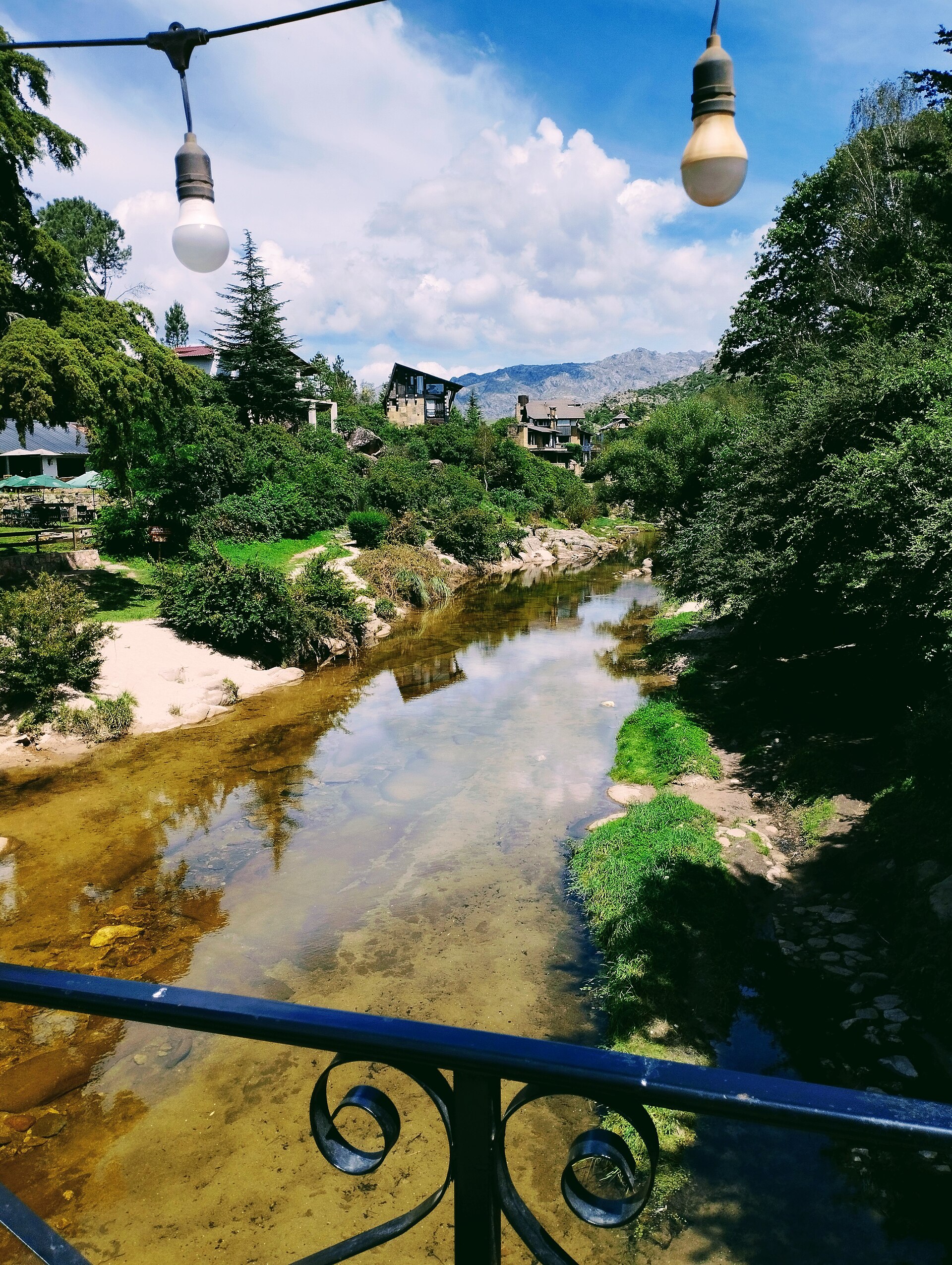
Outside festival season, Cosquin's main natural draw is its river, which flows through town from west to east before emptying into Lago San Roque. The Cosquin river offers several natural river beaches with sandy and pebbly shores, natural pools formed between the rocks, and deeper sections for swimming. The Municipal River Beach, just a few blocks from Plaza Prospero Molina in the heart of town, is the most accessible and best equipped — with summer lifeguards, a kids' play area, kiosks and umbrella rentals. Entry is free.
For a wilder setting, the river beaches further upstream (toward San Jose and Molinari) offer more private spots with deep pools framed by native vegetation, perfect for spending the day with mate and a snack board. The water of the Cosquin river is clean and crystal-clear, with a refreshing temperature in summer. In spring and fall, the riverbanks are perfect for walks and picnics in a quiet sierra setting.
Cerro Pan de Azucar and the Chairlift
Cerro Pan de Azucar (1,260 meters) is Cosquin's iconic peak and one of the most-visited cerros in the Cordoba sierras. Its rounded, distinctive silhouette dominates the town's skyline, and you can reach the summit two ways: by chairlift or on foot.
The chairlift is the most comfortable and popular option. The ride takes about 8 minutes and climbs through forested scenery with views that widen as you gain altitude. At the top, a panoramic viewpoint delivers 360-degree vistas of the Punilla Valley: the Cosquin river, Lago San Roque, Carlos Paz in the distance and the high peaks of the Sierras Grandes to the west. There is a cafe at the top to enjoy a hot drink with a view, plus short trails to explore the high-altitude vegetation. Tickets cost ARS 6,000-10,000 depending on the season, and the lift operates year-round (subject to weather).
For trekking fans, the trail to Cerro Pan de Azucar starts from the chairlift base and climbs along a moderately demanding path that takes about 1.5 hours. The route winds through sierra forest of quebrachos, molles and espinillos, with shaded sections that make it pleasant even on hot days. The reward at the top is the same spectacular view, with the bonus satisfaction of having earned it on your own legs. You can mix it up: hike up and ride down on the chairlift (or vice versa).
Sierra Cuisine in Cosquin
Cosquin's food scene is a faithful reflection of Cordoban sierra cooking, with creole influences and a local stamp defined by mountain ingredients and the slow-fire tradition. The Cordoban empanadas (with their signature touch of raisins and a hint of sugar) are everywhere, and every bakery and corner store has its own secret recipe. During the Folklore Festival, street empanada stalls multiply, and biting into a fresh, hot empanada on the walk to the plaza is practically a ritual.
Spit-roasted cabrito (kid goat) and pork ribs are the headline dishes at local restaurants, prepared on the parrilla or in wood-fired clay ovens. Sierra picadas (boards of cured meats with Colonia Caroya salami, farm cheese, bondiola, olives and homemade bread), paired with local craft beer, make the perfect aperitif for a sierra afternoon. In winter, locro (a hearty stew of corn, beans and meat) and homemade tamales are the stars of the table.
Cosquin has several craft breweries that have earned recognition in recent years. The main street and the riverside concentrate most of the dining options, with restaurants ranging from affordable parrillas (a full asado from ARS 12,000 per person) to more elaborate fine-dining concepts. The artisan ice cream parlors downtown are an obligatory summer stop, with classic flavors and ones inspired by sierra fruits.
What to Do in Cosquin Beyond the Festivals
Cosquin offers activities for every taste year-round. Horseback rides through the sierras depart from nearby estancias and follow mountain trails with valley views (from ARS 10,000/hour per person). Mountain biking circuits are marked across the surrounding hills with options for every difficulty level. Guided hikes through nearby streams and gorges reveal waterfalls and hidden corners only locals know.
The Camin Cosquin Municipal Museum, just across from the main plaza, displays the history of the Folklore Festival through photographs, instruments and memorabilia from the legendary artists who have stepped onto the stage. The Artisan Fair along the riverside promenade runs on weekends — and daily during peak season — selling leather goods, ceramics, textiles and artisan foods.
From Cosquin, you can easily reach other Punilla Valley destinations: La Falda (12 km north), La Cumbre (25 km), Capilla del Monte (40 km) and Carlos Paz (20 km south). It makes an excellent base for travelers who want to explore the entire valley without moving accommodation, with the bonus of more accessible prices than Carlos Paz and a more relaxed, authentic vibe.
Where to Stay in Cosquin
Cosquin has a wide range of lodging that expands significantly during festival season. Downtown hotels, just a few blocks from Plaza Prospero Molina and the river, run from USD 35-70/night for a double with breakfast outside peak season, climbing to USD 60-120/night during January and February. Cabins and complexes in the surrounding hills are ideal for families (from USD 40-80/night for four people), with pool, parrilla and direct mountain access.
Budget travelers can find hostels and guesthouses from USD 12-20/night and organized campsites by the river from ARS 5,000/night. During the Folklore Festival, many Cosquin residents rent out rooms and apartments at fair prices — a tradition that has held since the early festivals. The key is booking ahead: during January and the Cosquin Rock weekend, hotel occupancy hits 100%.
How to Get to Cosquin
From Cordoba city, Cosquin is 65 km away (about 1 hour by car via Route E-38 through Carlos Paz, or directly on Route 38). Frequent buses depart from the Cordoba bus terminal with Sarmiento and Ciudad de Cordoba companies, leaving every 30-45 minutes during the day. The fare runs ARS 2,500-4,000. From Carlos Paz the distance is just 20 km (25 minutes), with very frequent buses.
For travelers coming from Buenos Aires, the most practical option is flying into Cordoba airport (COR) and connecting onward by bus or rental car. There are also direct long-distance buses from Buenos Aires to Cosquin with Chevallier (10-11 hours). Driving from Buenos Aires takes about 720 km on highway and route (7-8 hours).