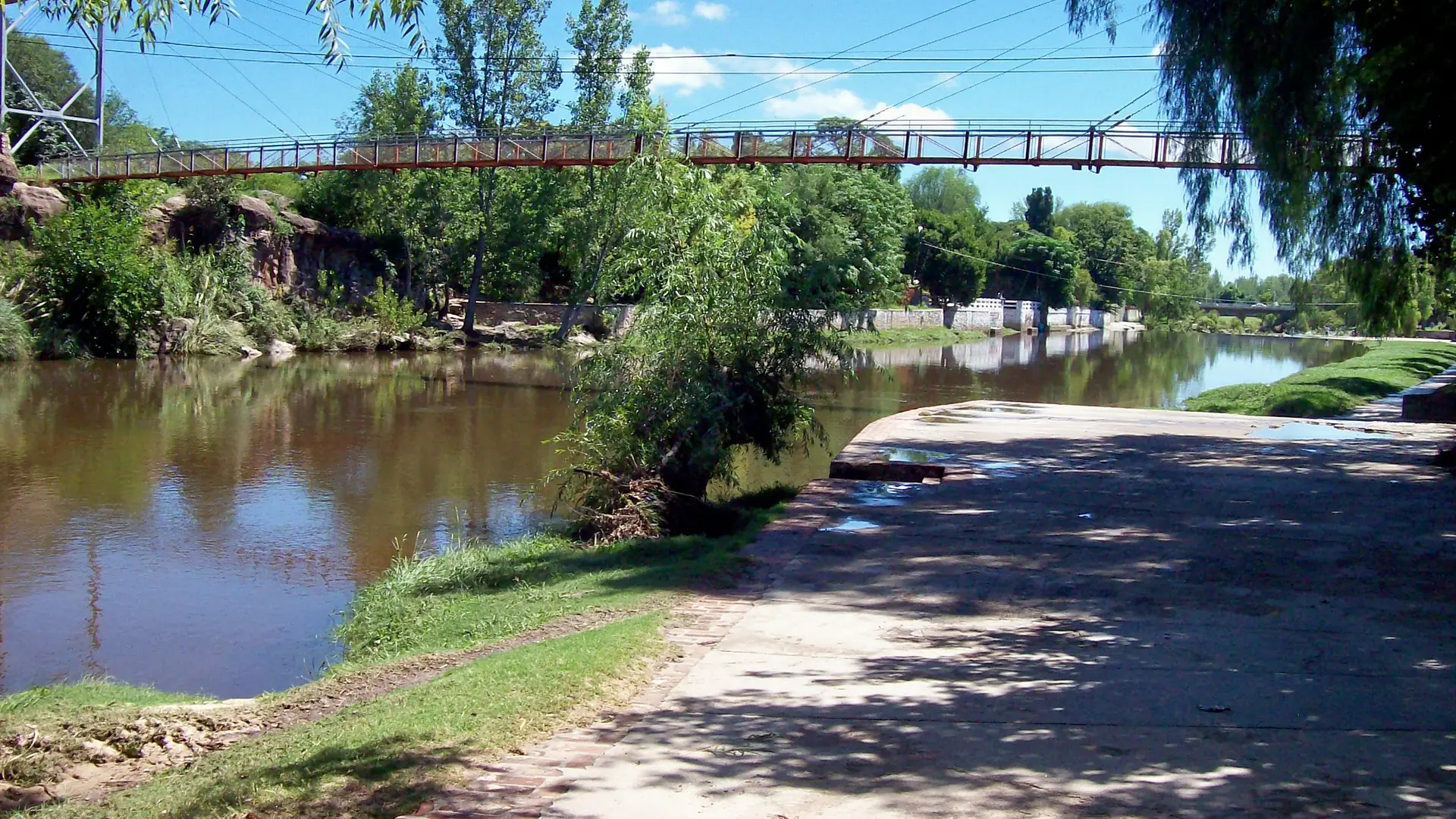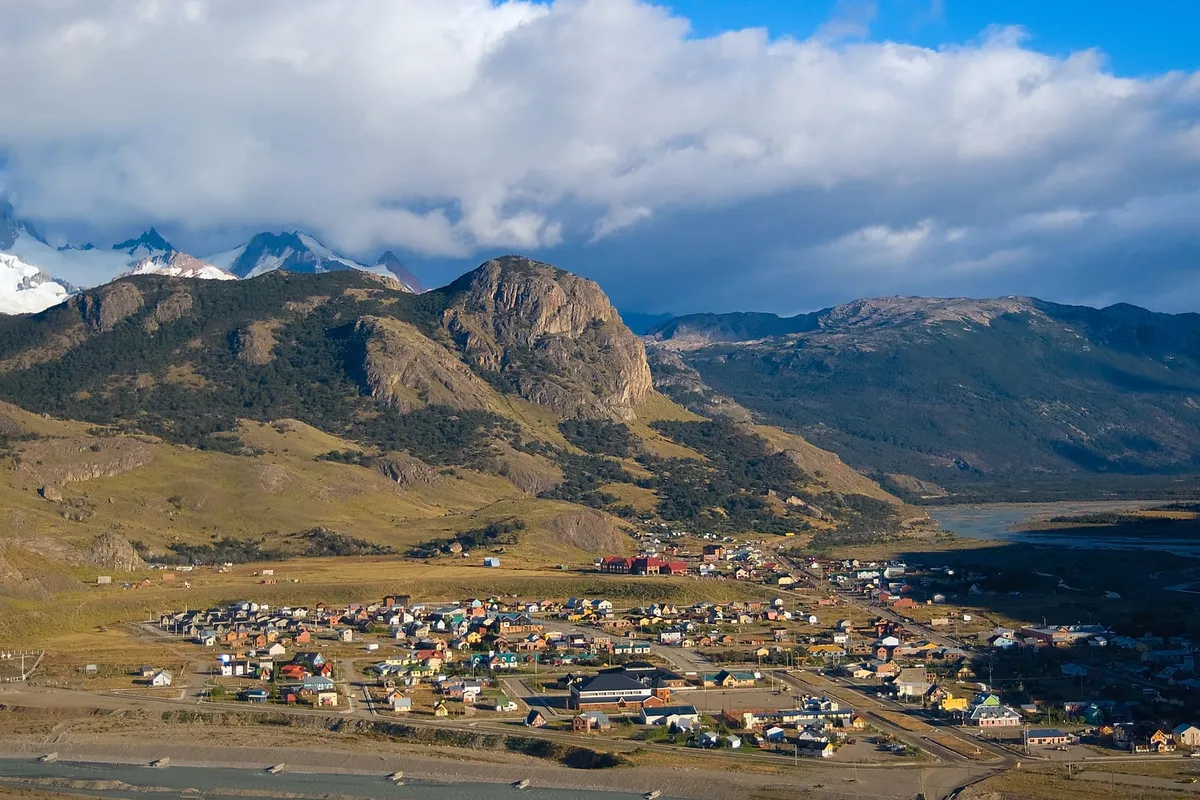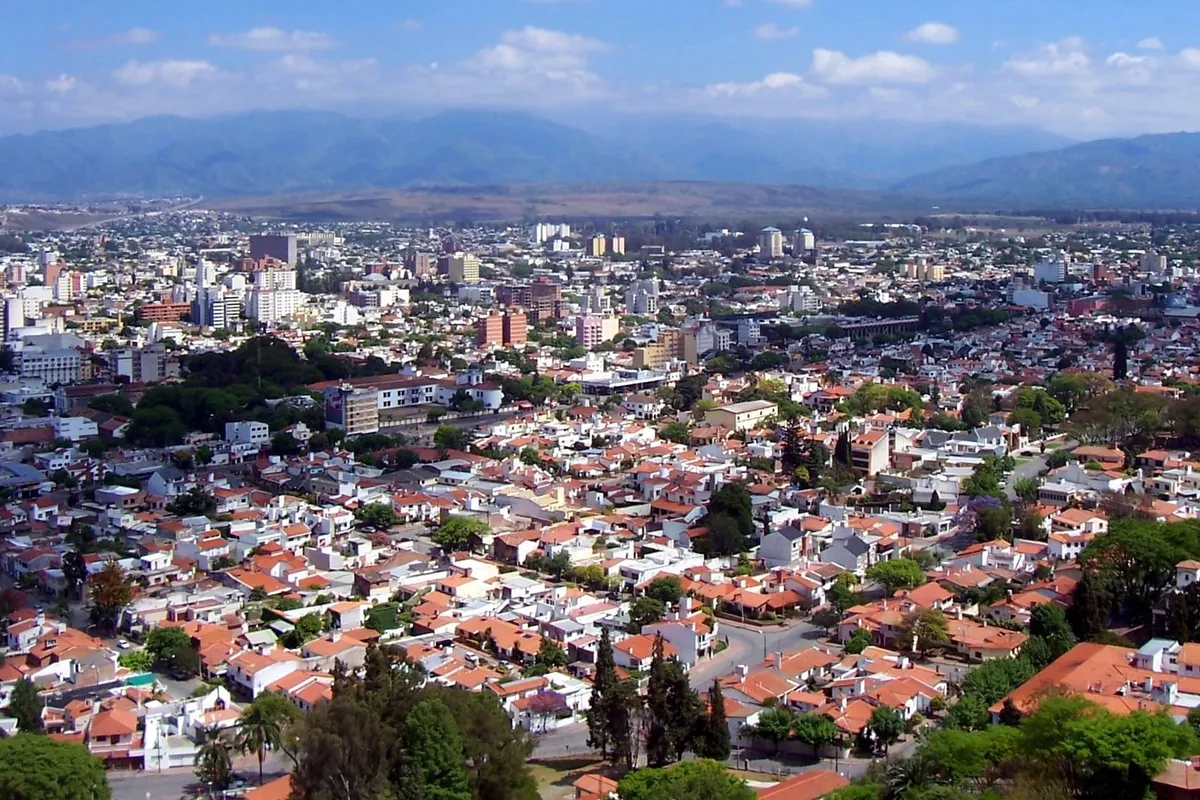
Cachi is an Andean village of 3,000 inhabitants at 2,280 meters elevation in the Calchaqui Valleys, Salta Province, Argentina, dominated by the Nevado de Cachi, a 6,380-meter massif that is the province's highest peak and one of the major summits of the northwestern Andes. The approach from Salta city (157 km, 3.5 hours) follows Provincial Route 33, one of Argentina's most spectacular mountain roads, crossing the Cuesta del Obispo (3,348m at Piedra del Molino pass), Los Cardones National Park (65,000 hectares of cardones cactus forest, Echinopsis atacamensis) and the Recta del Tin Tin, a perfectly straight 18-km stretch that the Inca used as a road. The village preserves colonial adobe architecture, cobblestone streets, an 18th-century church with a cardones-wood ceiling, an archaeological museum with Diaguita-Calchaqui artifacts and an elevated cemetery with valley views. From Cachi, Route 40 continues 157 km south to Cafayate via an unpaved road through Seclantes, Molinos, Angastaco and the Quebrada de las Flechas. The average annual temperature is 14°C, with frequent winter frosts and clear skies over 300 days per year.


Getting there — distances & times
| From | Distance | Flight | Bus | Drive |
|---|---|---|---|---|
| Buenos Aires (EZE) | 1500 km | 2 h 20 | 20–22 h | 15–17 h |
| New York (JFK) | 9400 km | 12 h + 2 h 20 layover | — | — |
| Madrid (MAD) | 11300 km | 14 h + 2 h 20 layover | — | — |
| São Paulo (GRU) | 2800 km | 4 h 30 | — | — |
| Córdoba | 890 km | 1 h 30 | 11–13 h | 9–10 h |
| Mendoza | 1200 km | 2 h | 17–19 h | 13–15 h |
Month-by-month climate
| Month | Temp. | Rain | Crowds | Note |
|---|---|---|---|---|
| Jan | 16° / 28°C | 180 mm | Rainy summer | |
| Feb | 15° / 27°C | 155 mm | ||
| Mar | 14° / 26°C | 110 mm | ||
| Apr | 11° / 24°C | 30 mm | Dry season starts | |
| May | 8° / 22°C | 8 mm | ||
| Jun | 5° / 20°C | 3 mm | ||
| Jul | 4° / 20°C | 3 mm | Winter break | |
| Aug | 6° / 22°C | 5 mm | ||
| Sep | 9° / 25°C | 10 mm | Clear skies | |
| Oct | 12° / 27°C | 25 mm | ||
| Nov | 14° / 28°C | 60 mm | ||
| Dec | 16° / 28°C | 140 mm | Holidays |
Typical prices by category
| Category | Budget | Mid-range | Luxury |
|---|---|---|---|
| Hotel/night | USD 15–25 | USD 50–90 | USD 150–350 |
| Food/day | USD 12–18 | USD 25–40 | USD 60–120 |
| Day tour | USD 40–55 | USD 60–90 | USD 120–200 |
| Car rental/day | USD 30–45 | USD 50–70 | USD 90–150 |
Approximate ranges in USD as of April 2026. May vary with Argentine peso exchange rate.
Getting to Cachi from Salta
The journey to Cachi is an experience in itself. The route from Salta is one of Argentina's most beautiful, with landscapes that change dramatically every 30 minutes.
The Route: Salta -- Cuesta del Obispo -- Los Cardones -- Cachi (RP 33)
The 157-km journey via RP 33 divides into clearly differentiated sections:
- Salta -- Lerma Valley (30 km, paved): Depart Salta westward through green fields and tobacco farms of the fertile Lerma Valley.
- Quebrada de Escoipe (30 km, paved): A subtropical canyon with lush vegetation, ferns and waterfalls. The Escoipe River accompanies the road. The transition from lowlands to mountains.
- Cuesta del Obispo (20 km, gravel): The ascent proper: tight curves climbing from 2,000m to 3,348m at Piedra del Molino pass. Spectacular lookouts. Landscape shifts from subtropical green to highland grassland to bare rock. At the summit, a monolith and stunning 360° views.
- Los Cardones National Park (40 km, gravel): After the pass, the landscape changes radically: an arid highland plateau dotted with thousands of giant cardones cacti that can reach 10 meters tall and live 300 years. The Valle Encantado (Enchanted Valley), with eroded rock formations, is a recommended stop.
- Recta del Tin Tin (18 km, gravel): A perfectly straight 18-km road through the park, believed to be a section of the Qhapaq Nan (Inca road). Cardones flank both sides and the Nevado de Cachi looms ahead as the final destination.
- Payogasta -- Cachi (20 km, gravel): Descent to the Calchaqui River valley. Payogasta is a small village with paprika pepper production. From here, 11 km to Cachi.
Do I Need a 4WD?
Not necessarily. RP 33 is consolidated gravel and in normal conditions can be driven with any vehicle with decent ground clearance (SUV, crossover, pickup). Not recommended with low sedans due to road irregularities and water crossings. During the rainy season (December--March), sections can be tricky -- check road conditions before departing. Organized excursions use minibuses. Average speed on gravel is 40-50 km/h.
Public Transport
There is a daily bus from Salta to Cachi (Marcos Rueda company), departing in the morning and returning in the afternoon. The journey takes 4-5 hours. It's an economical option but limits flexibility to stop at viewpoints along the Cuesta del Obispo and Los Cardones National Park.
What to See and Do in Cachi
The Village: Adobe Streets and Andean Silence
Cachi preserves an atmosphere of a village frozen in time. The cobblestone streets, whitewashed adobe houses, reed-and-mud roofs, and tree-lined plaza with its church create a setting of Andean tranquility. The village can be explored on foot in 1-2 hours. The Iglesia San Jose, from the 18th century, has a ceiling made of cardones wood (the dried central beam of the cactus) and a carved confessional. The cemetery, at the upper edge of the village, offers a panoramic view of the valley and the Nevado de Cachi.
Pio Pablo Diaz Archaeological Museum
A small but excellent museum with a collection of over 5,000 pieces from the Diaguita-Calchaqui cultures that inhabited the Calchaqui Valleys for thousands of years. Funerary urns, ceramics, stone tools, metalwork and textiles. The explanations contextualize the worldview and daily life of these peoples. Affordable admission, open Tuesday through Sunday.
Nevado de Cachi
The Nevado de Cachi massif dominates Cachi's western horizon at 6,380 meters. Its snow-capped peaks are visible from the entire village and valley. For experienced mountaineers, the ascent is a 3-5 day expedition with a guide. For general visitors, the views from the village, the cemetery and the road to Cachi Adentro are spectacular. The best light for photographing the nevado is at sunrise and sunset, when the peaks turn pink and orange.
Bodega Puna — Extreme Altitude Wines
About 6.5 km from the village, Bodega Puna is one of the highest wineries in the world: its vineyards range from 2,600m in Cachi to 3,400m in La Poma. Founded in 2015, it cultivates Malbec, Cabernet Sauvignon, Cabernet Franc, Tempranillo, Torrontes, Sauvignon Blanc, Syrah, Merlot and Chardonnay under extreme conditions that produce wines with unique concentration and minerality. The experience includes a tasting of 4 varietals with bread, cheese and regional delicacies (~45 minutes), a restaurant with a la carte and tasting menus, and spectacular views of the Nevado de Cachi. Open daily 10:00 AM to 6:00 PM. Book ahead, especially for lunch. Cachi's unmissable gastronomic stop.
When to Visit Cachi
- Autumn (March-May): The best season. Dry, mild climate, clear skies, golden poplars in the valley. Ideal walking temperature (18-22°C daytime). Few tourists.
- Winter (June-August): Sunny days, very cold nights (lows below 0°C). The Nevado de Cachi fully snow-capped: the most spectacular postcard. High season in July (school holidays). Roads in good condition.
- Spring (September-November): Cardones cactus bloom (November). Temperatures rising. Excellent balance between good weather and few tourists.
- Summer (December-February): Rainy season. Gravel roads can become difficult. Risk of closures on the Cuesta del Obispo and Route 40. Always check road conditions before departing. Intense green in the valleys.
Practical Information
Accommodation in Cachi
Cachi has an intimate hotel offering with plenty of character. No large hotels or chains. Options include hostels and guesthouses from USD 15-25/night, charming hosterias from USD 50-90 (many in converted colonial houses with courtyards and Nevado views), and boutique hotels from USD 120-200. La Merced del Alto and Hacienda de Cachi are the most exclusive. Book ahead in July and long weekends.
Connectivity & Services
Cell signal in Cachi is limited (Personal/Claro work better than Movistar). Wi-Fi at hotels and some restaurants, but slow. There is one ATM (Banco Macro) but it often runs out of cash -- bring sufficient cash from Salta. There is a gas station (YPF). Basic pharmacy and health center. No hospital -- the nearest is in Salta city.
Itinerary Combinations
- Classic Salta-Cachi circuit (1 day): Salta -- Cuesta del Obispo -- Los Cardones -- Cachi -- return same route. Full day, 12-14 hours. Works as a day trip but better with an overnight.
- Calchaqui Valleys circuit (2-3 days): Salta -- Cachi (night) -- Route 40 -- Cafayate (night) -- Route 68 -- Salta. The great loop combining Cuesta del Obispo, Los Cardones, Cachi, Quebrada de las Flechas, Molinos, Cafayate wineries and Quebrada de las Conchas. Unmissable.
- Complete NOA circuit (7-10 days): Salta + Quebrada de Humahuaca + Salinas Grandes + Cachi + Cafayate. The definitive NOA journey.