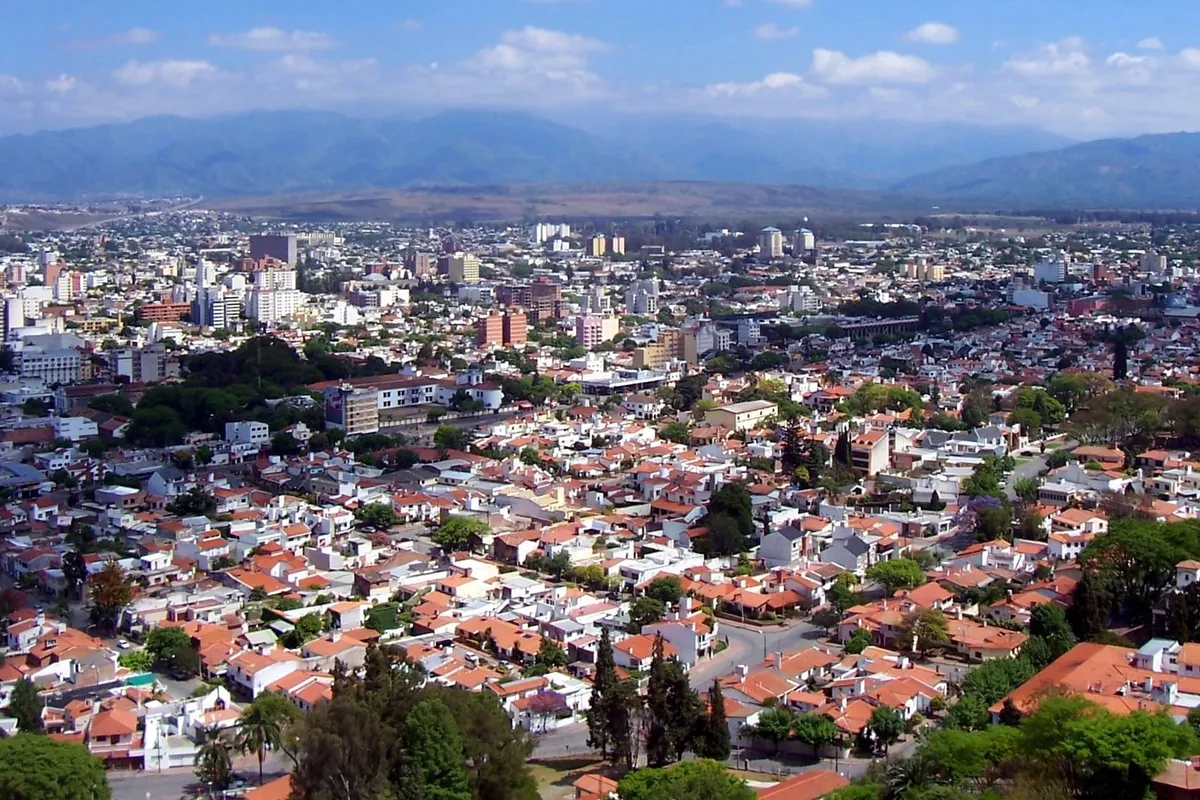
Salta's Martin Miguel de Guemes International Airport (IATA: SLA) is the most connected airport in Argentina's northwest, with direct flights from four international cities and all major Argentine hubs. The airport sits 9 kilometers southwest of the city center (20 minutes by taxi or transfer, approximately $5--8 USD). The single most important fact for international travelers planning a trip to Salta: Copa Airlines operates three weekly flights from its Panama City hub, which connects to 85 cities in 32 countries -- including 12 US cities (Miami, New York JFK, Los Angeles, Chicago, Houston, Orlando, Denver, Fort Lauderdale, Washington Dulles, Boston, Las Vegas, and Tampa), Toronto, Montreal, and dozens of Latin American and Caribbean destinations. This means Salta is reachable from most major North American cities with just one connection in Panama. LATAM provides direct flights from Sao Paulo (4 hours) and Lima (3.5 hours). From Buenos Aires, three airlines operate multiple daily flights taking just 2 hours. The city also has a modern bus terminal with connections across Argentina and to Chile and Bolivia by road.
International Flights to Salta
From the United States and Canada via Panama City (Copa Airlines)
Copa Airlines' hub at Tocumen International Airport in Panama City (PTY) is the key connection point for travelers from North America. Copa operates three weekly flights from Panama City to Salta (PTY-SLA), with flight times of approximately 7 hours. From Panama, Copa's route network covers 85 cities in 32 countries, making it the largest hub in Latin America.
Direct Copa flights to Panama operate from the following US cities: Miami (multiple daily), New York JFK (daily), Los Angeles (daily), Houston (daily), Chicago O'Hare (daily), Orlando (daily), Denver (multiple weekly), Fort Lauderdale (daily), Washington Dulles (daily), Boston (multiple weekly), Las Vegas (multiple weekly), and Tampa (multiple weekly). From Canada, Copa flies direct to Panama from Toronto and Montreal.
What this means in practice: A traveler from New York can reach Salta with one connection in Panama in approximately 13--14 hours of total travel time (5.5 hours JFK-PTY, layover, 7 hours PTY-SLA). From Miami, total travel time is approximately 11--12 hours. From Los Angeles, approximately 15--16 hours. These times are comparable to or better than routing through Buenos Aires, and Copa's Panama hub typically offers competitive fares.
Booking tips: Copa flights to Salta operate Tuesday, Thursday, and Saturday (verify current schedule). Book 3--4 months ahead for the best fares, especially for peak season (July, Easter, September-October). Round-trip fares from Miami to Salta via Panama typically range from $500--800 USD depending on season and advance purchase. From New York, expect $600--900 USD round-trip. Copa's ConnectMiles frequent flyer program is a Star Alliance partner, so United MileagePlus members can earn and redeem miles.
From Brazil (Sao Paulo and Florianopolis)
Sao Paulo Guarulhos (GRU) to Salta (SLA): LATAM operates direct flights year-round, with a flight time of approximately 4 hours. This is Salta's highest-volume international route -- Brazilian tourists represent 23--27% of Salta's international visitors, making them the single largest foreign visitor group. LATAM typically offers multiple weekly frequencies, increasing during Brazilian holiday periods (Carnival, July school break, December-January summer).
Florianopolis (FLN) to Salta (SLA): Aerolineas Argentinas operates this seasonal route during the Southern Hemisphere summer (December--March), connecting southern Brazil's beach capital with Salta for travelers wanting to combine sun and mountains in one trip.
Fares: Round-trip Sao Paulo to Salta typically ranges from $300--500 USD. Book through LATAM's website or via comparison sites. Tuesday and Wednesday departures tend to offer lower fares. LATAM's frequent flyer program (LATAM Pass) is a oneworld partner, usable for earning and redeeming with American Airlines, British Airways, Iberia, and others.
From Peru (Lima)
Lima (LIM) to Salta (SLA): LATAM operates direct flights with a flight time of approximately 3.5 hours. This route is popular with travelers combining Peru's classic circuit (Lima, Cusco, Machu Picchu) with Argentina's northwest -- a logical geographic pairing since both regions share Andean heritage, high-altitude landscapes, and indigenous culture. The flight crosses the Altiplano and Atacama Desert, offering spectacular views from window seats.
Tip for multi-country itineraries: A Lima-Salta-Buenos Aires route creates a compelling South America trip: Machu Picchu and Cusco, then fly to Salta for the NOA, then a domestic flight to Buenos Aires for tango, steak, and city culture. This sequence moves roughly south and avoids backtracking.
From Paraguay (Asuncion)
Asuncion (ASU) to Salta (SLA): Paranair operates direct flights with a flight time of approximately 2 hours. This is the shortest international route to Salta. Asuncion itself is reachable from many South American cities, making this a potential connection point for travelers coming from eastern South America.
From Europe
There are no direct flights from Europe to Salta. The most common routing options are:
- Via Buenos Aires: Multiple European airlines serve Buenos Aires Ezeiza (EZE) with direct flights -- British Airways (London Heathrow), Air France (Paris CDG), Lufthansa (Frankfurt), Iberia (Madrid), KLM (Amsterdam), Turkish Airlines (Istanbul), and Aerolineas Argentinas (Rome, Madrid, Barcelona). From Ezeiza, connect to a 2-hour domestic flight to Salta. Total travel time from London: approximately 17--20 hours.
- Via Sao Paulo: European travelers already in Brazil can fly LATAM direct from GRU to Salta (4 hours). Sao Paulo receives direct flights from London, Paris, Frankfurt, Madrid, Lisbon, Rome, Amsterdam, and Zurich.
- Via Panama: Copa Airlines connects from several European cities to Panama, then onward to Salta. This routing may be competitive on price and only slightly longer than the Buenos Aires connection.
Domestic Flights from Buenos Aires and Other Argentine Cities
Buenos Aires to Salta
This is the most-traveled domestic air route to Salta, with three airlines offering multiple daily departures:
- Aerolineas Argentinas: The national carrier operates from Buenos Aires Aeroparque (AEP), the city's domestic airport conveniently located in the Palermo neighborhood. Multiple daily flights, 2-hour flight time. Aerolineas typically has the most frequencies and the most reliable schedule. Fares range from $60--150 USD one-way depending on advance purchase and travel date.
- JetSmart: Low-cost carrier operating from Ezeiza (EZE). Competitive base fares starting from $30--40 USD one-way, but baggage and seat selection are extra. Book directly on JetSmart's website for the best prices.
- Flybondi: Argentina's original ultra-low-cost carrier, operating from Ezeiza (EZE). Similar pricing structure to JetSmart -- very low base fares with add-on fees for luggage. Fares from $30--40 USD one-way.
Important note on Buenos Aires airports: Buenos Aires has two airports. Aeroparque (AEP) is in the city center, easily reachable by taxi ($10--15 USD from most neighborhoods). Ezeiza (EZE) is 35 km south of the city (45--90 minutes by car depending on traffic, $25--35 USD by taxi or $8--12 USD by shuttle). If connecting from an international flight arriving at Ezeiza, check whether your domestic departure to Salta also leaves from Ezeiza (JetSmart, Flybondi) or requires transfer to Aeroparque (Aerolineas Argentinas). Allow at least 3--4 hours between an international arrival at Ezeiza and a domestic departure from Aeroparque, accounting for immigration, baggage claim, and cross-city transfer.
Other Domestic Routes
Direct domestic flights connect Salta to several other Argentine cities:
- Cordoba (COR): 1.5-hour flight. Cordoba is Argentina's second-largest city and a useful connection point for travelers coming from central Argentina or connecting from other domestic flights.
- Mendoza (MDZ): 2-hour flight. Useful for combining Argentina's two great wine regions -- Mendoza (Malbec country) and Cafayate (Torrontes at altitude) in one trip.
- Iguazu Falls (IGR): 2.5-hour flight. Connects two of Argentina's top tourist destinations without routing through Buenos Aires.
- Rosario (ROS): 1.5-hour flight.
- Tucuman (TUC): Short hop under 1 hour, though most travelers drive the 310 km (4 hours) between the two cities.
Getting to Salta by Bus
Argentina has an excellent long-distance bus network, and Salta's Terminal de Omnibus (bus terminal) is modern and well-organized, located about 1 km east of the city center. Long-distance buses in Argentina offer several classes of service:
- Semi-cama: Reclining seats (about 45 degrees), the most economical option. Adequate for shorter routes.
- Cama: Seats that recline nearly flat (about 160 degrees), with leg rests and more space. Includes meals and blankets. Comfortable for overnight trips.
- Cama ejecutivo / cama suite: Top-tier service with fully flat beds, personal entertainment screens, premium meals and drinks, and sometimes only 3 seats across (instead of 4). Worth the premium for the 18-hour Buenos Aires route.
Buenos Aires to Salta by Bus
Distance: approximately 1,500 km. Duration: 18--20 hours. Departure point: Retiro bus terminal in Buenos Aires. Multiple departures daily, mostly in the evening (arriving the following afternoon).
Companies: Andesmar, Flecha Bus, Balut, Via Bariloche. All offer cama and semi-cama services.
Fares: Semi-cama from approximately $35--45 USD. Cama from approximately $50--70 USD. Cama ejecutivo from approximately $70--90 USD. Book on company websites or through Plataforma 10 (Argentina's main bus booking platform, available in English).
Is it worth it? The bus is significantly cheaper than flying, and cama ejecutivo service is genuinely comfortable -- many travelers compare it favorably to business class on short-haul flights. If you have the time and want to save money, the overnight bus saves a night's hotel cost. However, with low-cost carriers offering $30--40 USD flights, the time savings of flying are hard to beat unless the journey itself appeals to you.
Other Domestic Bus Routes to Salta
- Cordoba to Salta: 10--12 hours, from approximately $25--40 USD. Overnight departures available.
- Tucuman to Salta: 4--5 hours, from approximately $10--15 USD. Frequent departures throughout the day. This is the shortest intercity bus route to Salta and a common connection for travelers arriving by air in Tucuman.
- Mendoza to Salta: 16--18 hours, from approximately $45--65 USD. Long haul but connects Argentina's two wine regions directly.
- Jujuy (San Salvador de Jujuy) to Salta: 1.5--2 hours, from approximately $3--5 USD. Very frequent service, almost like a shuttle. The two cities are functionally paired for tourism purposes.
Overland from Chile (Atacama Desert)
The Chile-Salta overland crossing is one of the most spectacular international border crossings in South America and a major draw for overlanders and road-trippers combining Chile's Atacama Desert with Argentina's northwest.
San Pedro de Atacama to Salta via Paso de Jama
Distance: approximately 520 km. Driving time: 6--7 hours. Maximum elevation: 4,230 meters at the Jama Pass. Road condition: fully paved on both sides (Chilean and Argentine).
The route crosses the Atacama-Puna plateau at altitudes above 3,500 meters for most of the journey. After clearing border formalities at the Jama customs complex (located at altitude -- dress warmly and have all documents ready), the road descends into Argentina and passes directly through (or near) the Salinas Grandes salt flats. You then descend the Cuesta del Lipan into Purmamarca (Hill of Seven Colors), joining the Quebrada de Humahuaca route. From Purmamarca, it's approximately 65 km to San Salvador de Jujuy and then 90 km onward to Salta (total from Purmamarca to Salta: about 2 hours).
Practical considerations:
- The Jama Pass is open year-round. Temporary closures for heavy snow are rare but possible in winter (June--August). Check road conditions before departing.
- Carry warm clothing, sunscreen, water, and snacks. Services between San Pedro de Atacama and Purmamarca are extremely limited.
- If driving a rental car, verify that your rental agreement allows cross-border travel (most Chilean rentals do not allow it by default -- you'll need a special permit or authorization letter). Many travelers return their Chilean rental in San Pedro and book a transfer or bus to Salta instead.
- Altitude sickness is a concern: the route spends several hours above 3,500 meters. If you haven't acclimatized in Atacama (San Pedro is at 2,438m), you may feel symptoms at the pass.
By Bus from San Pedro de Atacama
Several bus companies operate the San Pedro de Atacama to Salta route, typically departing in the early morning and arriving in the late afternoon. Companies include Pullman Bus, Andesmar, and Geminis. The journey takes approximately 10--12 hours (including border formalities). Fares range from $40--60 USD one-way. This is a popular tourist route and seats fill up during high season -- book in advance.
Sico Pass (Alternative Route via Antofagasta)
The Paso Sico is an alternative border crossing south of Jama, connecting Antofagasta (or the Atacama region) with San Antonio de los Cobres and then Salta. This route is less traveled, reaches 4,079 meters, and the Chilean side has some unpaved sections. It's suitable for adventurous overlanders with appropriate vehicles but is not recommended as a standard tourist route.
Overland from Bolivia
La Quiaca / Villazon Border Crossing
The main Bolivia-Argentina border crossing relevant to Salta is at La Quiaca (Argentina) / Villazon (Bolivia), at the northern end of the Quebrada de Humahuaca. From La Quiaca, you can travel south through Humahuaca, Tilcara, and Purmamarca to Salta (approximately 310 km, 5--6 hours by bus or car).
This crossing is used by travelers coming from Tupiza, Uyuni (after the famous salt flat tour), Potosi, or Sucre in southern Bolivia. The border itself is straightforward: walk across the international bridge, clear customs, and catch onward transport. Buses from La Quiaca to Salta take approximately 6--7 hours and cost $15--20 USD.
Multi-country route idea: Many backpackers and overland travelers do the Bolivia Uyuni salt flat tour, head south to Tupiza, cross into Argentina at La Quiaca/Villazon, travel the Quebrada de Humahuaca south to Salta, and then continue to Buenos Aires. This creates a spectacular overland journey through some of South America's most dramatic Andean scenery.
Aguas Blancas / Bermejo Border Crossing
A second Bolivia-Argentina crossing used by travelers coming from Tarija (Bolivia's wine region) or southeastern Bolivia. The crossing at Aguas Blancas (Argentina) / Bermejo (Bolivia) connects to Salta via Oran and RN 34 (approximately 310 km, 5 hours). This route passes through the Yungas (subtropical lowlands) and is less scenic than the Quebrada de Humahuaca route but more direct for travelers coming from eastern Bolivia.
Getting Around Salta: Airport Transfers, Taxis, and Rental Cars
Airport to City Center
Salta airport (SLA) is 9 km from the city center. Transport options:
- Pre-booked transfer: $8--12 USD, recommended for first-time visitors. Several services operate from the arrivals hall. Book in advance through your hotel or a transfer service.
- Taxi: $5--8 USD to the city center. Official airport taxis are available outside the arrivals terminal. The fare is fixed or metered; agree on the price before departing.
- Remise (private car): $6--10 USD. Similar to a taxi but pre-arranged. Hotels can typically arrange a remise for your arrival.
- Public bus: Line 8A connects the airport to the city center for approximately $0.50 USD. Runs during daytime hours, limited frequency. Only practical if you're traveling light and comfortable with local transit.
Renting a Car in Salta
Renting a car is highly recommended for exploring the region at your own pace. The major day-trip routes from Salta -- Cafayate via Route 68, Quebrada de Humahuaca via RN 9, Cachi via RP 33, and Salinas Grandes via the Cuesta del Lipan -- are all fully paved and in good condition. You do not need a 4WD vehicle for these routes. A standard compact or midsize car is perfectly adequate.
4WD is only necessary if you plan to drive to Iruya (50 km of unpaved mountain road), explore off-route Puna tracks, or do the Cachi-to-Cafayate loop via the unpaved Quebrada de las Flechas.
Rental agencies: International companies (Hertz, Sixt, Localiza) and local operators are available at the airport and in the city center. Prices range from approximately $30--55 USD per day for a compact car, depending on season and advance booking. Full insurance (including gravel/windshield coverage) is recommended -- roads outside the main routes can throw up small stones.
Driving tips:
- Carry cash for fuel stops in small towns -- card terminals don't always work in remote areas.
- Fill your tank before leaving Salta, Cafayate, or any major town. Gas stations in the Puna and on Ruta 40 can be spaced 100+ km apart.
- Drive cautiously on mountain passes (Cuesta del Lipan, Cuesta del Obispo) -- they have hairpin turns and occasional livestock on the road.
- Salta uses right-hand traffic (same as all of the Americas). An International Driving Permit (IDP) is technically required but local rental agencies typically accept a valid foreign license.
Organized Tours as an Alternative to Self-Driving
If you prefer not to drive, organized day trips from Salta are well-established and competitively priced. Tours to all major attractions (Humahuaca, Cafayate, Salinas Grandes, Cachi) depart daily during the season and include hotel pickup, transport, a bilingual guide, and often lunch. Prices range from $35--55 USD per person per day trip. You can book through hotel reception, local agencies in the center of Salta, or online platforms like GetYourGuide and Viator for guaranteed English-speaking guides.