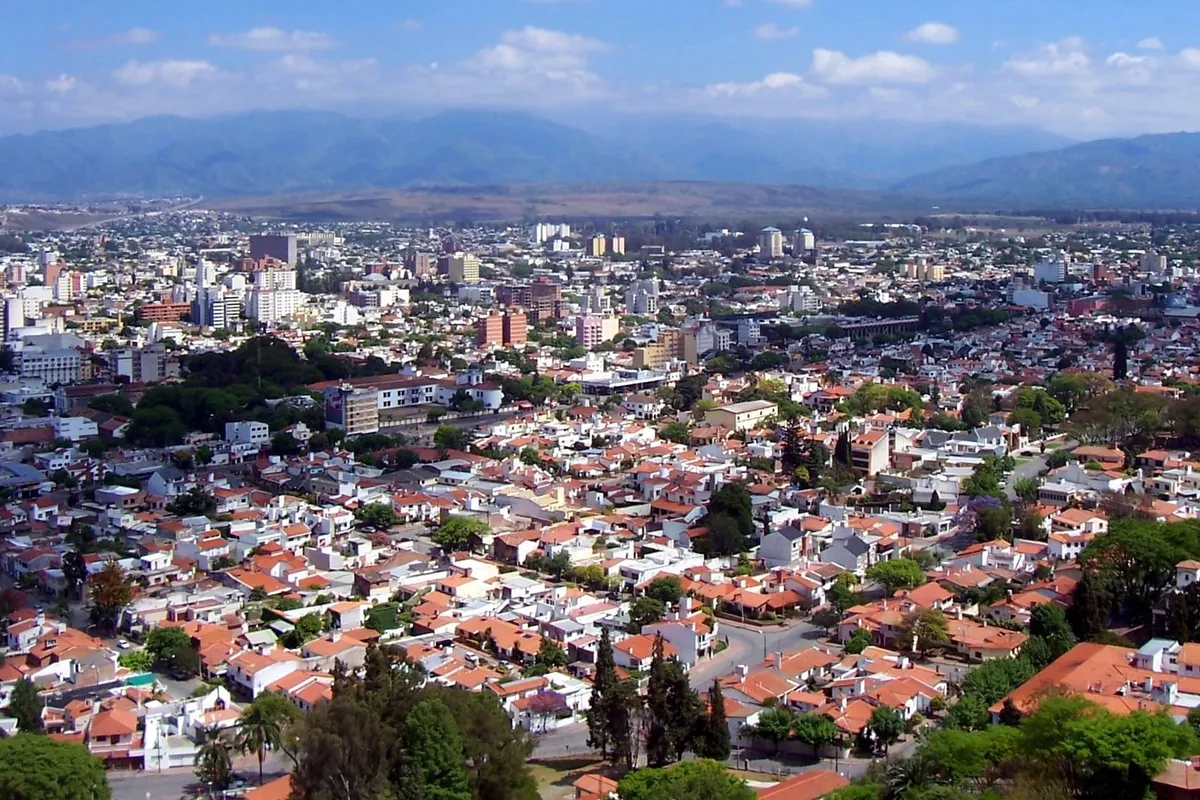
La Quiaca is a border town of 17,000 people in the far north of Jujuy province, in the Yavi Department, at 3,442 meters above sea level, on the south bank of the La Quiaca River that separates it from the Bolivian city of Villazon on the north bank. It is the end point — Km 0 from the south of the continent coming from Bolivia, or Km 0 going south within Argentina — of National Route 9 (5,194 km total when adding RN 40 and the southern Argentine-Chilean extension), making La Quiaca one of the highest cities in Argentina and the most important border crossing with Bolivia alongside Aguas Blancas (Salta). Founded in 1883 with the Central Norte railway, it preserves its highland village character with adobe and tile architecture, the imposing San Francisco Church (1922, neocolonial style with a 30-meter tower), the Route 9 Km 0 Monument marking the continental northern endpoint of the route and a mandatory photo stop, and the Sunday Regional Fair where Kolla and Quechua peasants from both sides of the border converge to sell textiles, ceramics, leather, chuño, fava beans and quinoa. The Manca Fiesta (Festival of Exchange) in October is the most important cultural event, with pre-Columbian origins of continental barter. La Quiaca is also a base for excursions to Yavi (16 km east, historic seat of the Marquisate of Tojo and home to one of northern Argentina\'s oldest Jesuit churches, founded in 1690), to Pozuelos Lagoon (Ramsar site, flamingos, 120 km south), and to Puna communities like Santa Catalina and Cusi Cusi to the west. The climate is dry highland: sunny mild days (20°C in summer), always cold nights (below 0°C in winter, +5-8°C in summer), low humidity, extreme UV radiation, thin air requiring progressive acclimatization. Cuisine is typically Andean: oven-roasted llama (lean, slightly sweet meat), locro, llama tamales, quinoa empanadas, api with pastel (a hot drink of purple corn with a fritter), corn chicha. You arrive from Salta (480 km on RN 9, 7 hours by car) or from San Salvador de Jujuy (290 km, 4h30) with daily bus services. La Quiaca works as a base to extend your trip into Bolivia: crossing the international pedestrian bridge takes you into Villazon, from where buses depart to Tupiza (95 km) and Uyuni (370 km, 6h), enabling one of the most iconic Andean circuits on the continent. Customs operates 7:00 AM - 10:00 PM with standard documentation (passport; Argentine DNI accepted for entry to Bolivia for 30 days).
Getting there — distances & times
| From | Distance | Bus | Drive |
|---|---|---|---|
| Salta city | 480 km | 9-10 h | 7 h |
| San Salvador Jujuy | 290 km | 5 h | 4 h 30 |
| Humahuaca | 165 km | 2 h 30 | 2 h 15 |
| Purmamarca | 225 km | 4 h | 3 h 30 |
| Abra Pampa | 75 km | 1 h 20 | 1 h |
| Yavi | 16 km | — | 20 min |
| Villazon (Bolivia) | 1 km | — | Pedestrian bridge |
| Tupiza (Bolivia) | 95 km | 2 h | — |
| Uyuni (Bolivia) | 370 km | 6 h | — |
Typical prices by category
| Item | Price |
|---|---|
| Hotel 3-star center | USD 45-75 |
| Budget hostal | USD 20-35 |
| Shared hostel | USD 12-18 |
| Lunch typical food | USD 8-15 |
| Bus Salta → La Quiaca | USD 28-45 |
| Taxi La Quiaca → Yavi | USD 15 one-way |
| Pozuelos Lagoon excursion | USD 65-85 |
| Border crossing fee | Free (documents only) |
| Uyuni 4x4 4-day tour (from Tupiza) | USD 190-250 |
| Bus Villazon → Uyuni | USD 25 |
April 2026 prices. October (Manca Fiesta): +40%.
The Border Crossing — Step by Step
Step 1: Arrive at the border complex ("El Puente"). Avenida Belgrano leads straight to it. Parking available (USD 2-5 per day).
Step 2: Argentine Immigration (exit). Show DNI or passport. Stamp out in passport or fill the TAM form for Argentines.
Step 3: Argentine Customs. Declare goods if applicable. Usually fast.
Step 4: Cross the international bridge (pedestrian walkway parallel to vehicle bridge). 150 meters. The La Quiaca River runs below.
Step 5: Bolivian Immigration (entry). Tourist visa for 30 days granted on the spot (Argentines and many nationalities visa-free). Some passports (USA, Canada) may require a 90-day visa with USD 160 fee.
Step 6: Bolivian Customs. Then walk to Villazon and the bus terminal.
Argentine DNI is enough if you go for tourism to Bolivia for less than 30 days. Bring your passport if continuing to Peru, Chile or any longer trip.
Yavi — The Hidden Gem (16 km)
Yavi is a 300-resident village 16 km east of La Quiaca, founded in the 17th century as the seat of the Marquisate of Tojo, the only marquisate granted by the Spanish Crown in what is today Argentine territory. The half-day visit must include:
- San Francisco de Yavi Church (1690): one of the oldest colonial churches in northern Argentina. Carved wooden baroque altarpiece, Cuzco school paintings, stone baptismal font. Hours: 9:00-12:00 and 15:00-18:00. Local guide explains history for USD 5.
- Marquis\' House: viceroyal mansion with Andalusian patio, today a provincial museum. Entry USD 3.
- Village walk: adobe streets, llama and alpaca textile workshops with pre-Hispanic techniques.
- Yavi Gorge: short walk to Tehuelche-Atacameño rock paintings.
Taxi from La Quiaca: USD 15 one-way, 20 min. Guided excursion USD 35/pax half-day including transport.
Tours from La Quiaca
Yavi Half Day — Marquisate and 1690 Church
Excursion from La Quiaca. Visit San Francisco church (1690), Marquis house, weaving workshops, gorge with rock paintings.
Pozuelos Lagoon + Puna
Full day to the Ramsar Pozuelos Lagoon, pink flamingo viewing, Kolla Puna villages, lunch in a ruka.
Transfer La Quiaca to Tupiza (Bolivia)
Private transfer to Tupiza crossing the border. Migration assistance. 95 km, 2h30. Then connection to Uyuni tours.
Combine with the Puna Circuit
La Quiaca chains naturally with the great Argentine Puna highlights:
- Pozuelos Lagoon (120 km south): Ramsar, pink flamingos.
- Humahuaca (165 km): historic city of the Quebrada.
- Iruya (270 km): village hanging on the mountain.
- Hornocal Hill (160 km): hill of 14 colors.
- Cusi Cusi (235 km): land of colors. The Argentine "mini-Uyuni".
- Santa Catalina (100 km): historic colonial silver-mining village.
How to Get to La Quiaca
From Salta: daily buses with Balut, Flecha Bus and La Veloz del Norte from the terminal. 9-10 hours, USD 28-45 one-way. Departures typically at 8 PM with arrival at sunrise (useful to cross the border early).
From San Salvador de Jujuy: same companies, 5 hours, USD 18-28. More frequent.
By car: RN 9 fully paved from Salta. The Humahuaca-La Quiaca stretch climbs from 2,940 m to 3,442 m via passes at 3,800 m (Abra de Azul Pampa). Watch for altitude sickness and fuel (long distances between gas stations north of Humahuaca).
See also: Salta and Jujuy hub, Humahuaca, Iruya, Pozuelos Lagoon, Hornocal.