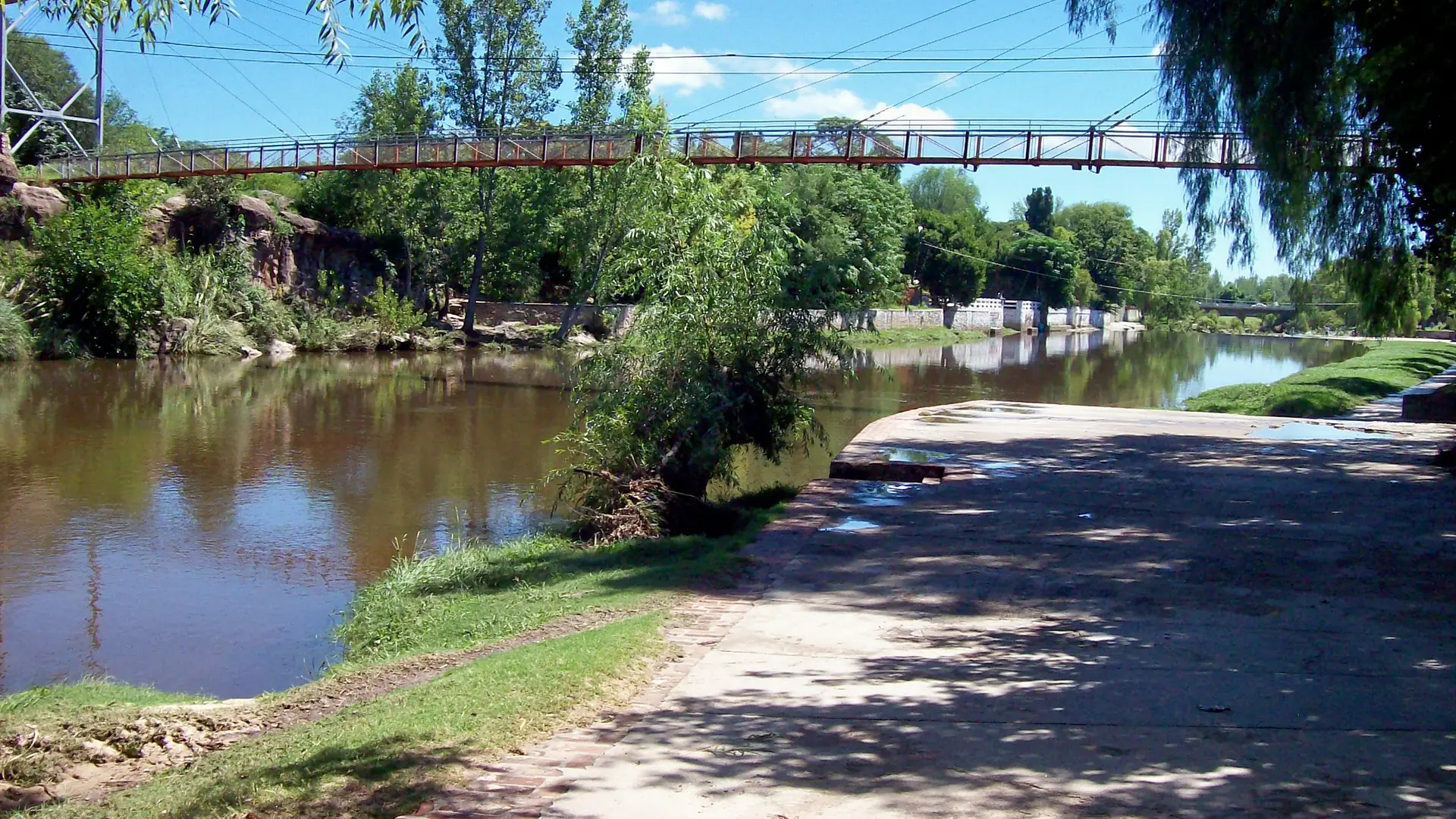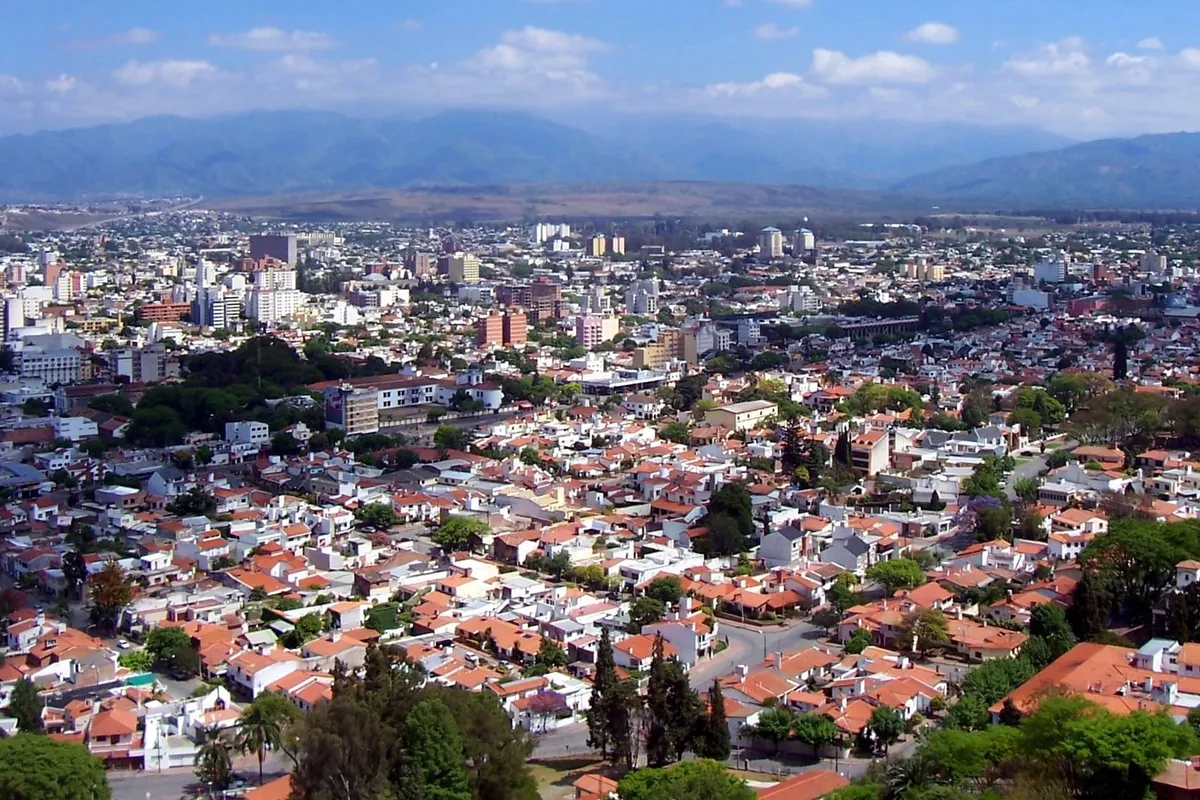
San Salvador de Jujuy, commonly called "Jujuy capital" or SSJ, is the capital and most populous city of Jujuy province with 305,000 inhabitants (2022 census) and 415,000 in the metropolitan area. It sits in the south-central part of the province at 1,259 meters above sea level, in a temperate valley between the Zapla and Tilquiza ranges, at the confluence of the Grande and Xibi Xibi rivers that give it its characteristic "split city" shape with great bridges. Founded on April 19, 1593 by Francisco de Argañaraz y Murguia as Ciudad de San Salvador de Velazco en el Valle de Jujuy, it is the oldest provincial capital in northwestern Argentina and preserves a compact historic center declared a "Historic City of National Interest". Its heritage landmarks include the Basilica Cathedral of Our Lady of the Rosary and San Salvador (1763) with the golden pulpit carved by indigenous artisans around 1700, considered one of the five most valuable Baroque pulpits in South America, and the only Argentine colonial religious piece that preserves its original gold leaves; the Cabildo (1827) with its neoclassical facade, today the Police Museum; the Government House (1923) in French style on Belgrano Plaza; and the San Francisco Church (17th century) with its Churrigueresque altarpieces. San Salvador was the historical protagonist of the Jujuy Exodus of August 1812, when Manuel Belgrano ordered the entire population to abandon the city while burning houses, crops and livestock to deny resources to the invading Royalist army — an epic act of the Argentine Independence War commemorated on August 23 with annual historical parades. The city is the transport hub of northern Argentina with the Governor Horacio Guzman International Airport (JUJ, also known as El Cadillal, 32 km from downtown) receiving daily flights from Buenos Aires, Cordoba and occasionally Rosario, and the modern Bus Terminal with services to Buenos Aires, Salta, Tucuman, La Quiaca and Bolivia (via Villazon). From SSJ it is 65 km to Purmamarca (1 hour, gateway to the Quebrada de Humahuaca), 95 km to Salta city (1h30 on RN 9), 155 km to Salinas Grandes (2h30 via RN 52 climbing the Cuesta del Lipán). Cuisine combines Andean, Quechua and Creole influences: humitas, tamales, Jujuy empanadas, oven-roasted llama, locro, api with pastel, carbonada. The local craft beer scene (Cerveceros Jujeños) and folk music with Kolla and Jujuy roots (festivals in January and August) round out the cultural offer. As a base for the NOA (Argentine Northwest), SSJ has the advantage over Salta of being 95 km closer to the Quebrada — saving 1h30 per day for travelers focused on Purmamarca-Tilcara-Humahuaca. The historic center can be walked in a day.
Getting there — distances & times
| From | Distance | Flight | Bus | Drive |
|---|---|---|---|---|
| Salta city | 95 km | — | 2 h | 1 h 30 |
| Buenos Aires | 1600 km | 2 h 10 | 24 h | 20 h |
| Cordoba | 915 km | 1 h 35 | 14 h | 11 h |
| Tucuman | 320 km | — | 5 h | 4 h |
| Purmamarca | 65 km | — | 1 h 10 | 1 h |
| Tilcara | 85 km | — | 1 h 30 | 1 h 20 |
| Humahuaca | 130 km | — | 2 h 15 | 2 h |
| Salinas Grandes | 155 km | — | — | 2 h 30 |
| La Quiaca (Bolivia) | 290 km | — | 5 h | 4 h 30 |
| Iruya | 220 km | — | — | 5 h (gravel) |
Typical prices by category
| Item | Price |
|---|---|
| Hotel 4-star center (double) | USD 85-140 |
| Hotel 3-star center | USD 55-85 |
| Shared hostel | USD 18-28 |
| Aparthotel (4 pax) | USD 80-130 |
| Jujuy empanada (each) | USD 1-1.50 |
| Lunch typical food | USD 10-18 |
| Mid-range dinner | USD 18-30 |
| Taxi airport → downtown | USD 15-22 |
| Full-day taxi (Quebrada) | USD 90-130 |
| Reyes Hot Springs entry | USD 10-15 |
| Yala Provincial Park entry | Free |
| Local bus (SAETA/line) | USD 0.40 |
April 2026 prices. Easter and July: +30-40%.
What to See in SSJ — Downtown Attractions
Basilica Cathedral and Golden Pulpit
The Basilica Cathedral of Our Lady of the Rosary (1763, Spanish Baroque facade modified in 1929) houses the golden pulpit, a jewel of colonial religious art. Carved in wood by indigenous artisans around 1700, covered with original gold leaf, it depicts biblical scenes in Andean baroque mestizo style. It is one of the five most valuable colonial pulpits in South America. Free entry; no flash photography. Hours: 7:00 AM-12:00 PM and 4:00-8:00 PM.
Cabildo and Belgrano Plaza
The Cabildo (1827, neoclassical facade with Doric columns) is today the Teobaldo Altamirano Historical Police Museum. Across from it lies Belgrano Plaza, the city\'s civic heart, with the Belgrano Monument handing the flag to the city (a replica of the original flag exhibited inside the Cabildo — one of the first Argentine flags, blessed by Belgrano after the Battle of Salta in 1813). The plaza has the traditional Sunday pedestrian walk.
Government House
French-style building (1923) at the corner of Belgrano Plaza. Free guided tours Tuesday to Friday 10:00 AM-12:00 PM, showing the Governors\' Hall, historic library and the balcony from which the governor takes office every December 10.
Jujuy Exodus Thematic Museum
Located on Avenida 19 de Abril 552. Tells the story of the 1812 Exodus with multimedia, immersive sets and replicas of Northern Army uniforms. Hours: Tue-Fri 9:00 AM-1:00 PM and 4:00-8:00 PM, weekends 9:00 AM-1:00 PM. Entry USD 3.
Colonizers Walk
Historic tourist corridor connecting the 5 milestones of the old town: Cathedral, Cabildo, Government House, San Francisco Church, Quintana House. Walkable in 2-3 hours. Free map at the tourist office.
Tours from San Salvador de Jujuy
Quebrada de Humahuaca Full Day
Classic excursion: Purmamarca (Hill of 7 Colors), Tilcara (Pucara), Humahuaca (Independence Monument). Guide, vehicle, 9 hours.
Salinas Grandes + Cuesta del Lipán
Full day to Salinas Grandes climbing Cuesta del Lipán (4,170m). Aerial view of the white desert. Lunch included.
Reyes Hot Springs Half Day
Excursion to volcanic hot springs (19km west). Access to 38°C thermal pools with Andean view, lunch at Hotel Termas. 4 hours.
Calilegua National Park Full Day
Yungas subtropical forests, howler monkeys, peccaries, hike on La Junta trail. Lunch in Ledesma. 10 hours.
SSJ Historic Center City Tour
3-hour guided walk: Cathedral with golden pulpit, Cabildo, Government House, Exodus Museum. Specialist historical guide.
Iruya + Hornocal (2 days from SSJ)
2-day expedition: Hornocal (14-color hill), Iruya village hanging on the mountain, overnight, return. All-inclusive.
Reyes Hot Springs and Surroundings
The Reyes Hot Springs are the most famous thermal escape in the NOA. Located 19 km west of downtown SSJ via RP 4, which climbs the Reyes River through a gorge of spectacular reddish landscapes. Outdoor thermal pools with volcanic water at 38°C. Two complexes: public (USD 10) and Hotel Termas de Reyes (USD 15, more exclusive). Best to go with few people (early on weekdays). The road includes the Huichaira Lookout with panoramic view.
Day Trips — The Quebrada and the Puna
From SSJ you reach the great destinations of the north quickly:
- Purmamarca (65km, 1h): Hill of the 7 Colors.
- Tilcara (85km, 1h20): Pucara, Devil\'s Throat.
- Humahuaca (130km, 2h): Independence Monument.
- Hornocal Hill (160km, 3h): 14 colors.
- Iruya (220km, 5h gravel): hanging village.
- Salinas Grandes (155km, 2h30): white desert at 3,450m.
- Pozuelos Lagoon (355km, 5h): RAMSAR flamingos.
- La Quiaca (290km, 4h30): Bolivia border.
How to Get to San Salvador de Jujuy
By plane (recommended for trips under 7 days): El Cadillal Airport (JUJ) is 32 km from downtown. Aerolineas Argentinas has 2-3 daily flights from Aeroparque (2h10, USD 80-180). Flybondi runs cheaper flights from Ezeiza. Taxi airport → downtown: USD 15-22.
By bus: the SSJ Bus Terminal connects to Buenos Aires (24h, USD 60-90), Salta (2h, USD 8-15), Tucuman (5h), Cordoba (14h), La Quiaca and Bolivia.
By car: from Salta on RN 9 it is 95 km, 1h30. From Buenos Aires it is 20 hours on RN 9 (passing Rosario, Cordoba, Santiago del Estero, Tucuman).
See also: Salta and Jujuy hub, Quebrada de Humahuaca, Purmamarca, Tilcara, La Quiaca.